

.svg.svg)


Contact us

Last Updated: September 16, 2026
British food tours in Manchester are guided walking experiences that combine multiple tasting stops with stories about the city's industrial past and its modern food and drink scene. At Flavours of Manchester, we run these tours because the city's culinary heritage deserves more than a quick restaurant booking. Most tours last around three hours and cover a compact stretch of the city centre on foot.
The format matters more than most people realise. You are not simply eating your way through a menu; you are following a narrative that connects a Victorian market hall to a modern kitchen.
The multi-stop tasting format means you visit several handpicked venues in one sitting, sampling a small dish or drink at each rather than a full meal in one place. A typical route includes four to six stops across a mix of historic pubs, independent eateries and market stalls. Each stop is chosen for what it says about the city, not just for the food itself.
This structure is what separates a proper food tour from a self-guided crawl. A guide ties the stops together, explaining why a particular dish or building matters. You get context, pacing and a route that has been tested many times.
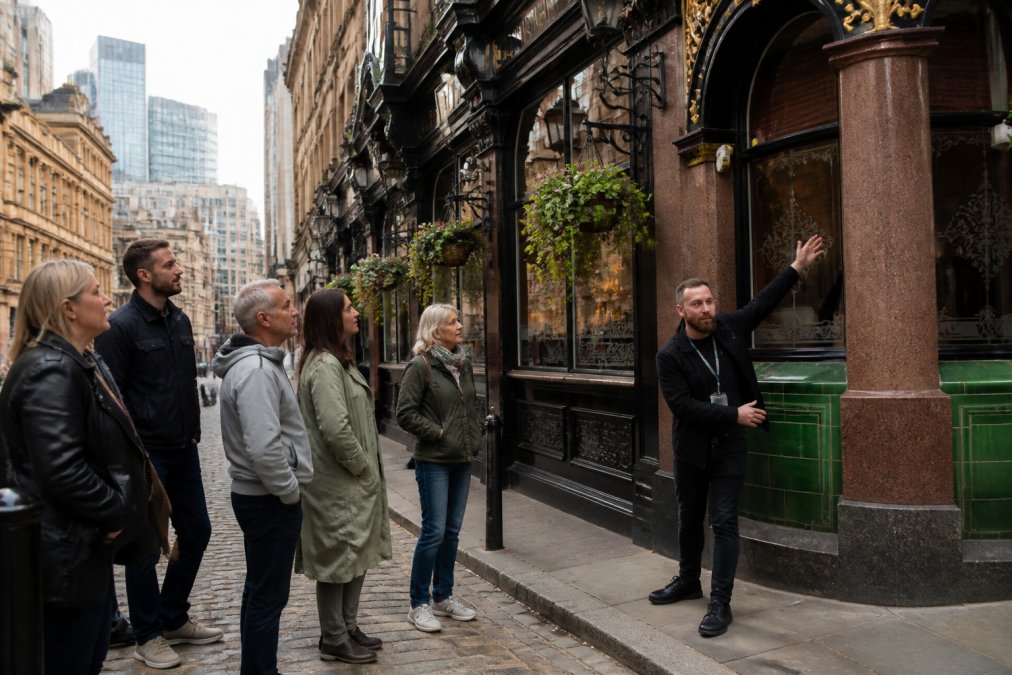
A Manchester food walking tour itinerary usually begins in the Northern Quarter or near the cathedral, moves through the old commercial district, and finishes close to a transport hub so guests can disperse easily. The exact route shifts with the season and venue availability, but the shape stays consistent, and the shape is what matters, because a route is a sequence of decisions about pacing, appetite and geography.
Here is how a typical afternoon unfolds, with the reasoning behind each stop:
The route is designed to feel like a walk through the city's transformation, from cotton warehouses to contemporary kitchens. Total walking distance is typically two to three kilometres, broken into short hops of five to ten minutes between stops, so you are never on your feet for long stretches.
Why the order matters:
A note on self-guided alternatives. If you would rather set your own pace, the same shape works as a DIY trail: pick one bakery, one historic pub, one market stall and one modern venue within walking distance of each other, and follow the light-to-heavy rule. You will miss the storytelling and the behind-the-scenes access, but you keep the flexibility, and for some visitors that trade-off is worth it.
Most food tours run for around three hours and cover roughly two to three kilometres on foot, paced gently with seated stops along the way. The walking pace is deliberately relaxed, since the point is to enjoy the food and the conversation, not to cover ground quickly.
Pacing is where a good operator earns their keep. Stops are spaced so you are never rushed and never standing around hungry. If you have an evening commitment, a midday tour is the safer choice.
What affects the duration:
The best local eateries for traditional British food in Manchester tend to be the ones locals actually use, not the ones with the biggest signs. Expect proper pies, fish and chips, Sunday roasts and regional cheeses served in places with real character.
A good tour guide knows which venues are worth your time on any given day. Kitchens have off days, and a fixed itinerary that ignores that will disappoint you. The venues below reflect the kinds of stops that appear on a well-run route.
Stop Type | Typical Dish | What It Shows |
|---|---|---|
Historic pub | Pie and mash | Working-class culinary traditions |
Market stall | Regional cheese or cured meat | Local sourcing and craft |
Bakery | Classic breakfast item | Everyday British fare |
Modern eatery | Reimagined British dish | The city's food evolution |
Manchester's industrial food history runs through everything you taste on a good tour. The city grew on cotton, and the workers who powered that trade shaped what people ate: filling, affordable, energy-dense food built for long shifts.
That legacy shows up in the city's culinary traditions today.
Accessibility, group size and sourcing are the three details that separate a thoughtfully run British food tour from a generic one, and they are also the three details most tour listings bury or skip entirely.
What to ask before booking:
What to ask:
What sustainable sourcing looks like in practice:
What to ask:
Factor | Why It Matters | What to Ask |
|---|---|---|
Accessibility | Cobbles, stairs and cellar dining rooms exclude some guests | Is the route step-free, and is there seating at every stop? |
Walking pace | Affects comfort for elderly or less mobile guests | How long is the longest walk between stops? |
Group size | Affects pacing and personal attention | What is the maximum group size? |
Sourcing | Fresher food, lower environmental impact, better quality | Where do venues source produce, and are they independent? |
Dietary needs | Determines whether you eat or watch | How are vegetarian, vegan and gluten-free guests handled? |
Most food walking tours last between two and three hours, covering three to five stops at around 15 to 25 minutes each. The walking distance is usually under three kilometres, with plenty of seated pauses for tastings. Some longer itineraries stretch to four hours when they include a full meal experience or a wine pairing. Check the specific tour listing for exact timings before you book, as pace varies by operator and group size.
Most providers can accommodate vegetarian, vegan, gluten-free and halal diets when you tell them at the time of booking. Kitchens need notice to prepare alternatives, so mention requirements at least 48 hours ahead. On a well-run tour, vegetarian guests receive separate dishes rather than a plate with the meat removed, and venues are briefed in advance. If you have severe allergies, confirm directly with the operator before booking.
Expect regional specialties such as a classic breakfast, pies, Eccles cakes, Lancashire hotpot, and dishes reflecting the city's industrial food history. Many tours also include modern takes on traditional fare, plus street food from the diverse food scene that grew from the city's trading past. Portions are usually tasting-sized across multiple stops, so the tour adds up to a full meal experience rather than a snack.
Yes. A self-guided trail lets you pick three or four authentic local spots and walk between them at your own pace. Plan a route through the Northern Quarter and the area around the cathedral, budget for tasters rather than full portions, and book nothing in advance so you stay flexible. You lose the food storytelling and hidden histories a local expert provides, but you keep full control of cost and timing.


