

.svg.svg)


Contact us

Last Updated: August 27, 2026
Wheelchair accessible cultural tours are guided experiences specifically designed to accommodate visitors with mobility requirements, combining history, heritage, and local culture with step-free access, accessible transport, and advance planning for assistance needs. These tours remove the barriers that often prevent wheelchair users from exploring cultural attractions and historical sites.
A truly accessible tour goes beyond a ramp at the entrance. It means tour operators have thought through every stage: how you'll arrive, where you can rest, whether accessible toilets are available, how the group moves through spaces, and what support staff can provide. At Flavours of Manchester, accessibility is fundamental to creating an experience where everyone can participate fully.
This guide walks you through the practical steps to book a wheelchair accessible cultural tour, from verifying accessibility features before you commit, to arranging transport, to confirming all the details that make the difference on the day itself.
Before you book, you need concrete information about what accessibility means for that specific tour. Tour operators vary enormously in what they offer, and "accessible" can mean different things depending on the venue, the route, and the group size.
When you contact a tour operator, ask these questions directly. Don't accept vague answers; you need specifics.
About the route itself:
About venues and buildings:
About the group and pace:
About assistance:
Create a simple checklist before you book to compare options and track what you've confirmed.
| Accessibility Feature | Tour A | Tour B | Tour C |
|---|---|---|---|
| Step-free route confirmed | Yes/No | Yes/No | Yes/No |
| Accessible toilet on route | Yes/No | Yes/No | Yes/No |
| Tour guide trained in mobility support | Yes/No | Yes/No | Yes/No |
| Wheelchair space in group confirmed | Yes/No | Yes/No | Yes/No |
| Companion ticket available | Yes/No | Yes/No | Yes/No |
| Accessible transport to start point | Yes/No | Yes/No | Yes/No |
| Rest areas or seating during tour | Yes/No | Yes/No | Yes/No |
| Advance notice accepted | Yes/No | Yes/No | Yes/No |
Write down specific answers, not just yes or no. "There's an accessible toilet at the café halfway through, about 45 minutes into the tour" is more useful than "Yes, there's an accessible toilet."
Getting to the tour start point is often the first accessibility challenge. Work backwards from where the tour begins to decide how you'll arrive and whether you need assistance.
If you're using public transport, advance notice is key. Most bus and train operators require you to book assistance in advance, especially if you need help boarding, securing a wheelchair, or navigating the station (rights of disabled passengers on transport(https://www.gov.uk/guidance/rights-of-disabled-passengers-on-transport)).
For bus travel, contact the local transport authority at least 24 hours before your journey. They'll confirm which services have wheelchair lifts and whether staff will be available to assist.
For train travel, book passenger assist through the train operator's website or phone line (National Rail Passenger Assist(https://www.nationalrail.co.uk/help-and-assistance/passenger-assist/)). Specify your stations, mobility needs, and journey time. Staff will meet you at the station to help with boarding, securing your wheelchair, and exiting at your destination. This service is typically free.
Be specific about what you need: "I use a manual wheelchair and need help boarding the train" or "I use a mobility scooter and need to know which doors have the lowest step." The more detail you provide, the better prepared staff will be.
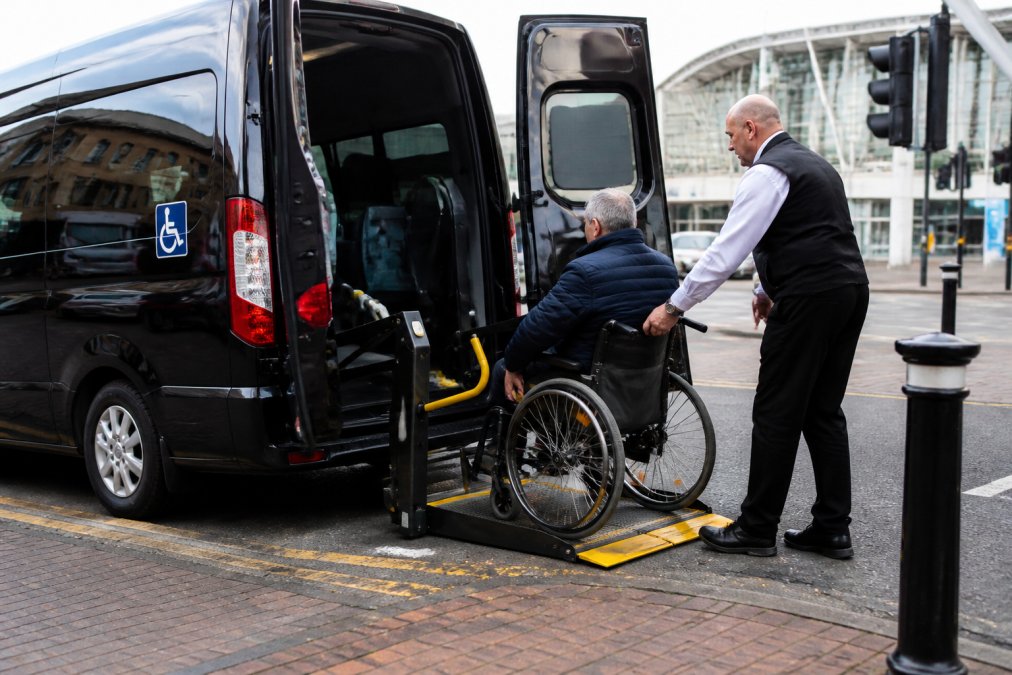
Ask the tour operator about drop-off points. A drop-off point close to a step-free entrance is better than one requiring you to cross a busy road or navigate several kerbs.
If you have a blue badge, check whether there's accessible parking near the tour start point. Book parking in advance if the location offers online reservations.
For private hire vehicles, many operators offer wheelchair-accessible vehicles with hydraulic lifts and secure wheelchair tie-down points. When you book, specify that you need a wheelchair-accessible vehicle and confirm the driver knows your mobility requirements.
Once you've verified accessibility and planned your transport, use the booking process to communicate your specific requirements.
When you book, provide detail about your mobility requirements. Tell the tour operator:
The tour operator will use this information to brief their guide, ensure appropriate staff are scheduled, and prepare any assistance equipment they might need.
If the operator doesn't ask about mobility requirements during booking, email them after with a summary of your needs. Request written confirmation that they've noted your requirements and understand what support you'll need.
If you're bringing a companion or carer, clarify the ticket arrangements. Some tours offer a companion ticket at a reduced rate or free, while others charge full price. Ask specifically: "I'm bringing a companion. Is there a companion rate, and should I book them separately or note them on my booking?"
Concessionary rates may be available if you have a disability. Ask about this when you book; rates vary by operator.
Request a booking confirmation email that includes your accessibility requirements, any companion tickets, and concessionary rates applied. This creates a record and prevents confusion on the day.
Understanding what a wheelchair accessible walking tour involves helps you prepare properly and know what to expect when you arrive.
A step-free accessible route means you can navigate the entire tour without encountering steps, steep ramps, or significant kerbs (Guiding Principles for Accessible Transport(https://www.equalityhumanrights.com/our-work/our-compliance-work/guiding-principles-accessible-transport)). The tour operator should have tested the route in a wheelchair to confirm it's genuinely passable.
Step-free doesn't mean flat. city centre has gradients and slopes, particularly near the river and canal areas. When you verify accessibility, ask about gradients: "Are there any steep inclines, and how long are they?" This helps you decide whether the route suits your energy levels and equipment capabilities.
Accessible routes often follow main streets and established pathways rather than narrow alleyways. The tour might take slightly longer than a non-accessible route because it avoids steps, but you're getting the same cultural content and historical context.
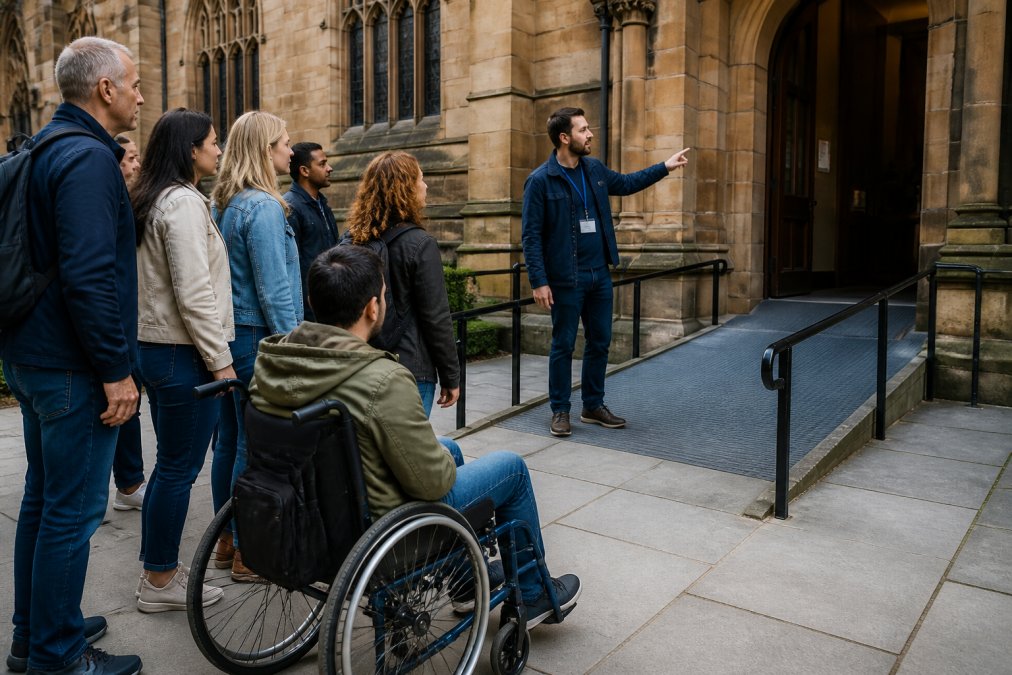
Accessible tours typically move more slowly than standard tours, giving everyone time to absorb information, take photographs, and ask questions. Rest breaks are built into the itinerary at cafés, museums, or public spaces with accessible toilets and seating.
The total tour time is usually longer than a standard tour because of the slower pace and built-in rest breaks. If a non-accessible tour takes two hours, an accessible tour might take two and a half or three hours.
Ask the tour operator: "How long is the tour, how many rest breaks are included, and where do we rest?" This helps you plan your energy and medication schedules around the tour.
If you're booking a group tour for a corporate team, family gathering, or group of friends, accessibility requirements become more complex because you're coordinating multiple people's needs.
Large groups can feel overwhelming on an accessible tour. A group of 20 people moving slowly through narrow streets creates congestion. Many operators limit accessible groups to 12-15 people specifically to maintain the quality of the experience.
A wheelchair user needs room to manoeuvre. If the group is too tightly packed, the wheelchair becomes an obstacle rather than part of the natural flow. The tour operator should position the group so that wheelchair users aren't at the back, struggling to hear the guide or see what's being pointed out.
When you book a group tour, mention that you have participants with mobility requirements and ask how the operator accommodates this.
If your group includes people with dietary requirements, communicate this in advance. Many cultural tours include food tastings or visits to restaurants. Provide a breakdown: "We have two people who are vegetarian, one with a nut allergy, and one who's gluten-free." The tour operator will confirm which venues can accommodate these requirements.
Ask about accessible toilets at each stop, where the group will eat (if food is included), and whether there are facilities for medication storage or rest if someone needs privacy.
The quality of your tour experience often depends on how well you communicate with the tour operator before the day arrives.
Find out the best way to reach the tour operator and what response time to expect. When you contact them about accessibility, expect a response within 24-48 hours during business days. If they don't respond, follow up. A tour operator who ignores accessibility enquiries is signalling that they don't take accessibility seriously.
Ask for a named contact person if possible. This gives you continuity; the same person handles your booking from start to finish and knows your requirements.
Some tour operators will modify the itinerary to suit accessibility requirements. If there's a particular building you want to visit but it's not step-free, ask whether they can include an external view or alternative location instead.
Request any specific assistance you need in writing. "I need help boarding the coach" or "I'll need a rest break after the first 45 minutes" should be noted on your booking confirmation. This ensures the guide is prepared and doesn't catch anyone by surprise on the day.
Ask questions about specific accessibility features before you book. Don't wait until the day of the tour to discover that a "step-free" entrance actually has a small kerb.
At Flavours of Manchester, we approach accessibility as fundamental to how we design and deliver our tours. When you book with us, you're getting guides who understand the routes intimately, staff trained to support visitors with mobility requirements, and a commitment to making sure everyone in the group has a genuine cultural experience.
Booking a wheelchair accessible cultural tour shouldn't require navigating unanswered questions and uncertain logistics. The steps we've covered, verifying accessibility, planning transport, communicating your requirements, and understanding what to expect, turn the booking process into something straightforward and manageable. When you work with a tour operator who takes accessibility seriously, you're setting yourself up for an experience that's genuinely enjoyable. Get in touch with Flavours of Manchester today to discuss how we can create an accessible cultural tour tailored to your group's needs, with step-free routes, accessible transport coordination, and guides trained to support participants with mobility requirements.
Ask the tour operator specific questions: Are all venues on the route step-free? Is the accessible route clearly marked? Do they offer accessible toilet facilities? Request details about drop-off points, rest stops, and whether mobility scooters are permitted. Request this documentation before committing to a booking.
Enquire about group size limits and whether the operator can accommodate your entire party comfortably. Ask about the itinerary's pace and duration, including scheduled rest breaks. Confirm advance notice requirements for mobility aids, dietary restrictions, and companion tickets. Request information about facility accessibility at each venue stop. Clarify their cancellation policy if accessibility standards aren't met on the day. Getting answers in writing protects both you and the operator.
Most public transport services require advance booking for passenger assist. Contact the operator at least 24 to 48 hours before your journey. Provide your arrival time, departure point, and destination. Specify your mobility needs: wheelchair space, step-free access, or passenger assistance. Booking confirmation will include your assistance request details and the operator's contact number. Arrive 15 minutes early to meet your assigned assistant. Keep your booking confirmation accessible on your phone or in print for the day of travel.
Provide clear details about your mobility needs: wheelchair type and dimensions, whether you use a mobility scooter, or if you require a companion for assistance. Mention any other accessibility requirements such as large-print materials, or dietary restrictions. Specify your arrival time and preferred drop-off location. Confirm whether you need a companion ticket and whether concessionary rates apply. The more detail you give, the better the operator can prepare and ensure a smooth, enjoyable experience.
This article was written using GrandRanker


