

.svg.svg)


Contact us

Last Updated: September 14, 2026
A Manchester food tour ticket typically covers a guided walk through several tasting stops, with food and drink at each, plus commentary from a local guide. This guide from Flavours of Manchester breaks down exactly what that means in practice, so you know what you are paying for before you book. Understanding what is included in a Manchester food tour matters because tours vary widely in structure, group size and what counts as a "stop."
Most tickets bundle three things: the food and drink itself, the guide's time and knowledge, and the logistics of moving a group between venues. What sits outside the ticket is usually travel to the meeting point, extra drinks beyond the planned pairings, and gratuities.
Across a typical tour, the tastings add up to a full meal rather than a series of snacks. Expect a mix of savoury dishes, something sweet, and drink pairings that range from soft options to alcoholic beverages. Inclusive pricing means you are not reaching for your card at each stop.
The guide is the part most people underestimate. A good local guide does more than point at buildings; they connect each dish to the city's history, migration and innovation. That context is what turns a walk into a culinary experience rather than a pub crawl with extra steps.
The difference between a food walk and a guided tour comes down to structure, pacing and how much control the guide has over the route. A food walk is looser and more exploratory; a guided tour follows a fixed itinerary with timed stops and set tastings.
On a walk, the guide may swap a stop if a venue is unexpectedly closed or a market stall has something worth trying that day. On a guided tour, the sequence is locked in advance, which suits groups that need predictability, a corporate team day, a birthday booking, or anyone coordinating several people with different arrival times.
Factor | Food walk | Guided tour |
|---|---|---|
Route | Flexible, guide-led | Fixed itinerary |
Timing | Loose, can run over | Timed stops, predictable finish |
Tasting size | Smaller, more stops | Larger portions, fewer stops |
Group size | Usually smaller | Often larger, bookable as private |
Booking lead time | Often short notice | Usually booked ahead |
Best for | Couples, solo visitors, curious locals | Teams, first-timers, celebrations |
On a walk, the pace is set by the group and the guide's read of the room. You might linger at a market stall for twenty minutes because the conversation is good, then move on quickly elsewhere. That spontaneity is the appeal, but it also means the finish time can drift.
On a guided tour, the trade-off runs the other way. You get a reliable start and end, a set number of tastings, and a guide who has rehearsed the route. What you lose is the ability to follow a whim, if a bakery has just pulled something out of the oven, a fixed tour may not be able to detour.
Group size shapes the experience more than most people expect. Smaller groups mean more time with the guide and easier conversation at each stop; larger groups mean more energy but less individual attention, and venues need to handle bigger tables.
If you are booking for a team, the guided format keeps everyone together and on schedule, and private bookings let you set the start time, the route and any dietary requirements across the whole group. If you are exploring solo or as a couple, a walk often feels more personal, you are one of a handful of guests rather than one of twenty.
Choose a walk if you want flexibility, a smaller group and the sense that the day could go anywhere. Choose a guided tour if you want a fixed plan, a guaranteed finish time and a format that scales to a group. Both cover similar ground; the choice is about how much spontaneity you want to trade for predictability.
A well-built route mixes street food stalls, independent bakeries and hidden gems that sit off the main drag. The best tours avoid chains entirely and lean on places with a story behind the counter.
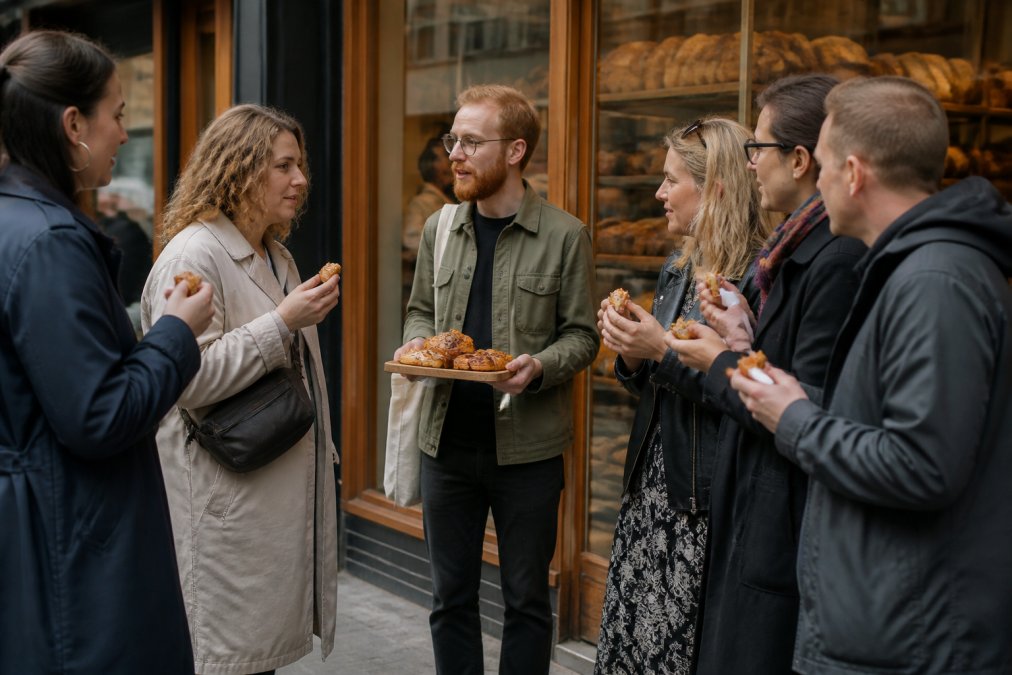
Stops usually span a walking distance of a few hundred metres to a couple of kilometres, threaded through different quarters so the food changes with the streetscape. You might move from a market hall to a back-street bakery to a bar with a heritage interior.
What most guides miss is that the order of stops matters. Starting with something light and ending with something rich keeps the palate engaged. A route that front-loads heavy dishes leaves everyone flagging by the third stop.
The typical duration of a food tour runs between two and a half and four hours, depending on how many tasting stops are included (UK Food & Drink Festivals, Events & Experiences). Most of that time is spent seated or standing at venues, not marching.
Walking is gentle and broken up. Expect short hops between stops rather than a continuous hike, with plenty of pauses to eat, drink and listen. Comfortable shoes matter more than fitness.
Dietary requirements on food tours can usually be accommodated when you flag them at booking. Vegetarian, vegan, gluten-free and allergy needs are the common ones, and venues can often swap a dish or adjust a pairing (food.gov.uk).
The key is timing. Telling your guide on the day gives them little room to manoeuvre; telling the booking team in advance lets them brief each venue. Non-alcoholic options are normally available in place of alcoholic beverages.
Most food tour guides focus on what you eat and where you go. Three things they tend to skip, accessibility, how menus shift through the year, and where the food actually comes from, matter just as much when you are deciding whether a tour will suit you.
Accessibility varies by route, so ask before you book if anyone in your group has mobility needs. Some venues have step-free access and ground-floor seating; others sit in older buildings with narrow entrances, cellars or mezzanine floors reached by stairs (Wheelchair access & avoiding stairs).
A few practical points worth raising with the operator:
If you are booking for an older relative or someone with a long-term condition, the honest answer is that a private tour is usually the more comfortable option, you set the pace, and the operator can pick venues that work.
Seasonal menus shift through the year, and that is part of the appeal rather than a drawback. Spring and summer lean on lighter dishes, salads, outdoor seating and longer evenings; autumn and winter bring heartier fare, warmer drinks and more time indoors.
What this means for you as a guest:
If you have your heart set on a particular dish, mention it at booking. It may not be possible out of season, but the operator can tell you honestly.
Local sourcing ties into the seasonal picture. Many independents build their menus around what is available nearby, which is why the food changes with the streetscape as much as the calendar.
A well-built route avoids chains entirely and leans on places with a story behind the counter, a family bakery, a market trader, a small producer. That approach supports independent businesses and keeps more of the spend in the local economy, which is part of why food tours appeal to conscious consumers.
When you are comparing tours, it is worth asking:
Preparation is simple, and it makes a noticeable difference. Come hungry, wear comfortable shoes, and carry a water bottle. If you have dietary restrictions, confirm them in writing before the day.
A common mistake is treating the tour as a quick snack stop and eating a full meal beforehand. You will regret it by the second tasting.
Expect a walking route of roughly 1.5 to 3 hours with several tasting stops at independent eateries, markets and bars. A local guide leads the group, sharing city history and food stories between stops. Most tickets cover all food samples and one or two drinks, with non-alcoholic options available. You walk between venues at a relaxed pace, so wear comfortable shoes and arrive hungry rather than having eaten beforehand.
Most operators, including Flavours of Manchester, ask about dietary requirements at the time of booking. Vegetarian, vegan, gluten-free and alcohol-free requests are usually accommodated when you give notice in advance, often with separate tastings at the same venues. Last-minute requests are harder to arrange because stops pre-prepare portions. Always confirm your needs in writing when you book, and remind your guide at the meeting point so nothing is missed on the day.
Many tours include at least one alcoholic beverage, such as a local beer, wine or cocktail, alongside the food tastings. Non-alcoholic options are normally available on request, including soft drinks, mocktails or tea and coffee. If you prefer to skip alcohol entirely, say so when booking so the guide can arrange an alternative at each stop. Itineraries that visit bars often include a drink pairing, while daytime market tours may focus on food only.
Ticket prices vary by tour length, group size and the number of tasting stops, so check the Flavours of Manchester website for current rates and group booking options. The ticket price typically covers all food tastings, selected drinks, the guided commentary and any entry to venues along the route. It usually excludes travel to the meeting point, extra drinks beyond those included, and gratuities. Booking in advance is recommended, especially for weekend and corporate slots.
Booking a food tour is really about trusting someone else to curate the route, the venues and the timing so you can simply enjoy it. Flavours of Manchester runs guided food and drink walking tours built around the city's history, culture and culinary landscape, with specialised routes and private options for groups and corporate teams. Visit the Flavours of Manchester site for more info and booking, and discover the city one bite at a time.


