

.svg.svg)


Contact us

Last Updated: September 23, 2026
Flavours of Manchester runs guided food and drink walking tours built around the city's history and food scene, and pairing one with a hands-on cookery session turns a good afternoon into a genuinely useful one.
Here's the gap most guides miss. A tour alone gives you great stories and full plates, but nothing you can repeat at home. A class alone teaches technique, but in a room far from the streets that shaped the dish. Together, they cover both.
A culinary walking tour is a guided route through several independent eateries, with tastings and stories at each stop. Expect three to five stops across two to three hours, a relaxed walking pace, and enough food to replace a meal.
Routes typically move between a mix of venues:
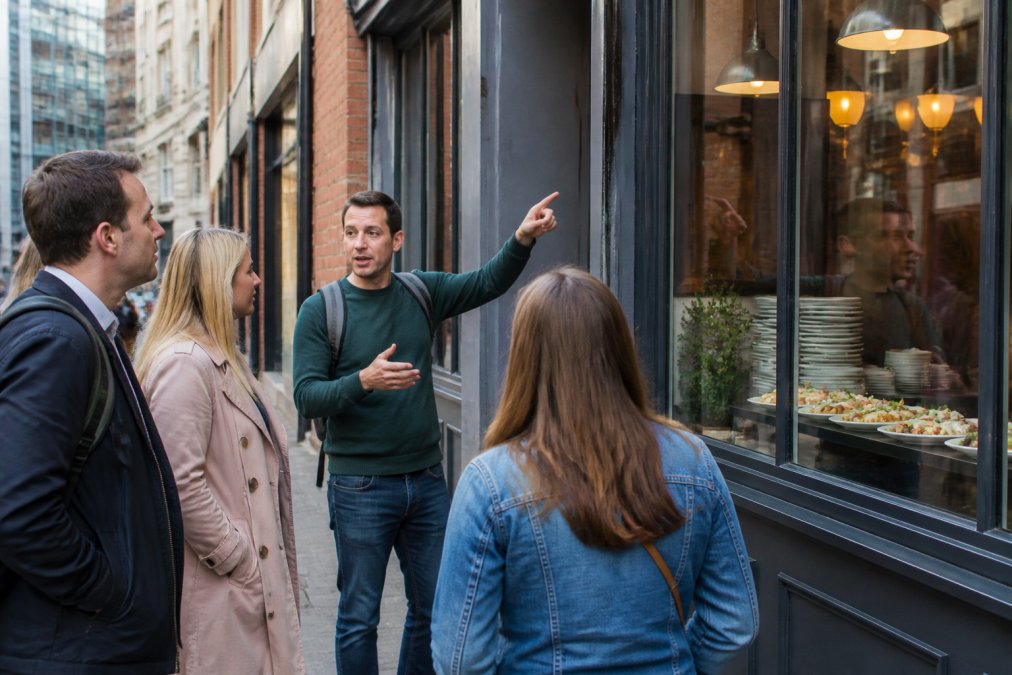
Guides build routes around the city's culinary heritage, so you get context, not just snacks. For anyone new to the food and drink scene, this is the fastest way to find places worth returning to.
If you only have one day, do the tour first. You will taste dishes you actually want to learn, then book a class that teaches them.
The right class is the one that matches your skill level and your diet, not the one with the prettiest photos. Most booking pages bury both details, so filter on them first and treat cuisine as the tie-breaker.
If a listing does not state a level, look for the phrase "no experience necessary" or a note that ingredients are prepped in advance. Both signal a beginner room.
A useful rule: the smaller the group, the more a kitchen can adapt. Sessions capped at around ten to twelve people are far more flexible than large demonstration-style events.
Class type | Level | Dietary flexibility | Format |
|---|---|---|---|
Chef-led cookery class | Beginner to intermediate | High with notice | Stationary |
Curry and chapati | Beginner to intermediate | High, often naturally halal-friendly | Hands-on |
British baking | Beginner | Low to moderate, gluten is central | Hands-on |
Cocktail making | Beginner | Low, alcohol is central | Social |
Craft beer experience | Beginner | Low | Walking |
check current class listings and availability
What most guides miss is that the take-home value comes from a written recipe and a technique you practised, not from watching someone else plate a dish. Before you book, ask whether you leave with the recipe in writing, if the answer is no, the class is entertainment rather than education.
Foodie experiences for groups work best when the whole route is private. Corporate team days and birthday groups can book a dedicated tour, which means the guide adapts the stops, pace, and menu to your party rather than a mixed public group.
Flavours of Manchester offers private and corporate tour options alongside its scheduled routes, including its Taste of Two Cities and Cottonopolis tours. A private booking keeps everyone engaged because the stories and tastings are pitched at your group.
Dietary needs are the most common reason a group booking goes wrong. Tell the operator at the point of booking, not on the day, so venues can prepare alternatives.
Smaller groups of six to ten usually get the most personal experience. Larger groups are workable but need more lead time.
Most guides treat a tour as a standalone booking. The real value is in sequencing them into one day that actually flows. Here is a workable template, followed by the logistics that make or break it.
Central districts are compact enough to walk, but the class and the tour start points are often in different areas, so check both before you commit.
A practical rule: keep the tour within one tram stop or a 25-minute walk of other activities. Anything further and the travel eats into the day.
Costs depend on the tour and the group size, so there is no single figure. A guided walking tour with multiple tastings often sits near £99 per person.
For a full day, budget for the tour, plus travel and any drinks bought separately. Private and corporate bookings are priced on group size and route, so the reliable move is to check the operator's pricing page for current rates and a quote.
What you are paying for over booking a few tables yourself is the guide, the curated route, and the stories behind each stop. That is the part you cannot assemble on your own.
Yes. A guided walking tour can be a great experience in the late morning or early afternoon. Allow at least an hour between activities so you are not rushed.
Most culinary walking tours run for around two and a half to three hours, covering several stops on foot with tastings at each. That pace leaves the rest of the day free for other activities. If you are planning other activities on the same day, pick a morning tour and confirm meeting points in advance so you are not crossing the city twice.
Many tours can accommodate dietary requirements, but you need to ask before booking rather than on the day. Vegetarian, vegan, gluten-free and alcohol-free options are the most commonly accommodated. Tell the organiser about allergies and intolerances when you book, and again when you arrive, so the venues can adjust ingredients in advance.
Plenty. Beginner-friendly workshops assume no prior kitchen skill and focus on a single technique, such as making dough from scratch, balancing spices or baking classic British recipes. You will usually work in a small group with step-by-step guidance from a chef, and you eat what you make. Baking and curry workshops tend to be the most forgiving starting points for anyone who rarely cooks.
The hard part of planning a culinary day is not finding good food, it is fitting a class and a tour into one smooth schedule without missing either. Flavours of Manchester builds guided food and drink walking tours around the city's history, culture, and best independent kitchens, with private and corporate options for groups of any size. Get started with Flavours of Manchester and book a tour that turns a day of eating into skills you will use at home.


