

.svg.svg)


Contact us

Last Updated: August 8, 2026
A corporate team building food tour manchester combines shared experience and culinary discovery. When your team walks through Manchester's neighbourhoods together, stopping at independent restaurants, historic pubs, and artisan food spots, people become explorers. They taste something new, learn about local heritage, and bond over genuine moments rather than forced ice-breakers.
The real value isn't just the food. It's the conversation when a finance director tries a dish they've never encountered, or when a junior team member discovers they share a passion for craft beer with someone from another department. These casual interactions build connection that traditional team days struggle to create. A walking tour keeps momentum going with no awkward silences or forced games. The experience itself does the work.
Flavours of Manchester specialises in this gastronomic journey for corporate groups. Their guides weave together Manchester's industrial history, its transformation into a cultural hub, and the stories behind the businesses you're visiting. That context transforms a meal into a narrative. Your team experiences the city's culinary culture and understands why these places matter to the community.
For event planners and team leads, engagement metrics improve when people feel genuinely valued. A day that feels like authentic exploration beats a generic off-site every time.
A private food tour designed for corporate groups differs fundamentally from dropping your team at a restaurant. You're booking a guided experience tailored to your group's pace, preferences, and dynamics.
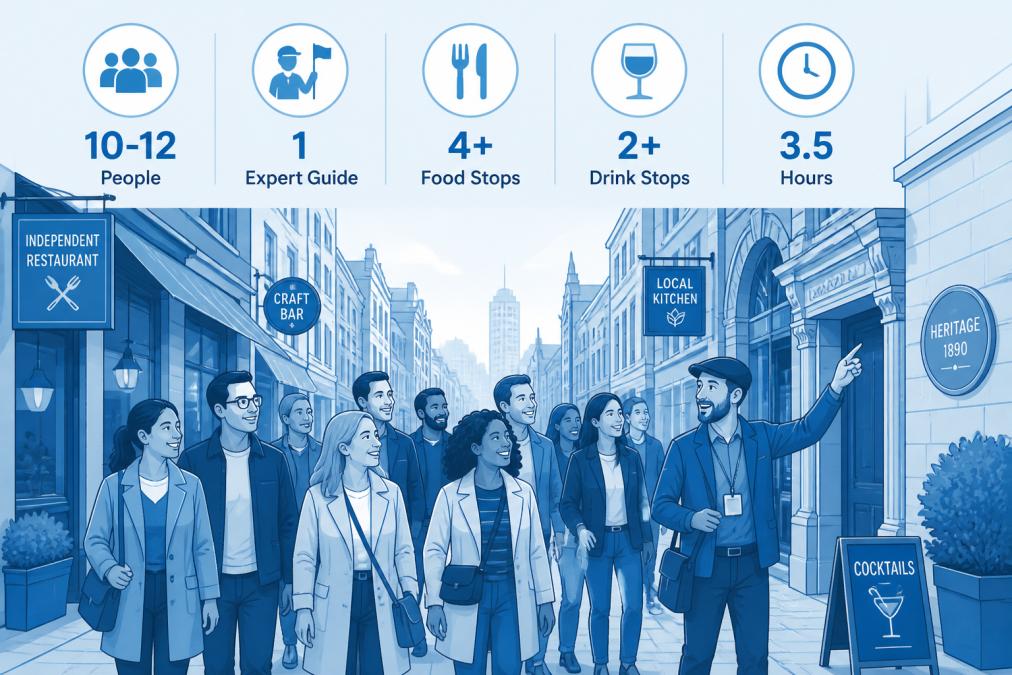
When you book a private food tour through Flavours of Manchester, you receive several core components. First, a professional guide who knows the city's food scene intimately, not just which restaurants exist, but their stories, ownership, sourcing practices, and how they fit into Manchester's narrative. Second, a curated walking route that hits hidden gems where locals actually eat, avoiding overcrowded tourist traps. Third, pre-arranged access and reserved seating so your group isn't competing with walk-in customers. Fourth, food and drink pairings selected specifically for the experience, tasting portions rather than full meals, which keeps everyone engaged without anyone feeling overfed.
The interactive element matters too. Unlike self-guided tours where everyone's on their phones, a guided experience creates shared attention. Your guide explains the history of a dish, the technique behind it, or the supplier relationship that made it possible. Conversations start naturally. That's where team bonding happens.
Most private tours include between 4 and 6 food stops, depending on duration. Each stop is different, a charcuterie specialist, a traditional pub with heritage recipes, a contemporary restaurant showcasing local producers, perhaps a craft brewery or independent coffee roaster. The variety prevents monotony and ensures something for different tastes and dietary needs.
Your guide manages timing, pacing, and group dynamics. If someone's walking slower or needs a break, the group adjusts naturally. If someone's interested in a building's history, the guide can expand on that. It's structured but flexible.
Booking a group tour requires attention to practical details. Get these right, and the experience runs smoothly.
Most professional food tour operators have an optimal group size between 8 and 20 people. Smaller groups feel more intimate; larger groups require more coordination. The sweet spot for team building is typically 10-15 people, allowing genuine community without fragmentation.
Flavours of Manchester can accommodate larger groups by splitting them into two parallel tours with separate guides, maintaining experience quality while scaling up. Confirm capacity when you book and ask whether the operator has experience managing your specific size.
Food tours are built around tasting, so dietary requirements are central to planning. When you book, provide detailed information about allergies, intolerances, and dietary preferences.
Common requirements include vegetarian and vegan options, gluten-free needs, nut allergies, shellfish allergies, and religious dietary restrictions. A good operator contacts venues in advance and arranges alternatives so nobody watches others eat while they have nothing. Flavours of Manchester works with partner venues to ensure meaningful alternatives at each stop.
Be specific when you book: "We have 3 vegetarians, 1 vegan, 1 person with a shellfish allergy, and 1 person who doesn't eat spicy food" is more useful than "Some people are vegetarian."
A private tour should reflect your group's interests. When you book, discuss what your team cares about. Are they interested in Manchester's industrial heritage? Contemporary food innovation? Supporting small independent businesses? A historical walking route through specific neighbourhoods?
Flavours of Manchester offers themed tours: Taste of Two Cities (exploring Manchester and Salford's distinct identities), Cottonopolis (focused on industrial heritage), and Inspiration, Innovation & Intellect (exploring contemporary food culture). You can also request customisation. If your team is interested in craft beverages, the guide can emphasise breweries. If you want to focus on sustainable sourcing, the route can highlight those businesses.
Discuss walking distance upfront. A typical tour covers 1.5 to 2.5 miles across 2-3 hours, with stops built in. Clarify this when booking so nobody's surprised.
A food tour is inherently a team building activity. Understanding how and why it works helps you maximise the benefit.
Learning happens in layers. Your team learns about food, techniques, ingredients, and flavour profiles. A guide explaining how a traditional Manchester dish is made or why a brewery's water source affects their beer creates genuine interest.
Deeper down, learning is social. Team members discover shared interests they didn't know they had. Someone from accounting mentions wanting to learn about fermentation; the guide connects them with someone from marketing experimenting with home brewing. These connections are the actual team building; the food is the vehicle.
The networking element matters especially for larger organisations where departments rarely interact. A finance team member and someone from operations might never cross paths normally. A guided food tour puts them side by side for three hours, walking, tasting, and listening to stories. That proximity and shared experience create familiarity that translates back to the workplace.
Interactive stops amplify this. Some venues offer behind-the-scenes access or demonstrations. Watching someone make fresh pasta or explaining the brewing process engages people differently than simply tasting the end product.
Post-tour surveys asking whether team members felt more connected to colleagues, learned something new about people in their team, and would recommend similar events are straightforward. Most people report higher connection after shared experiences.
Longer-term indicators include whether conversations started on the tour continue in the office, whether people mention the experience in team meetings, and whether cross-departmental collaboration improves in the following weeks. Some organisations track whether attendees report higher job satisfaction in post-event surveys.
The ROI calculation depends on what you value. If you're investing in team cohesion, retention, and cross-departmental collaboration, a day that builds genuine connection justifies the cost.
Manchester's food scene isn't separate from its history; it's a direct expression of it.
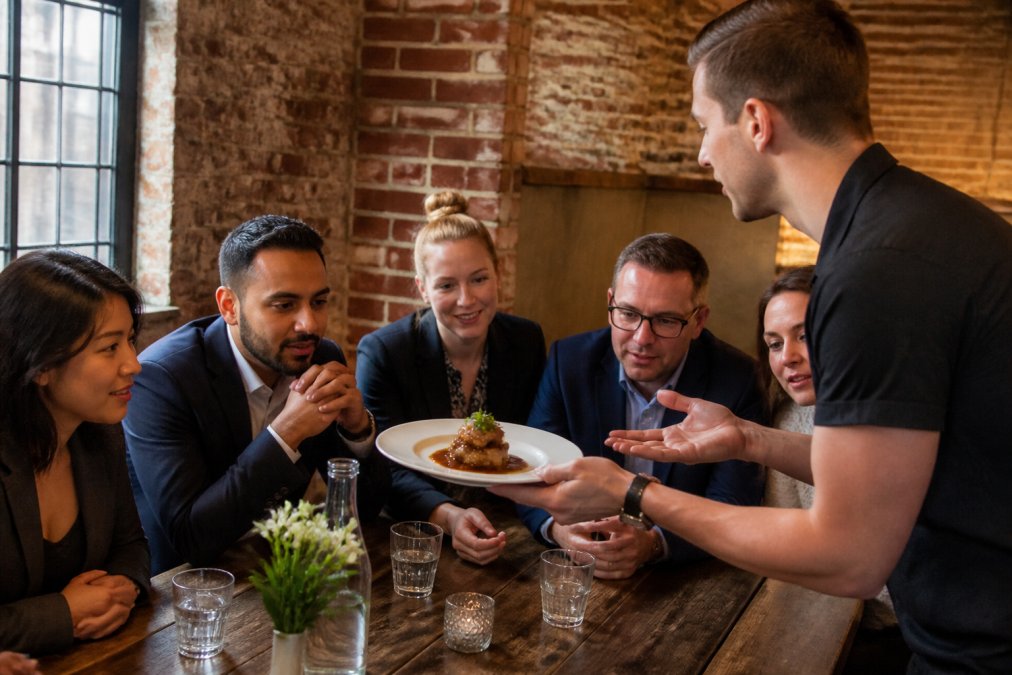
The city's industrial past shaped everything. Manchester was the epicentre of the cotton trade, which brought wealth, immigration, and cultural exchange. That diversity created a genuinely cosmopolitan food culture. You see it in Kashmiri restaurants that emerged from specific migration patterns, Italian delis in areas where Italian immigrants settled, and Jewish bakeries that remain cultural landmarks.
Contemporary Manchester food culture reclaims and celebrates these histories. Independent restaurants often tell the story of a place, why it matters, who built it, what it meant to the community. A guide from Flavours of Manchester connects these dots. You're not just eating; you're understanding how a city's food reflects its people and history.
The "hidden gems" aren't secret, locals know them. But they're hidden from the typical tourist trail. These are neighbourhood restaurants where people actually eat, pubs with real histories, food producers working with local suppliers. A private tour takes you to these places because your guide has genuine relationships with owners and knows the stories that make them worth visiting.
Salford has its own distinct culinary identity. The Salford Quays area has attracted contemporary food businesses, while Salford also has older, working-class food traditions, places that have served the same community for decades. A tour exploring both Manchester and Salford shows how two adjacent cities have developed different but interconnected food cultures.
This context transforms a food tour from a pleasant afternoon into something meaningful. Your team experiences the cultural and historical layers that make a place distinctive.
Manchester's weather is unpredictable. Most operators plan routes that work in various conditions, knowing which streets have covered arcades and which venues have indoor waiting areas. Discuss contingencies when booking. Some operators have indoor alternative routes focusing on covered markets, historic pubs, and indoor food halls.
Most food tours proceed in light rain. People are moving, stopping for short periods at venues, and generally staying warm. Heavy rain or snow might make a difference, but typical Manchester drizzle doesn't stop a tour. Many teams find there's something atmospheric about exploring a city in soft rain, and the shared minor discomfort reinforces bonding.
If your team is distributed, a food tour becomes more complex but not impossible. The most straightforward approach is inviting only team members who can physically be in Manchester. This ensures everyone gets the full experience.
Alternatively, combine the tour with a broader team event. Remote team members join virtually for a pre-tour briefing where the guide explains what the team will experience. Then the in-person team does the tour, and everyone reconvenes virtually afterward to share reflections.
For fully remote teams, some operators offer virtual experiences where a guide walks through a neighbourhood on video and arranges tasting boxes delivered to remote participants beforehand. It's not the same as being there, but it's a creative middle ground.
When planning, be honest about your team's distribution and discuss options with your operator.
A corporate team building food tour manchester delivers something most off-site events struggle to achieve: genuine connection without feeling forced. Your team walks together through a city, discovers new places, learns about local heritage, and shares moments that feel authentic rather than manufactured.
Flavours of Manchester specialises in exactly this experience. Their guides weave together Manchester's industrial history, its culinary transformation, and the stories of independent food businesses, creating a narrative that makes the tour meaningful. They handle the logistics so your team can focus on the experience. They offer themed tours that let you shape the experience around what your team cares about.
If you're planning a team day that builds real connection, improves cross-departmental collaboration, and gives your team something they'll genuinely remember, Flavours of Manchester's corporate tour options are worth exploring. Get started with a consultation to discuss your team's size, interests, and any specific requirements.
A corporate team building food tour combines networking, cultural immersion, and shared experience in one activity. Your team bonds over authentic local flavours while learning Manchester's industrial and culinary heritage. Unlike standard team-building exercises, food tours create natural conversation starters, encourage cross-department mingling, and leave participants with memorable experiences rather than forced activities. Teams often report improved morale and stronger working relationships after exploring the city's hidden gems together with a knowledgeable guide.
Yes. Dietary accommodations are a core part of planning any private food tour for groups. When you book, you'll specify allergies, vegetarian, vegan, gluten-free, halal, kosher, or other requirements for each participant. Your guide and the venues on your customized itinerary are briefed in advance, ensuring every team member enjoys the full meal experience without compromise. This flexibility is one of the key advantages of private bookings over fixed public tours.
Private group tours typically accommodate between 8 and 30 participants, depending on the venues and walking route selected. Smaller groups (8-15) offer more intimate experiences and easier logistics; larger corporate groups (15-30) can be split into two guided tours running simultaneously or sequentially. Your event planner will work with you to ensure the group size doesn't compromise the quality of the experience or the guide's ability to deliver engaging storytelling about Manchester's culinary culture and industrial history.
Manchester's weather can be unpredictable, so private food tours include contingency planning. Routes can be adjusted to maximize indoor venues and covered walkways, or alternative dates can be offered. Some tours integrate indoor experiences such as brewery tastings, market hall visits, or seated culinary heritage workshops if outdoor walking isn't feasible. Discuss weather backup options when planning your team building activities in Manchester city centre to ensure your event runs smoothly regardless of conditions.
Measure ROI through post-tour feedback surveys and team engagement metrics. Track whether participants report improved relationships with colleagues, increased sense of belonging, and higher morale in the weeks following the tour. Many companies see measurable benefits: better cross-team communication, reduced turnover, and stronger company culture. A guided food tour delivers these outcomes more effectively than traditional team-building activities because it combines learning, shared meals, and authentic local storytelling in a low-pressure environment.
Professional guides at Flavours of Manchester are trained in both the city's industrial heritage and its contemporary food scene. They share stories about how Manchester's cotton industry shaped the city, explain the origins of local food traditions, and introduce you to independent restaurateurs and artisan producers. Their expertise transforms a simple walking tour into a gastronomic journey that reveals why Manchester's food culture is authentic and distinctive—not a generic tourist experience.
Absolutely. Customizable itineraries are a core feature of private food tours for groups. You can specify which neighbourhoods to explore, types of cuisine, dietary needs, duration, pace, and learning focus (industrial heritage, contemporary innovation, sustainable tourism, etc.). Your event planner will work with you to design a bespoke corporate event that aligns with your team's interests and your company's values, whether that's supporting small businesses, exploring culinary heritage, or discovering hidden local spots.
This article was written using GrandRanker


