

.svg.svg)


Contact us

Last Updated: August 25, 2026
When you're serious about food, Manchester rewards that obsession. The city's culinary landscape has transformed dramatically over the past decade, shifting from chain restaurants and pub fare to something genuinely distinctive. This guide from Flavours of Manchester covers seven immersive culinary experiences that go beyond sitting at a table and ordering from a menu, experiences that reveal how a city thinks, creates, and celebrates food.
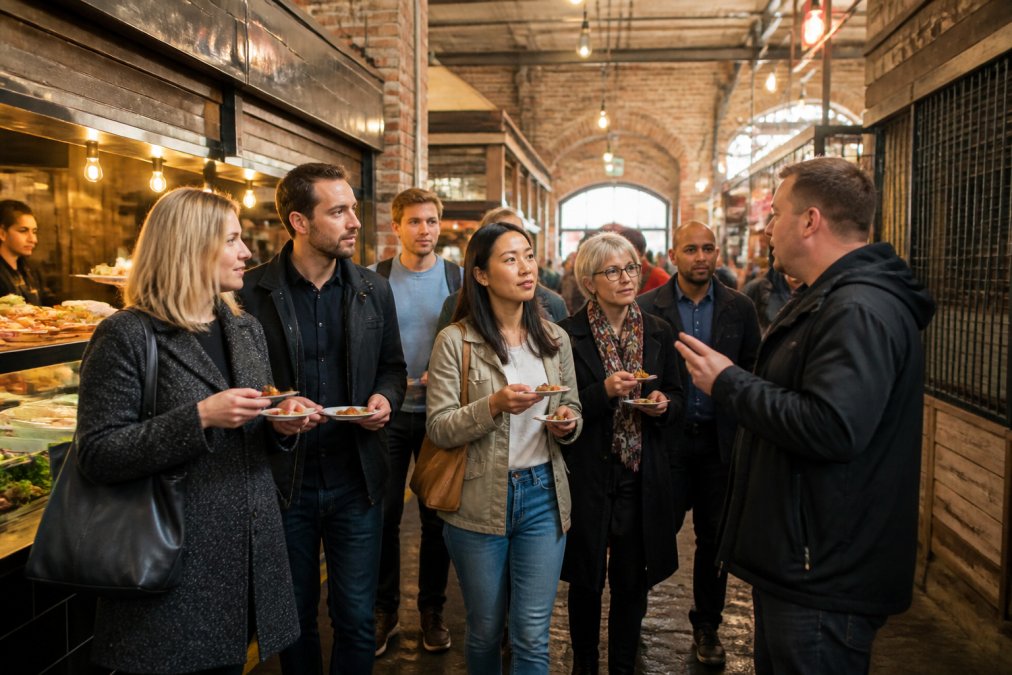
Flavours of Manchester has built its reputation on structured, locally-led food tours. The guides are locals with genuine passion for the city's culinary scene, not reading from scripts.
Themed tours offer distinct experiences: "Taste of Two Cities" explores Manchester and Salford's distinct food identities; "Cottonopolis" connects industrial heritage directly to food culture; "Inspiration, Innovation & Intellect" focuses on contemporary creative energy. Corporate teams and private groups can book bespoke tours.
The walking-intensive nature is essential, you move through neighbourhoods, see how spaces connect, and notice which areas have thriving independent food scenes. That context transforms a meal into an experience.
Learning to cook from a professional chef who can correct your technique in real time is fundamentally different from videos or written instructions. Food Sorcery operates two locations (Manchester city centre and Didsbury) with classes spanning Thai cooking, Indian curries, Japanese sushi, Mexican street food, pasta making, and cake decorating. The "Cooking Together Experiences" format has you prepare a starter and main course alongside other participants, then sit down together to eat what you've made. Classes start from £95 per person and accommodate most dietary needs if specified in advance (foodsorcery.co.uk).
The real value emerges when you realise you've learned transferable principles. A chef teaching you how to build flavour in a Thai curry is teaching you about balancing heat, acid, salt, and fat, knowledge that transfers across cuisines.
The Cheshire Cookery School in Altrincham takes a different approach, emphasising breadth across skill levels with classes in essential dishes, knife skills, Italian cuisine, French patisserie, and bread baking. Starting from £130 per class, they position themselves toward serious home cooks. The location outside Manchester city centre means travel, but also a different atmosphere focused on technical skill-building rather than the experiential side.
Some of the most interesting food in a city lives in markets and communal food halls where vendors operate independently and menus change frequently.
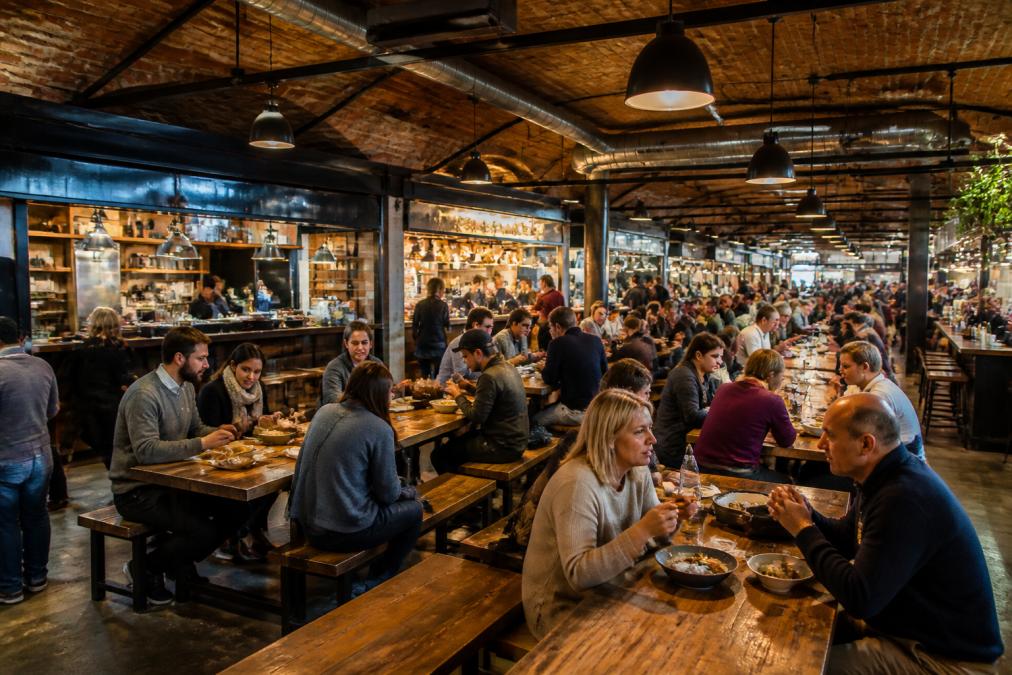
GRUB Manchester is the city's biggest street food space with free entry, you pay only for what you eat. The vendor lineup rotates constantly, which means repeat visits reveal new cuisines and vendors testing ideas. The craft beer selection and independent cinema complement the food, transforming the space from "place to eat" into "place to spend an evening." Busy periods get genuinely crowded, and Manchester's weather can significantly impact your experience.
Mackie Mayor operates in a restored Victorian market building in the Northern Quarter. The soaring ceilings, open kitchens, and communal seating create an atmosphere that feels both historic and contemporary. The vendor selection spans fried chicken, sake, and everything between, genuinely diverse rather than thematically coherent. Communal seating creates social energy that private dining can't match, though finding a seat during peak hours requires patience.
What makes these spaces valuable for culinary experiences is the element of discovery. You're not choosing from a fixed menu; you're responding to what's actually available on the day you visit.
A tasting menu from a Michelin-starred chef is an argument made through food, course by course. It requires attention, time, and willingness to follow someone else's vision.
mana holds a Michelin star and operates with a tasting menu format exclusively. Chef Simon Martin, trained at Noma, brings precise technique and conceptual thinking to modern British cuisine. The menu changes seasonally, so the experience is never the same twice. Tasting menus typically start around £100+ per person, reflecting not just ingredients and labour but the conceptual work of designing a coherent progression of dishes (michelin.com).
Getting a reservation at mana is difficult, demand consistently exceeds availability. Plan months in advance or use cancellation lists if flexible on dates.
The Michelin star system emphasises technical precision and ingredient quality, which are real measures of excellence but not the only ones. That said, when a chef has earned a star, the experience is worth experiencing.
Some of the most memorable culinary experiences deliberately break the conventional restaurant format by removing elements you take for granted.
Dining in the Dark Manchester, curated by Fever Originals, eliminates sight entirely. You're blindfolded for a three-course dinner, forcing your other senses to compensate. Taste and smell become acute in ways they usually aren't. The menu is secret and chosen by colour (Green for vegan, Blue for seafood, Red for meat), removing decision-making and making the experience purely about responding to what arrives.
The experience is genuinely disorienting at first, but that uncertainty is the point. It creates a space where you can't rely on habits or expectations. You're present in a way conventional dining doesn't demand. If darkness or blindfolds trigger discomfort or anxiety, this isn't the experience for you. Availability in Manchester has been intermittent, so check current offerings before planning.
Tattu Manchester integrates environment, presentation, and cuisine into a single immersive experience. It serves contemporary Chinese cuisine with visual presentation that rivals the cooking itself. The Far East bottomless brunch and distinctive Sunday roast menu (roast duck with salt and pepper potatoes) show willingness to reinterpret traditions. Main courses typically range from £20-£40+, with tasting menus available for more structured experiences.
Tattu's popularity means reservations are essential, particularly during peak times. Plan ahead or use cancellation lists.
What distinguishes Tattu is the integration of design, service, and cuisine into a coherent whole. Every element, lighting, music, presentation, service pacing, has been considered. That level of attention transforms dining into an experience.
Choosing among culinary experiences requires understanding what you're actually seeking. Cost matters, but it's not the primary factor.
Budget considerations: Pricing for guided tours, cookery classes, and fine dining experiences varies. Street food markets operate on pay-as-you-go pricing. For current pricing, please refer to the Flavours of Manchester website.
Group dynamics: Guided tours work well for groups. Cookery classes work well for groups but require advance booking. Street food markets are genuinely social but crowded during peak hours. Fine dining works best with people you're genuinely interested in spending several hours with.
Dietary requirements and accessibility: Most cookery schools accommodate dietary needs if specified in advance. Street food markets offer variety but require independent navigation. Fine dining restaurants need advance notice of restrictions. Guided tours vary by operator.
Seasonal factors: Manchester's weather affects outdoor experiences like street food markets and walking tours. Spring and autumn typically offer the most reliable conditions. Indoor experiences are weather-independent. Seasonal menus at fine dining restaurants mean the experience genuinely differs depending on when you visit.
Advance planning: Guided tours can often accommodate same-week bookings but book faster during peak seasons. Cookery classes typically need 1-2 weeks' notice. Street food markets are genuinely spontaneous. Fine dining requires months of advance planning.
| Experience Type | Duration | Cost Range | Best For | Booking Timeline |
|---|---|---|---|---|
| Guided food tours | Varies | See website | Immersive learning, local context | 1-4 weeks |
| Cookery schools | 2-3 hours | £95-£130 pp | Skill-building, social dining | 1-2 weeks |
| Street food markets | Self-directed | £10-£30 pp | Casual discovery, variety | Walk-in or same-day |
| Fine dining tasting menus | 2-3 hours | £100+ pp | Special occasions, precision | 2-3 months |
| Unique/immersive dining | 1.5-2 hours | Varies | Novelty, sensory focus | 2-4 weeks |
The most common mistake is treating these experiences as interchangeable. A guided tour serves a completely different purpose than a cookery class. Fine dining is fundamentally different from street food markets. Choose based on what you actually want to learn, experience, or celebrate.
Culinary experiences foodies truly value require planning and intention. Whether you're drawn to learning directly from chefs, discovering independent vendors, or experiencing food in unconventional ways, the city offers genuine depth. Flavours of Manchester's guided tours provide the most comprehensive entry point, combining local knowledge, structured tasting, and genuine storytelling about how the city's food culture developed. From there, branch into deeper specialisation: hands-on cooking, fine dining exploration, or the deliberate discovery of street food markets. Start with what interests you most, and let that experience shape what you explore next. Get started with Flavours of Manchester and explore the city's culinary landscape through its best eateries, bars, and the stories behind them, offering immersive guided experiences that blend history, culture, and exceptional local flavours into a genuine understanding of how the city thinks about food.
=== FAQ ANSWERS (audit these too, same rules) ===
[1] Q: What makes guided food tours different from visiting restaurants on my own? A: Guided food tours provide curated access to hidden gems and lesser-known eateries you might not discover independently. Expert guides share stories about the city's culinary heritage, food history, and the people behind each dish. Tours typically include multiple tastings, drinks, and insights into local ingredients and techniques. You also benefit from the social experience of exploring with others who share your passion for food, plus guides handle logistics so you focus purely on enjoying the culinary adventure.
[2] Q: Are food tours suitable for locals who already know the city well? A: Yes. Even long-time residents discover new perspectives through guided food tours. Local guides often reveal the stories behind familiar neighbourhoods, introduce you to newly opened independent vendors, and highlight the culinary innovation happening in less-explored areas. Tours focusing on specific themes, such as the industrial heritage of Cottonopolis or the intersection of innovation and food culture, offer fresh angles that change how locals see their own city. Many residents use tours as a way to rediscover familiar areas with new eyes.
[3] Q: What should I expect from a cookery school class in terms of time and cost? A: Cookery school classes typically last 2-4 hours and cost from £95 upwards per person, depending on the cuisine and complexity. Classes are hands-on: you'll prepare dishes under expert guidance, learn techniques, and often enjoy the meal you've created with other participants. Most schools accommodate dietary requirements if notified in advance. Classes suit all skill levels, from complete beginners to experienced home cooks seeking to master specific techniques like pasta-making or French patisserie.
[4] Q: Can culinary experiences be arranged for large corporate groups? A: Yes. Many culinary venues and tour operators offer bespoke experiences for corporate groups. Options include private guided tours, dedicated cookery class sessions, and exclusive use of food halls or restaurant spaces. Corporate experiences work well for team-building, client entertainment, or away-day activities. Group bookings typically require advance notice and may include tailored itineraries, dietary accommodations, and flexible timing. Check individual venues for group capacity and customisation options.
Guided food tours provide curated access to hidden gems and lesser-known eateries you might not discover independently. Expert guides share stories about the city's culinary heritage, food history, and the people behind each dish. Tours typically include multiple tastings, drinks, and insights into local ingredients and techniques. You also benefit from the social experience of exploring with others who share your passion for food, plus guides handle logistics so you focus purely on enjoying the culinary adventure.
Yes. Even long-time residents discover new perspectives through guided food tours. Local guides often reveal the stories behind familiar neighbourhoods, introduce you to newly opened independent vendors, and highlight the culinary innovation happening in less-explored areas. Tours focusing on specific themes, such as the industrial heritage of Cottonopolis or the intersection of innovation and food culture, offer fresh angles that change how locals see their own city. Many residents use tours as a way to rediscover familiar areas with new eyes.
Cookery school classes typically last 2-4 hours and cost from £95 upwards per person, depending on the cuisine and complexity. Classes are hands-on: you'll prepare dishes under expert guidance, learn techniques, and often enjoy the meal you've created with other participants. Most schools accommodate dietary requirements if notified in advance. Classes suit all skill levels, from complete beginners to experienced home cooks seeking to master specific techniques like pasta-making or French patisserie.
Yes. Many culinary venues and tour operators offer bespoke experiences for corporate groups. Options include private guided tours, dedicated cookery class sessions, and exclusive use of food halls or restaurant spaces. Corporate experiences work well for team-building, client entertainment, or away-day activities. Group bookings typically require advance notice and may include tailored itineraries, dietary accommodations, and flexible timing. Check individual venues for group capacity and customisation options.
This article was written using GrandRanker


