

.svg.svg)


Contact us

Last Updated: September 12, 2026
Booking a table at three restaurants in one evening tells you what Manchester tastes like. A guided culinary tour tells you why it tastes that way. At Flavours of Manchester, we have watched hundreds of visitors and long-term residents finish a tour saying the same thing: they walked past these streets for years without knowing what was behind the doors. That is the real argument for a why book a guided culinary tour in Manchester decision, and it has nothing to do with convenience.
The food is the hook, not the whole story. A good guide connects a dish to the cotton trade, the migrant communities, or the industrial past that shaped a neighbourhood. You get context that a menu cannot carry.
Three things separate a guided experience from a solo night out:
Self-guided walks suit confident eaters who want total control. Guided tours suit anyone who wants access, context, and a route that has already been tested. The honest answer is that both work, and the right choice depends on how you like to explore, but the practical differences run deeper than most guides admit.
A self-guided walk costs nothing to plan and lets you linger wherever you like. The trade-offs are real, though. You will miss the backstreet venues you do not know exist, you will spend part of the day reading reviews instead of eating, and you will get no explanation of what you are tasting. For a first visit, that is a lot of guesswork.
The hidden costs add up too. Walk-in only venues mean you may queue, or be turned away on a busy Saturday. You negotiate dietary requirements at each stop from scratch. And if you are organising for a group, you become the unpaid coordinator, chasing confirmations, checking opening hours, and fielding last-minute changes.
A guided tour removes the logistics entirely. Someone else has vetted the venues, timed the route, and arranged the tastings. You arrive, walk, eat, and listen. The guide also handles the awkward parts: dietary requirements, group size, and keeping twenty people engaged on a corporate away day.
Under the surface, several mechanisms do the work:
Factor | Self-Guided Walk | Guided Tour |
|---|---|---|
Planning effort | High, you research everything | None, route is set |
Venue access | Walk-in only, subject to queues | Pre-arranged tastings |
Local insight | What you already know | Guide-led storytelling |
Dietary needs | You negotiate each stop | Collected at booking, passed to venues |
Accessibility | You check each venue yourself | Step-free and seated options arranged |
Group suitability | Hard to coordinate | Built for groups |
Best for | Repeat visitors, solo eaters | First-timers, groups, corporate |
Expect a small group, a walking pace of roughly ten to fifteen minutes between stops, and between four and six tastings across three to four hours (visitbritain.org). Tours run on foot, so comfortable shoes matter more than anything else in your bag.
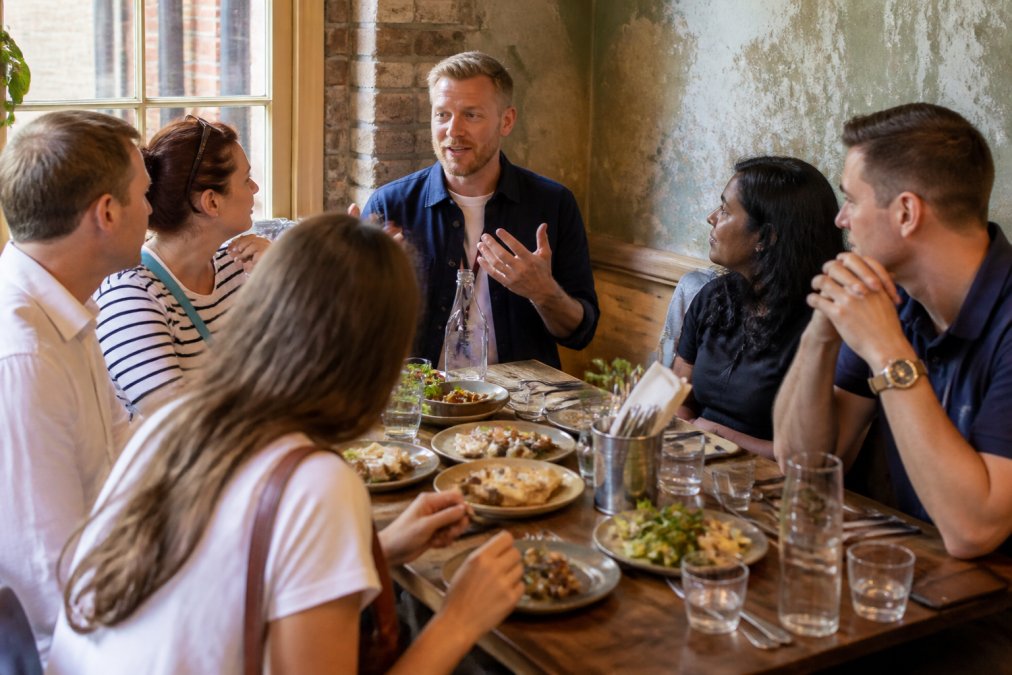
A typical itinerary mixes independent eateries, a market stop, and at least one drink pairing. Guides introduce each venue, explain the dish, and give the group time to eat and talk. Most tours finish near public transport so nobody is stranded at the end.
What separates a genuinely good culinary tour from a pleasant walk with snacks is the hands-on element, and this is where most online guides stay vague. On a well-designed tour, you are not just eating; you are meeting the people who make the food and, in some cases, stepping behind the counter.
Common interactive features include:
If this matters to you, ask before booking. Not every tour includes hands-on elements, and the difference between a 'walk and eat' and a 'culinary education' usually comes down to whether the operator has built these moments into the route.
Most guided food tours in the city run between three and four hours, covering four to six stops on foot (visitmanchester.com). Shorter two-hour versions exist for lunchtime slots, while bespoke private tours can stretch longer if the group wants a full evening.
The length matters more than people expect. Three hours is the sweet spot: long enough to visit several venues and hear the stories behind them, short enough that nobody hits the wall halfway through. Anything under two hours feels rushed, and anything over four starts to blur.
The best food in any city is rarely on the main drag. Manchester's independent scene hides in side streets, converted warehouses, and upper floors that give no clue from pavement level. A local guide knows which unmarked doors lead to something worth eating.
This is where local knowledge pays for itself. You could spend an evening searching reviews and still walk past the venue that locals actually rate. Guides also know the opening hours, the days a kitchen closes early, and which spots handle a group of fifteen without falling apart.
Menus shift with the seasons, and that shapes what you taste on any given tour. Spring and summer bring lighter plates and outdoor stops; autumn and winter lean into warmer, heavier dishes and indoor venues.
Ethical sourcing has moved from a niche concern to a deciding factor for many diners. Independent venues increasingly name their suppliers, work with regional producers, and build menus around what is available locally rather than what is cheapest to import. Ask your guide about sourcing and you will usually get a straight answer, because it is a point of pride for the kitchens involved.
Guided tours work for almost anyone, but they suit three groups particularly well. First-time visitors get orientation and context in one afternoon. Long-term residents get the backstreet venues they never found on their own. Corporate groups get a structured social event that keeps everyone talking.
For team away days, the format does the heavy lifting. A walking tour gives colleagues something to discuss that is not work, moves at a pace everyone can manage, and ends with a shared experience rather than another meeting room. Private and bespoke options let organisers set the route, the duration, and the dietary requirements in advance.
Manchester's food scene rewards people who know where to look, and the gap between a decent night out and a genuinely memorable one usually comes down to local knowledge. Flavours of Manchester runs guided food and drink walking tours built around that idea, including the Taste of Two Cities route, the Cottonopolis tour, and the Inspiration, Innovation & Intellect experience, with corporate and private options for larger groups. If you want the stories behind the food rather than just the food itself, get started with Flavours of Manchester and book a tour that shows you the city one bite at a time.
A guided culinary tour gives you a local expert who knows which venues are worth your time, so you skip the guesswork and the duds. You get stories behind the dishes, access to places that don't advertise, and a route planned around the best of the city's food scene. Exploring alone means missing that context and often walking past hidden gems without realising they're there.
The Northern Quarter hides much of its best food behind unmarked doors and above shopfronts. A local guide takes you straight to the kitchens and bars that matter, explains how the area's creative spirit shaped its food culture, and times your stops so you taste each place at its best. You also get the stories and heritage that a quick solo visit would miss entirely.
Yes. Solo travellers often find a guided culinary tour is the easiest way to eat well across several venues without ordering full portions alone. You join a small group, share a table, and get conversation along with the tasting experience. It turns a solitary meal into a social dining occasion, and the guide makes sure nobody feels left out.
Many of the best stops are family-run places, backstreet bars and artisan producers that don't show up in standard listings. A guide with local relationships can bring a group in, arrange tastings and introduce you to the people behind the food. That access is hard to replicate when you're booking tables yourself, especially for larger groups or corporate bookings.


