

.svg.svg)


Contact us

Last Updated: August 9, 2026
A group food tour in Manchester is an immersive walking experience where you explore the city's culinary landscape alongside a knowledgeable local guide. You'll visit multiple independent restaurants, bars, and food venues, sampling carefully curated dishes and drinks while learning the stories behind Manchester's food culture, history, and innovation.
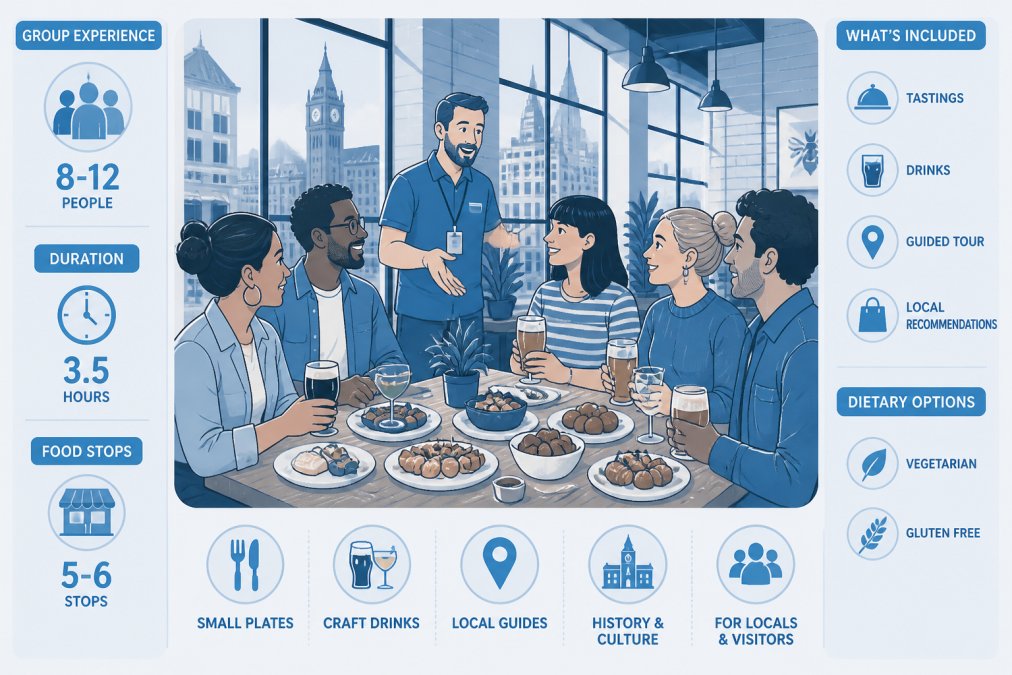
Unlike a standard restaurant booking, a group food tour combines movement through the city with tasting experiences at different stops. You'll typically spend 15-20 minutes at each location, sampling 2-3 dishes or drinks before moving on. Guides share context about Manchester's industrial heritage, its transformation into a cultural hub, and how local producers and chefs have shaped the food scene. This storytelling transforms the tour from simple tasting into cultural immersion.
Group tours create a social dynamic that individual dining doesn't replicate. You meet fellow food enthusiasts, locals, and visitors from around the world. The shared experience of discovering hidden gems builds camaraderie and often makes participants more adventurous with food choices than they'd be dining alone.
Flavours of Manchester specialises in curated experiences, offering tours like Taste of Two Cities, Cottonopolis, and Inspiration, Innovation & Intellect, each with distinct focus on the city's heritage and modern food culture.
A group food tour serves as an engaging team-building experience because it combines movement, discovery, shared learning, and memorable moments in a relaxed setting. Teams benefit from exploring a city together in a non-work context, creating conversation opportunities that typical office settings don't provide.
For corporate event planners, food tours offer advantages over conventional team days. They're active without being physically demanding, accommodate mixed fitness levels and dietary requirements flexibly, and generate natural photo opportunities. The experience becomes a talking point, teams remember unexpected flavour combinations, local producer stories, and hidden venues they never knew existed.
The logistics work well for groups of 10-50 people. Smaller groups maintain intimacy and meaningful interaction. Larger groups can be split into two simultaneous tours, ensuring no one feels lost in a crowd. Many organisations book these for away days, client entertainment, or celebration events.
Flavours of Manchester offers private group bookings specifically designed for corporate clients, tailored to team size, dietary needs, and organisational objectives.
Most group food tours run between 2.5 and 3.5 hours, typically including 4-6 venue stops with tasting portions interspersed with walking segments covering 1.5 to 2 miles total distance. Walking pace is leisurely, tours aren't endurance events but conversational experiences allowing time to absorb surroundings and chat with participants.
Routes follow logical geographical flow through specific neighbourhoods, preventing backtracking and ensuring progressive experience of an area's character. Guides choose venues within walking distance of each other (typically 5-10 minutes) to minimise fatigue and maximise tasting time. They account for weather protection and accessibility features while using walking segments to share historical context and architectural details.
Seasonal conditions influence routes slightly. Winter tours include more indoor venue stops or shorter walking segments, while summer tours incorporate outdoor seating areas. Guides adjust based on weather forecasts to ensure comfort.
Dietary requirements are accommodated across most Manchester group food tours with advance notice. Communicate specific allergies clearly during booking, as this affects venue selection and menu coordination. Venues take allergies seriously.
Most tours involve 1.5-2 miles of walking on city pavements with typical urban features. If mobility is a concern, discuss this when booking. Some venues may have step access or tight layouts affecting comfort for wheelchair users. Accessible toilets are typically available at venue stops, and tours allow adequate time for comfort breaks.
Tours work well for mixed-age groups, though very young children may struggle with duration and standing time. Most venues serve alcohol, though non-alcoholic alternatives are available. Tours proceed in light rain but may reschedule for severe weather.
Flavours of Manchester discusses accessibility requirements during booking, allowing them to select routes and venues matching your needs.
Manchester's distinct neighbourhoods each offer unique food tour experiences reflecting their character and history.
Northern Quarter represents independent Manchester, characterised by vintage boutiques, street art, and independent eateries rejecting corporate chains. Food stops feature craft breweries, independent coffee roasters, and chef-owned restaurants with strong local roots. Walking through Northern Quarter, you experience Manchester's contemporary food culture: experimental, locally-focused, and unapologetically independent.
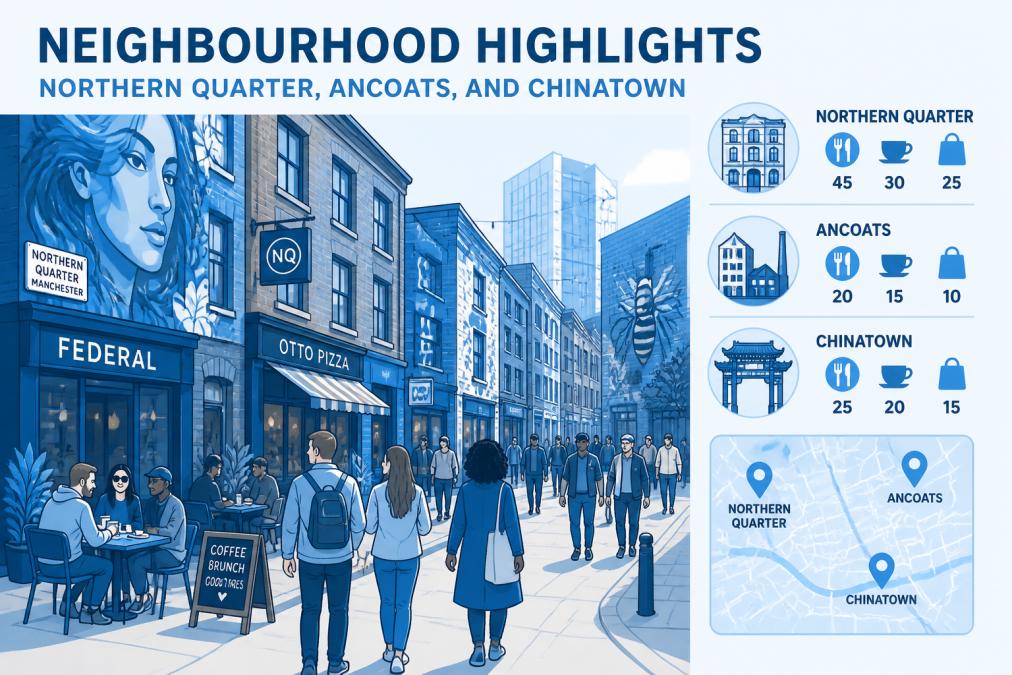
Ancoats tells a story of industrial transformation. This former manufacturing district has undergone dramatic regeneration, with Victorian warehouses now housing restaurants and food venues. Tours here explore how Ancoats has become a destination for ambitious chefs seeking affordable space and creative freedom, revealing the physical remnants of industrial Manchester alongside contemporary food culture.
Chinatown is Manchester's oldest established ethnic food district, with roots extending back over a century. Tours here focus on culinary heritage and the stories of families who built Manchester's Chinese food culture. You'll taste dishes prepared using traditional techniques, offering cultural immersion alongside food tasting.
Each neighbourhood reflects different aspects of Manchester's food identity. Most group food tours focus on one neighbourhood, allowing deep exploration rather than superficial coverage.
The distinction between tourist-focused venues and authentic local experiences matters significantly on food tours. Hidden gems are typically independent businesses that locals frequent regularly, surviving through word-of-mouth rather than tour bookings.
Authentic experiences involve direct interaction with food producers or chefs who explain their work with genuine passion. You might meet a baker making the same sourdough for 20 years or a chef experimenting with forgotten British ingredients. These conversations transform a meal into a story.
Quality food tour guides know these places because they spend time in the community. The guide's local knowledge becomes the actual value you're paying for. Discovering places you'd never find through TripAdvisor appeals to both visitors and long-term residents, making food tours valuable for mixed groups.
Authenticity also means accepting that not every stop will be Instagram-perfect. Authentic venues prioritise good food and genuine hospitality over aesthetic presentation. The best guides balance discovery with comfort, including genuine hidden spots while ensuring participants feel comfortable.
Successful group food tour planning requires advance coordination across group size, dietary needs, budget, date availability, and logistics.
Group size affects experience significantly. Tours work well for 8-20 people, maintaining group cohesion and guide interaction. Smaller groups (4-8) create intimate experiences. Larger groups (20-50) should split into multiple simultaneous tours to maintain the intimate dynamic.
Booking lead time varies by season. Individual spots on scheduled public tours typically require 1-2 weeks' notice. Private group bookings need 3-4 weeks' notice for venue coordination. Summer months book faster than winter.
Budget depends on tour type and group size. Pricing for Flavours of Manchester tours depends on quantity, dates, and delivery. Private group bookings may offer per-person rates decreasing with larger groups.
Dietary coordination requires communicating requirements during booking. Provide specific allergies, religious restrictions, and preferences (vegetarian, vegan, gluten-free) so guides can coordinate with venues.
Weather planning affects comfort but rarely cancels tours. Check forecasts a few days before and dress appropriately. Venues provide shelter at stops.
Accessibility discussion should happen during booking if mobility or other needs require accommodation, allowing organisers to select appropriate routes and venues.
Timing logistics matter for group coordination. Agree on meeting location and arrival time in advance. Tours start punctually, so arrive 10 minutes early. For corporate groups, coordinate transport if needed.
Gift vouchers are available for group bookings, making food tours popular choices for team celebrations or client gifts.
Flavours of Manchester handles group bookings through their website. Contact them directly to discuss specific requirements or customisation options for corporate events.
Group food tours transform how you experience Manchester. Whether you're a corporate team seeking meaningful connection, a group of friends celebrating together, or a visitor determined to experience the city authentically, food tours deliver genuine local knowledge, authentic culinary experiences, and memorable shared moments.
Flavours of Manchester delivers this balance through carefully curated routes, knowledgeable local guides, and genuine engagement with Manchester's food community. Their specialised tours, Taste of Two Cities, Cottonopolis, and Inspiration, Innovation & Intellect, each offer distinct perspectives on Manchester's heritage and contemporary food culture. Get started with Flavours of Manchester and discover the heart of the city one bite at a time.
Yes, group food tours in Manchester accommodate parties from small groups up to 20+ people. Larger groups may be split into smaller walking parties to ensure everyone gets personal attention from guides and can enjoy the culinary experience without feeling rushed. When booking, inform the tour operator of your group size so they can structure the experience appropriately and ensure all participants stay engaged throughout the walking tour.
Most group food tours in Manchester duration typically ranges from 2.5 to 4 hours, depending on the route and number of food stops included. The walking pace is leisurely, allowing groups to explore neighbourhoods like the Northern Quarter or Ancoats whilst enjoying multiple tastings and drinks. Exact Manchester food tour duration varies by operator and itinerary, so confirm timings when booking to fit your schedule.
Most Manchester food tour providers can accommodate dietary requirements including vegan, vegetarian, gluten-free, and allergy-related needs. When booking your group food tour, inform the operator about any dietary restrictions well in advance so they can arrange suitable alternatives at each venue. This flexibility ensures all group members enjoy the culinary experience without compromise, making it an inclusive activity for diverse groups.
A guided food tour provides insider knowledge from local experts who share the history, culture, and stories behind each dish and neighbourhood. You avoid the logistical hassle of coordinating multiple restaurant bookings, timing, and reservations for a group. Guides introduce you to hidden gems and authentic local producers you might not discover independently, creating a curated culinary journey that blends education, storytelling, and exceptional flavours in a single experience.
Yes, private group food tours are ideal for corporate team building activities in Manchester. Operators offer bespoke itineraries tailored to your team's preferences, group size, and budget, with options to include specific neighbourhoods or cuisine types. A guided food and drink experience strengthens team bonds through shared discovery and conversation in a relaxed setting, making it an engaging alternative to traditional team-building activities.
Popular food tour neighbourhoods include the Northern Quarter, known for independent eateries and street food culture; Ancoats, with its mix of heritage venues and contemporary restaurants; and Chinatown, offering authentic Asian cuisine and culinary heritage. Tours often explore the city's Cottonopolis history, connecting food stops to Manchester's industrial past and cultural transformation, creating a gastronomic tour that doubles as city exploration.
This article was written using GrandRanker


