

.svg.svg)


Contact us

Last Updated: September 21, 2026
Authentic Manchester food is defined by independent, locally owned venues that cook with regional and seasonal ingredients, often in historic buildings tied to the city's industrial past. The most authentic Manchester food experiences go beyond eating: they connect a dish to the people, streets and stories behind it.
This guide from Flavours of Manchester covers traditional dishes, market halls, hidden gems, food tours, immersive dining and cookery schools. It is built for visitors, long-term residents and corporate groups who want more than a chain restaurant booking.
The city's culinary heritage runs from Victorian market halls to modern chef-led kitchens, and the best experiences sit at the intersection of the two. Below, we break down what to eat, where locals actually go, and how to plan a full day around it.
The dishes most associated with the city come from its working-class history and its position as a trading hub. A traditional Manchester food dish is one rooted in local working history, regional produce or immigrant communities that settled here, rather than a national chain menu.
Start with these:
Many independent eateries now reinterpret these recipes with seasonal ingredients, which is where the food scene gets interesting. Look for menus that name the farm or producer; that transparency is usually a sign the kitchen cares about sourcing.
Market halls are the fastest way to sample the city's street food under one roof. They let you try several independent kitchens in a single visit, which suits groups where everyone wants something different. The city has three that matter most for authenticity, and each has a different character.
Mackie Mayor (Smithfield Market, Northern Quarter) occupies a restored 1858 market building with a glass roof and a rotating line-up of independent kitchens. It is the most polished of the three, which makes it the easiest first stop for visitors. Go for the wood-fired pizza and the rotisserie chicken; the room is loud and communal, so it works well for groups of four to eight.
Altrincham Market sits just outside the city centre and is the original of the modern market-hall revival. Its food hall, Market House, runs a tight roster of kitchens alongside a produce market on Tuesdays and Saturdays. The market's own butchers and greengrocers supply several of the kitchens, which is the clearest example of the farm-to-table principle you will find in a casual setting.
Grub is the city's street-food collective rather than a fixed hall. It runs regular events at venues such as Fairfield Social Club and Exhibition, with a changing line-up of independent traders. Because the roster rotates, it is the best way to catch kitchens that do not yet have a permanent site. Check the current schedule before travelling, as venues and dates change.
A few things worth knowing:
Independent eateries around the Northern Quarter and Ancoats carry the same spirit in a sit-down format. The tell-tale signs of a genuinely local spot: a short menu, a rotating specials board, and staff who can tell you where the produce came from. Look for places that name the farm or producer on the menu, that transparency is usually a sign the kitchen cares about sourcing.
The best hidden gem restaurants Manchester has to offer tend to be small, booked by word of mouth, and off the main drag. They rarely advertise, and that is exactly why they stay good.
What to look for:
The trade-off is real. Small venues limit group sizes, so a table for twenty is rarely possible.
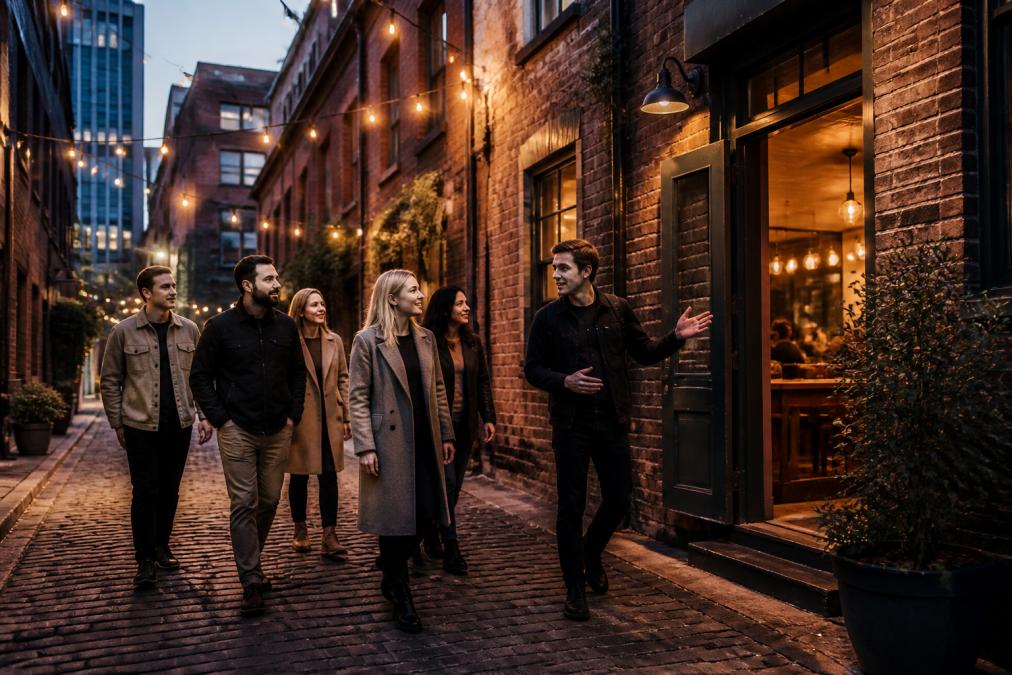
The best food tours in Manchester combine several independent venues with a guide who explains the history behind each stop. That structure solves the hardest part of eating well in a new city: choosing where to go and in what order.
VisitBritain's official guidance on food and drink experiences
Immersive dining swaps a standard menu for a set narrative, often with theatre, storytelling or a fixed theme. The food is only part of the evening; the format is the draw. Chef-led tasting menus sit at the other end of the scale: multi-course set menus where the kitchen decides what you eat, usually built around seasonal ingredients.
Experience type | Format | Best for |
|---|---|---|
Themed tasting menu | Six courses, changes every six weeks | Repeat visitors wanting variety |
Chef-led fine dining | Seasonal tasting menu, set seating | Special occasions |
Immersive dining | Themed, interactive, ticketed | Groups wanting entertainment |
Social sharing plates | Small plates, a la carte | Casual evenings with friends |
Cookery schools let you take the experience home. A half-day class typically covers one regional dish, from pastry to a full main, and most supply all ingredients and equipment. It suits anyone who wants to understand a cuisine rather than just eat it.
Planning comes down to matching the format to the group. A solo traveller or couple can move between venues freely; a party of twenty needs a booked route with fixed stops.
Use this order:
Look for tours that focus on independent venues and local stories rather than chains. Flavours of Manchester offers guided food and drink walking tours that explore the city's history and culinary culture through its best eateries and bars. Check reviews and ask whether the guide is a local expert. Booking ahead is wise, especially for weekend tours.
Traditional Manchester food dishes include Eccles cakes, rag pudding, black peas, and Manchester tart. These historic recipes reflect the city's culinary heritage and are still served in some independent eateries and market halls. Trying them gives you a genuine taste of local flavours and connects you to the city's past.
Yes, the city centre has a range of immersive dining experiences, from themed cocktail bars to chef-led tasting menus. You can also join guided food tours that combine storytelling with tastings at several venues. These experiences often need advance booking, so plan ahead to secure your spot.
Authenticity comes from local sourcing, traditional recipes, and a connection to the community. Venues that use seasonal ingredients from nearby farms and have been part of the neighbourhood for years tend to offer a more genuine experience. Guided tours led by locals can also provide context and stories that deepen your understanding.
Organising a group around food is harder than it looks. Venues fill up, dietary needs clash, and someone always ends up herding everyone between stops. Flavours of Manchester handles that side of it, with guided food and drink walking tours built around local stories, private and corporate options, and routes such as Taste of Two Cities and Cottonopolis that cover both the city and Salford. Get started with Flavours of Manchester and see the city one bite at a time.


