

.svg.svg)


Contact us

Last Updated: September 13, 2026
A restaurant voucher buys one meal in one place. A manchester food tour gift vouchers purchase buys a guided walk through several kitchens, bars and stories in a single afternoon. That difference matters more than most gift buyers realise.
At Flavours of Manchester, we run guided food and drink walking tours built around the city's history and its independent food scene. A voucher for that kind of experience works differently from a fixed restaurant credit, and once you understand how, choosing a gift gets much easier.
The case for a tour voucher rests on three things a restaurant voucher cannot offer:
Below, we break down what a voucher actually buys, how redemption works, and how to match the right tour to the right recipient.
A food tour gift voucher is a prepaid credit that the recipient exchanges for a scheduled guided walk, covering tastings at several venues along a set route. It is not a restaurant booking and not a fixed tasting menu at one address.
Most guided food tours include a set number of food tastings, a knowledgeable guide, and a walking route through specific neighbourhoods. On our tours, that means visits to local vendors and eateries, with commentary on Manchester and Salford's culinary heritage and hidden histories along the way.
Vouchers rarely include extra drinks beyond the set tastings, additional dishes ordered on the day, or transport to the meeting point. Some tours exclude alcohol from the standard voucher price. Check the specific terms before you buy, because inclusions vary between operators.
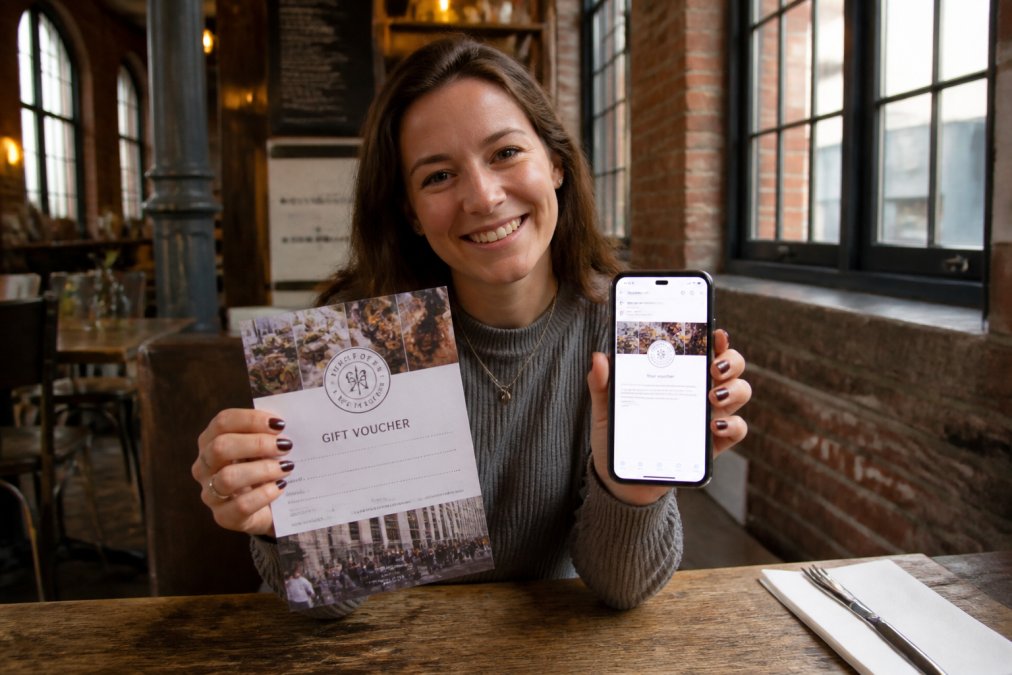
Redemption is straightforward: the recipient receives a voucher code, visits the operator's booking page, selects a tour date and applies the code at checkout. Most operators issue an e-voucher by email within minutes of purchase.
Digital delivery has changed how gift vouchers work. Instead of waiting for a card in the post, buyers can order an e-voucher and forward it the same day, which suits last-minute gifts. The recipient then books online, choosing from available tour dates.
Validity periods vary by operator, and this is where buyers get caught out. Some vouchers stay valid for twelve months, others for six (gov.uk). Cancellation terms also differ: many tours allow free cancellation up to a set window before the booking, while others charge a fee for late changes.
Guided food tours duration typically runs between two and four hours, depending on the number of stops and the route (visitbritain.org). A shorter tour suits an afternoon slot; a longer one works better as a main event.
Most walking routes cover a manageable distance on foot, with breaks at each venue. If you are booking for someone with limited mobility, ask about the pace and the walking distance before you commit. Accessibility information is not always listed on booking pages, so a quick enquiry saves disappointment.
Seasonal variations matter too. Menus shift with what local vendors have available, and some routes run less frequently in winter. A voucher with a long validity period gives the recipient the flexibility to pick a season that suits them.
Standard tours usually run with a modest group size, which keeps the experience personal and stops the guide from being stretched. If a smaller, more private feel matters to your recipient, ask about the typical tour capacity before booking. A group of eight feels very different from a group of twenty, even on the same route.
Accessibility information is rarely listed on booking pages, and this is where gift buyers most often get caught out. Before you commit, ask the operator four questions:
A common pattern is that city-centre routes are mostly flat and step-free, while routes that cross into older quarters include cobbles, narrow doorways or a flight of stairs. None of that is a problem if you know in advance. It is a problem if you find out on the day.
Dietary accommodations are handled by advance notice. Tell the operator about allergies, restrictions or dislikes when you book, and the venues can adjust the tasting menu. Most operators can accommodate dietary requirements with enough warning, but the window matters: a few days is usually fine, a few hours often is not (food.gov.uk).
Severe allergies are worth a direct conversation rather than a note in a booking form. Ask how the operator communicates requirements to each venue, and whether the guide carries a written list on the day.
For corporate team days, private group bookings are usually the better route. A private tour lets the organiser set the date, the route and the pace, which matters when you are coordinating twenty people. Private bookings also make dietary coordination simpler, because the operator is planning for one group rather than merging your requirements with a public tour.
| Booking Type | Typical Group Size | Best For | How to Arrange |
|---|---|---|---|
| Standard scheduled tour | Small group, fixed capacity | Individuals and couples | Book online, pick a date |
| Private group tour | Your group only | Team days, celebrations | Enquire with the operator |
| Corporate booking | Larger groups on request | Client entertainment | Contact for a tailored quote |
Pricing for group and private bookings depends on group size, chosen route and date, so check the operator's website for current rates or request a quote. When you enquire, mention the group size, any dietary requirements and whether anyone in the party needs step-free access. That single message saves a round of back-and-forth and gets you an accurate quote first time.
The best unique gift ideas for foodies match the tour style to the person, not the other way around. Most operators sell one format and describe it as the obvious choice. In reality, guided food tours split into recognisable styles, and the style matters more than the route when you are buying for someone else.
A walking tour moves between venues on foot, usually covering a compact stretch of the city centre with tastings at each stop. It suits recipients who enjoy being outdoors, are comfortable on their feet for a couple of hours, and like the rhythm of walking between courses.
Some tours are built around the food itself: what is on the plate, where the ingredients come from, how the dish is made. Others use the food as a vehicle for local history, with the guide narrating the city's past between tastings. A history-focused tour works well for a recipient who has lived here for years and thinks they know the place. A food-focused tour works for someone who wants to taste the independent scene without a history lecture attached.
Many tours blend the two, so ask the operator where the balance sits before you buy.
Tour content shifts with the calendar. Summer routes tend to include more outdoor market stops and lighter tastings, while winter routes lean towards indoor venues and warmer dishes. Some routes run less frequently in the colder months, and a few pause altogether. A voucher with a long validity period gives the recipient the flexibility to pick the season that suits them, but it is worth telling them which months the route they want actually runs.
A walking tour also solves a common gift problem. It is an experience rather than an object, and it gives the recipient a story to tell afterwards. For a city with as much food and drink heritage as this one, a guided walk turns an ordinary afternoon into something worth remembering.
The hardest part of buying a food tour gift voucher is not the purchase, it is the matching. Get the tour style, the duration and the group size right, and the gift lands. Get them wrong, and a twelve-month validity period becomes twelve months of good intentions.
Flavours of Manchester runs guided food and drink walking tours built around the city's history, its independent eateries and its stories. Our tours include Taste of Two Cities, Cottonopolis, and Inspiration, Innovation & Intellect, and we offer corporate and private tour options for groups that want something tailored. Vouchers make a flexible gift, and our team can help you pick the right route for the person you have in mind.
Get started with Flavours of Manchester and give someone an afternoon of local flavours, hidden histories and a proper guided walk through the city.
You buy a voucher for a set value or a specific tour, and the recipient redeems it by booking a date through the operator's website. Most vouchers arrive as a digital e-voucher by email within minutes, though printed versions can often be arranged. The recipient picks an available tour date, enters the voucher code at checkout, and receives a booking confirmation with meeting point details. Check the validity period before buying, as most vouchers run for a set number of months from purchase.
Most vouchers are valid for a window of months rather than a fixed date, so the recipient chooses a tour date that suits them. That flexibility matters for food and drink experience gifts, because the best culinary experience depends on the season and the recipient's availability. Some tours run only on certain days, and seasonal menu changes can affect what's served, so it's worth checking the tour calendar before you gift it.
Yes. Vouchers can be bought for multiple people, which suits corporate away days, birthdays and team-building events. Private group bookings let you set the pace and focus, and operators can usually accommodate dietary accommodations across the group if you flag them at booking. For larger groups, confirm capacity and available dates early, since popular weekend slots fill quickly. Group pricing depends on numbers, dates and which tour you choose, so check the operator's website for a quote.
They work well for locals who want to see their own city differently. A guided walk through neighbourhoods like the Northern Quarter or Ancoats reveals hidden histories, independent vendors and culinary heritage that residents often walk past without noticing. Long-term locals frequently say the stories behind familiar streets are the surprise. If you're unsure which tour suits, a voucher with a choice of routes is the safer pick for unique gift ideas for foodies who already know the city well.


