

.svg.svg)


Contact us

Last Updated: August 2, 2026
A food tour combines local storytelling, tasting stops at carefully selected venues, and a knowledgeable guide who transforms the experience from transactional to immersive. Tours vary dramatically in scope, price, and delivery: some cram seven tastings into two hours, while others prioritize depth at local producers and heritage sites.
Most first-time participants don't realize how much enjoyment depends on matching the tour's style to their preferences. A corporate team needs something entirely different from a couple celebrating an anniversary, yet both might book the same generic tour and feel let down.
The first decision is whether to join an existing public tour or arrange a private experience. This choice affects pricing, group dynamics, flexibility, and overall tone.
Public food tours operate on fixed schedules with set itineraries and regular departure times. Tours with fewer than eight participants feel intimate; tours with 15-16 people fragment, the guide struggles to keep everyone together, and portions shrink. Look for operators capping groups at 12 people or fewer.
Availability varies seasonally. Manchester food tours have more frequent departures May through September and on weekends. Most operators require pre-booking at least 48 hours in advance. Check the booking calendar directly on the operator's website for the clearest picture.
Private food tours are booked exclusively for your group, meaning you control departure time and can customize the itinerary. You pay for the entire guide's time rather than per-person pricing, which makes sense for groups of 8 or more.
Private tours offer genuine flexibility: adjust walking pace for mobility concerns, spend extra time at particular markets, skip tasting stops due to dietary restrictions, or focus on specific cuisines or historical eras. They eliminate awkwardness for solo travellers and logistics nightmares for large groups. For corporate events, private tours allow you to control messaging and weave in company values.
Booking directly through an operator's website is almost always best. Direct booking offers clearest pricing (no hidden platform fees), most detailed itinerary information, and direct communication if you need modifications. When you book directly, the operator retains more revenue to invest in guide training and experience quality.
Flavours of Manchester makes direct booking straightforward through their website, where you can see real-time availability, read detailed descriptions of each tour type, and access pricing without intermediaries. You can easily contact the team with questions about dietary requirements, accessibility, or customization before committing.
Platforms like Viator, Klook, and GetYourGuide aggregate food tours from multiple operators. These platforms typically take 15-30% commission, meaning tour prices are often higher than direct booking.
When booking through third-party platforms, you add distance between yourself and the operator. If you need modifications or have questions, you work through the platform's customer service rather than directly with the tour company. Availability calendars on third-party sites are sometimes out of sync with actual availability.
Not all food tours deliver genuine value, and price alone doesn't predict quality.
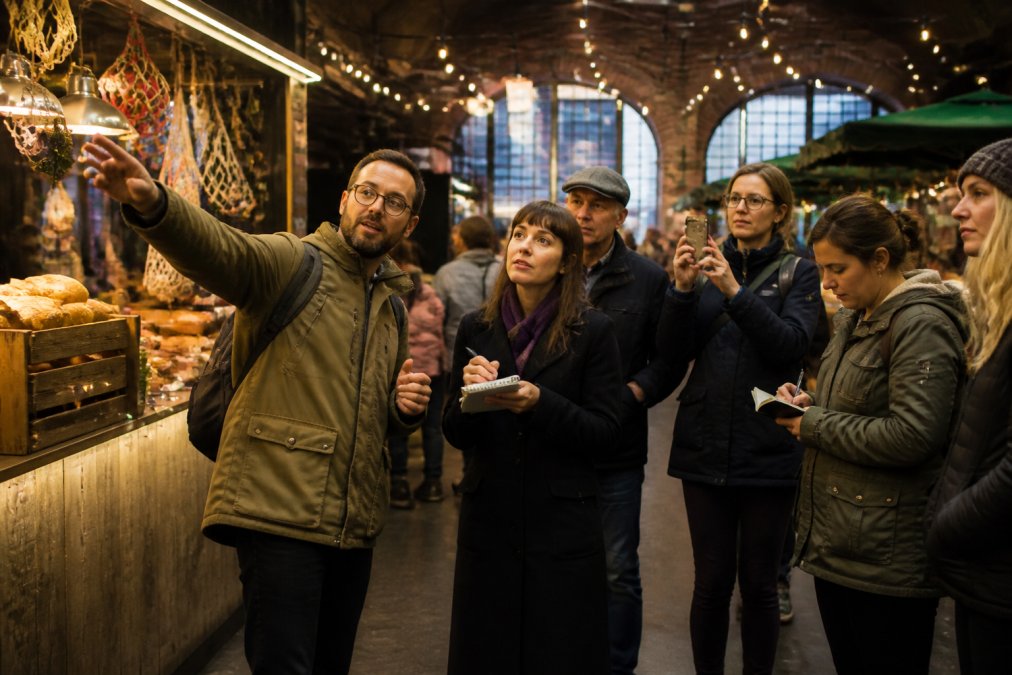
The guide makes or breaks a food tour. A great guide transforms a walking route into storytelling, connecting food to Manchester's history and creating genuine connection. A mediocre guide simply walks you between venues and reads descriptions.
Look for evidence of local expertise rather than just hospitality training. Has the guide lived in Manchester for years? Do they have professional experience in hospitality, food writing, or culinary education? Check whether the operator provides guide bios on their website. If they don't, that's a yellow flag. You can also ask directly when booking: "Can you tell me about my guide's background?"
Read beyond star ratings and look at specific language. Do reviews mention feeling rushed? Do they praise the guide's knowledge? Do they comment on portion sizes or group dynamics? Specific feedback matters more than generic praise.
Pay attention to reviews mentioning aspects relevant to your priorities. If concerned about pace, look for comments about whether the tour felt rushed. If you care about dietary accommodation, search reviews from people with similar restrictions. Reviewers mentioning specific restaurants, dishes, or guide names are more credible than those speaking only in generalities.
The itinerary reveals what the operator prioritizes. Does it focus on established restaurants or independent producers and market stalls? Does it tell Manchester's food story or simply offer a series of tastings? Does it offer vegetarian, vegan, or allergen-free options?
Check whether the itinerary is fixed or flexible. For private tours, assess how much customization the operator genuinely offers. Can they create a tour focused on specific cuisines or eras? Can they incorporate your company's values for corporate events? Can they design routes around accessibility requirements? Operators asking specific questions about your needs before quoting a price are taking customization seriously.
Communicate dietary requirements clearly when you book. Instead of "vegetarian," specify: "vegetarian, no seafood, allergic to tree nuts." Instead of "gluten-free," explain: "celiac disease, requires certified gluten-free preparation, cross-contamination is a serious concern."
Most operators ask about dietary requirements during booking. If they don't, flag this and ask directly before completing your booking. Get confirmation in writing. If the operator says they'll "do their best" without committing to specific accommodations, push back. A quality operator commits to meeting dietary needs or explains clearly why they can't.
For private tours, discuss dietary requirements during customization. A good operator will ask whether they need to source specific ingredients, notify venues in advance, or adjust the itinerary to focus on restaurants with strong dietary accommodation track records.
A tasting typically means a small portion, 2-3 bites or a small cup of soup or drink. You're sampling multiple cuisines and venues, not getting full meals. Tasting portions should be meaningful, not insultingly small. If reviews mention "generous samples that gave us a real sense of each cuisine," that's positive.
Menu flexibility varies by venue. Some restaurants will happily prepare vegetarian or allergen-free versions of standard tastings. A quality operator has pre-negotiated with venues to ensure flexibility or selected venues known for dietary accommodation. Ask specifically: "Can all tasting stops accommodate [your requirement], or will some require substitutions?"
Most operators set a minimum group size for private tours at 6-8 people, because the guide's time is the main cost. Some will book smaller groups but charge a higher per-person rate.
Maximum group size is usually 15-20 people, though larger groups create logistical challenges. A guide managing 20 people struggles to maintain conversation and provide personalized attention. If booking a private tour with more than 12 people, ask whether the operator uses multiple guides.
When booking, clarify exactly what group size you're committing to and whether the price is per person or a flat rate.
Corporate food tours have become popular team-building activities, combining physical activity, shared experience, and informal conversation that builds connection. When booking for a corporate event, discuss your team's specific goals with the operator. A good operator will shape the tour's narrative to support those goals.
Corporate tours benefit from advance logistics planning. Confirm whether the operator handles special arrangements, reserved tables, photography, a debrief space, or incorporation of your company's branding. Clarify cancellation policies for corporate events, which sometimes differ from individual bookings.
Check whether the meeting point is centrally located, easy to find, and accessible via public transport. Ask for a specific address with clear directions.
Walking pace is crucial. Ask directly: "What's the walking pace?" and "How much total walking is involved?" A typical two-hour food tour involves 1.5-2 miles of walking with frequent stops. If someone in your group has mobility limitations, flag this during booking so the operator can accommodate a slower pace or suggest alternatives.
Most UK food tour operators offer full refunds if you cancel more than 48-72 hours before the tour. Cancellations within 48 hours typically forfeit the booking fee or incur partial refunds.
When booking, check the specific cancellation deadline and what "refund" means. Does it mean a full refund to your original payment method, or a credit toward a future tour? Get this in writing before booking.
For private tours, cancellation policies are sometimes negotiable, especially for large groups or corporate bookings.
Rescheduling is often easier than cancellation. Most operators allow rescheduling at no additional cost, provided you reschedule within a reasonable timeframe (usually 30-60 days).
Ask: "What happens if it rains?" Some tours operate in light rain; others require heavy rain to cancel. Understand the operator's weather policy before booking, especially if booking months in advance.
Most food tours run 2-3 hours, the sweet spot for covering multiple venues without exhaustion. A two-hour tour typically includes 4-5 tasting stops plus walking and commentary. A three-hour tour stretches to 6-7 stops.
Tour departure times vary by operator and season. Many offer mid-morning (10-11am) and early afternoon (1-2pm) departures. Some offer evening tours (5-6pm), which work well for after-work team events.
Check the operator's full schedule when booking. If you have scheduling constraints, confirm availability for your preferred time before booking.
Food tour availability fluctuates seasonally. Summer months see daily or multiple-daily departures for public tours. Winter months might offer only weekend tours or less frequent departures.
Advance booking requirements vary. Some operators accept bookings up to 12 months ahead; others take bookings only 4-6 weeks in advance. If planning a special occasion tour, book as far ahead as possible to secure your preferred date and time.
Food tour gift vouchers are popular for birthdays, anniversaries, and celebrations. Most operators offer vouchers valid for 6-12 months, allowing the recipient to choose their preferred date.
When purchasing a gift voucher, confirm the expiration date, whether it's transferable, and what happens if it expires unused. Get voucher terms in writing.
For special occasions, consider whether the recipient might prefer a private tour over a public one. A private tour allows customization, though it costs more.
| Tour Type | Best For | Duration | Group Size | Customisation |
|---|---|---|---|---|
| Public tour | Independent travellers, couples, spontaneous bookings | 2-3 hours | 8-16 people | None, fixed itinerary |
| Private tour | Groups, corporate events, special occasions | 2-4 hours (flexible) | 6-20+ people | Full, customisable itinerary and timing |
| Gift voucher | Celebrations, special occasions | Recipient's choice | Recipient's choice | Depends on voucher terms |
Booking a food tour should feel straightforward once you understand your options and priorities. Start with clarity about what you want: an educational culinary adventure, a social experience, or a corporate team event. Then match that to the right operator and tour type. Public tours offer simplicity and affordability; private tours deliver customization and control. Direct booking ensures better pricing and communication than third-party platforms. Vetting guides, reading genuine reviews, and confirming dietary accommodation prevents disappointment. Understanding cancellation policies and scheduling logistics removes stress from the process.
Flavours of Manchester specializes in curated experiences, offering guided walking tours through Manchester and Salford that blend storytelling about the city's heritage with genuine culinary discovery at carefully selected venues. Their tours accommodate dietary requirements, offer both public and private options, and feature guides with deep local expertise. When you're ready to book a food tour that transforms how you experience Manchester, their team can help you choose the tour matching your specific needs.
The best approach depends on your preferences. You can book directly with tour operators' websites for the most control over itinerary customization, or use third-party booking platforms to compare multiple food tours at once. Check the operator's booking calendar for availability, read recent customer reviews, and confirm dietary requirements during the booking process. Pre-booking is essential, especially for public tours during peak seasons.
Yes, most UK food tour operators offer private group booking options for corporate teams. Minimum group sizes typically range from 8-12 people, though some operators accept smaller groups. Contact operators directly to discuss your group size, budget, and specific corporate team-building needs. Many provide customizable itineraries and can arrange separate food and drink stops tailored to your group's preferences and dietary requirements.
Provide detailed dietary information during the booking process, either through an online form or by contacting the operator directly. Specify allergies, vegetarian or vegan preferences, religious dietary restrictions, and any other requirements. Most quality operators confirm dietary accommodations before the tour begins and inform tasting stops in advance. This ensures the culinary guide can arrange appropriate alternatives at each food and drink location on your itinerary.
Most UK food tour operators allow free cancellation up to 7-14 days before your tour date, with refunds issued within 5-10 business days. Cancellations made closer to the tour date may incur a fee or forfeit payment entirely. Many operators offer flexible rescheduling if weather or unexpected circumstances arise. Always check the specific cancellation policy on the operator's website before booking, as terms vary between providers.
This article was written using GrandRanker


