

.svg.svg)


Contact us

Last Updated: September 7, 2026
Food tours in Manchester typically run between 2 and 4 hours, with most operators settling on a 3-hour sweet spot (visitmanchester.com). This guide breaks down standard durations, what happens at each stage, and how to choose the right length.
Most Manchester food tours fall into three clear duration bands. The 2-hour option suits visitors with a tight itinerary who want a focused introduction to one area, such as a single market hall or a compact neighbourhood stretch. These shorter tours typically include three to four tasting stops and cover limited ground.
The 3-hour tour is the industry standard for good reason. It allows enough time for five to seven stops across two connected neighbourhoods, with a comfortable walking pace and time to hear the stories behind each venue. This duration suits most first-time visitors and locals exploring their city anew.
The 4-hour tours are the most immersive, often blending a market visit with a sit-down element or a drink pairing. They cover more ground and suit food enthusiasts who want a comprehensive culinary experience. For corporate groups or celebrations, the longer format provides a more relaxed, social atmosphere.
Tour Length | Typical Stops | Best For | Walking Demand |
|---|---|---|---|
2 hours | 3-4 tastings | Tight schedules, single area focus | Low to moderate |
3 hours | 5-7 tastings | Most visitors, balanced pace | Moderate |
4 hours | 7-9 tastings, possible sit-down | Food enthusiasts, group events | Higher, with breaks |
A typical food tour in Manchester follows a predictable rhythm: an opening meet-and-greet, a middle exploration phase, and a concluding stop that ties the experience together.
The first 30 to 45 minutes cover orientation: your guide confirms the meeting point, introduces the group, outlines the route, and settles practical matters like dietary restrictions, restroom locations, and the tasting lineup.
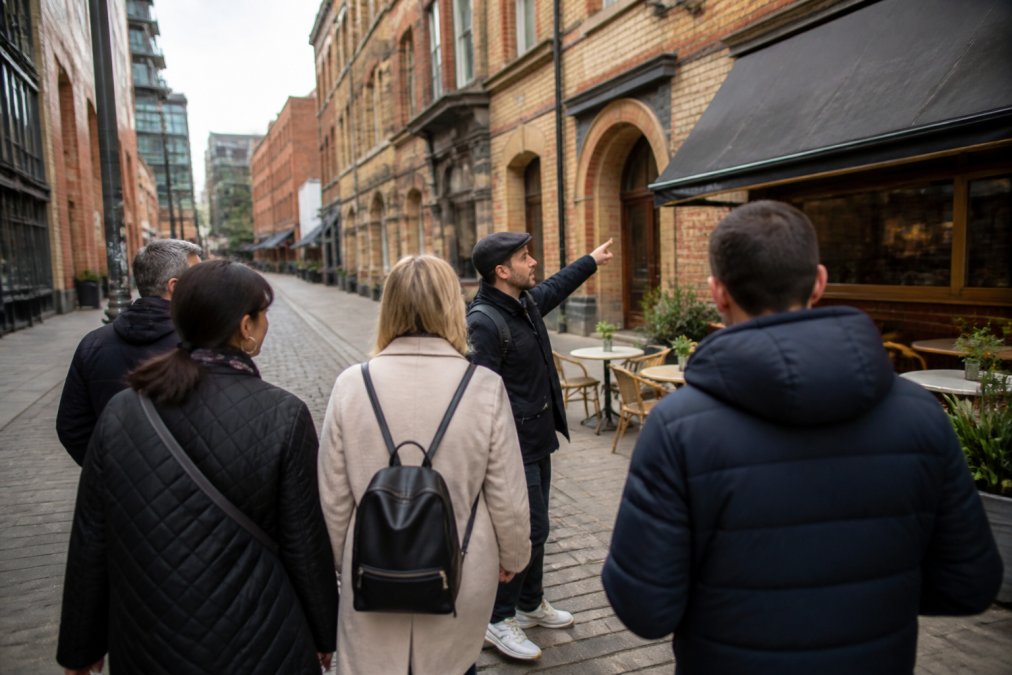
The middle portion is where the bulk of eating and walking happens. Guides alternate standing tastings with short walks and weave in city history, connecting the food scene to Manchester's industrial past and modern revival.
Your first hour sets the tone. After meeting your guide, you'll make your first two or three stops within a compact radius, introducing the tour's theme, a market's fresh produce, a bakery's heritage recipes, or a bar's local brews.
This opening phase is also when the guide establishes group dynamics, learning names, checking dietary needs, and adjusting the pace.
The second hour marks deeper neighbourhood exploration, often moving between distinct areas like the Northern Quarter's independent eateries and the city centre's historic pubs. This is where you cover the most distance.
Walking pace is relaxed, with stops every 15 to 20 minutes. The guide shares stories about culinary heritage and points out hidden gems.
The real distinction between a self-guided food walk and a guided tour is the trade-off between flexibility and access.
A self-guided route costs nothing beyond the food you buy, and you set the pace. The trade-off is losing the guide's vendor relationships: on a busy Saturday, a guided group bypasses a queue at a popular bakery via pre-arranged pickup, while you would wait 15 to 20 minutes. You also lose the narrative layer, without a guide, you might walk past a 19th-century warehouse housing an award-winning street-food vendor and never know the connection.
Guided tours in Manchester offer a premium experience that covers three things you cannot easily replicate on your own:
A middle path exists: several operators offer digital self-guided routes via your phone, with audio commentary and a map of recommended stops. You get the narrative layer without the group dynamic or fixed schedule, but lose the live guide's adaptability if a vendor is closed or a market is busy.
Your Priority | Best Choice | Why |
|---|---|---|
Learning about Manchester's history | Guided tour | The narrative thread is the main value |
Maximum food quantity per hour | Guided tour | Pre-arranged tastings eliminate waiting |
Flexibility and spontaneity | Self-guided walk | No fixed schedule, linger where you like |
Budget-conscious exploration | Self-guided walk | No tour fee, pay only for what you eat |
Solo travel, want to meet people | Guided tour | Group dynamic is part of the experience |
Already know the city well | Self-guided walk | You have your own context and favourites |
A self-guided walk also carries the mental load of planning: researching stops, checking opening hours, and making snap decisions about portion sizes. A guided tour removes that burden, you simply show up and eat.
Tour length affects more than how much you eat, it determines how the experience fits your itinerary and whether you need to arrange meals around it. A 2-hour morning tour leaves your afternoon free; a 4-hour afternoon tour effectively replaces lunch and early dinner. Booking lead time varies by duration: popular weekend slots for longer tours fill quickly, so reserve a week or more ahead; shorter tours often have same-day availability.
Choosing the right tour starts with clarifying your mobility, the season, and your budget tier.
Manchester's food tour routes vary in physical demand. The Northern Quarter has cobbled streets and gentle inclines; city centre routes are mostly flat but cross busy junctions; Castlefield includes narrow, uneven canal-side paths.
If you have mobility concerns, ask the operator three questions before booking:
For elderly participants or those who tire easily, a private tour is often better. Private bookings allow a slower pace, additional seated breaks, and skipping stops with stairs.
Manchester's food tours shift with the seasons, and knowing this helps you choose the right time to book.
Spring (March to May): Tours lean toward fresh produce as markets fill with early-season vegetables and local cheeses. The city's many food festivals begin in late spring, and some operators add special festival-themed routes.
Summer (June to August): This is peak season, with the busiest schedules and highest prices. Expect lighter fare, street food, cold drinks, and outdoor stalls. Evening tours become popular as daylight extends, with some operators running sunset-focused routes. Book at least a week ahead for weekend slots.
Autumn (September to November): Many food writers consider this the best season. Game season begins, pubs stock autumn ales, and the weather is still manageable. The Manchester Food and Drink Festival typically runs in early October, with several operators offering special routes.
Winter (December to February): Tours shift decisively indoors. Expect hearty dishes, mulled drinks, and a focus on cosy pubs and warm cafés. The Christmas markets create a busier, more festive experience, but with longer queues even for guided groups. Some operators pause regular routes during peak market days, so check availability early.
Manchester's food tour market splits into three clear tiers, and knowing which tier fits your budget prevents disappointment.
Budget tier (£25-£40): Typically 2-hour tours focused on a single market or neighbourhood, with three to four street-food-style tastings and a guide covering the basics.
Mid-tier (£40-£60): The 3-hour standard tours fall here, with five to seven tastings, a mix of standing and seated stops, and a guide with deeper historical knowledge. This tier offers the best value per tasting.
Premium tier (£60-£90+): These are 4-hour experiences that include a substantial sit-down meal, drink pairings, or a private group booking. Some include a chef's demonstration or a visit to a producer's kitchen. These suit food enthusiasts, celebrations, or corporate entertaining.
Where your tour finishes often determines the best next stop.
If your tour ends in the Northern Quarter, head to Mackie Mayor, a converted 19th-century market hall housing multiple independent food stalls, for a coffee or dessert. The nearby Smithfield Market Tavern offers a solid selection of local ales.
Tours ending near Piccadilly Gardens put you close to the Arndale Market, where you can pick up regional specialities to take home. The market's cheese and baked goods stalls are particularly good for gifts.
For tours finishing in Castlefield, the canal-side pubs offer a relaxed place to digest. The Wharf, a converted warehouse pub, has outdoor seating overlooking the water and a menu of hearty British classics.
A common pattern is to book a morning tour, spend the afternoon at a museum or gallery, then return to one of the tour's stops for an evening meal.
Planning a food tour in Manchester comes down to matching duration to your schedule and interests. Seasonal variations matter: summer tours feature lighter fare and outdoor markets, while winter routes lean toward hearty dishes and cosy pubs. Confirm accessibility in advance if you have mobility concerns, as some routes include cobbled streets and stairs.
For a guided experience that combines Manchester and Salford's history with its best eateries and bars, Flavours of Manchester offers tours designed for individuals, groups, and corporate clients. Discover the heart of the city one bite at a time.
Typically, tours focused on the Northern Quarter run for about 3 hours, similar to many city centre options. The duration is less about the specific neighbourhood and more about the number of stops and the distance between them. A tour concentrating on a compact area might be shorter, while one that crosses between districts, like a Salford and Manchester combo, can extend towards 4 hours. Check the specific itinerary to see how much ground it covers.
Expect to be on your feet for most of the 3 hours, covering roughly 2 to 3 kilometres at a relaxed, conversational pace. The walking is broken up by the stops, which usually last 20 to 30 minutes each. You will not be hiking, but comfortable shoes are essential. The pace is generally gentle, allowing for plenty of time to hear the history and stories behind each location without feeling rushed.
Yes, many operators offer private bookings that can be tailored to a half-day format, often running for around 4 hours. This extended time allows for a more relaxed experience, perhaps including a sit-down meal or a longer visit to a specific market. For corporate groups or celebrations, a half-day tour provides a more substantial team-building or social activity compared to the standard 2 to 3-hour public tours.
The average duration for a guided food tour in Manchester is between 2.5 and 3 hours. This timeframe is popular because it is long enough to visit 4 to 6 different independent food spots and cover a couple of key neighbourhoods, yet short enough to fit easily into a day of sightseeing. Most tours start in the late morning or early afternoon to align with lunch service.
Planning your tour is the first step. Get started with Flavours of Manchester and explore the city's vibrant culture through its finest local flavours, with expert guides and curated routes that reveal the best food tours in Manchester.


