

.svg.svg)


Contact us

Last Updated: September 11, 2026
The open-top bus and the general city-centre walk cover the same ground in the same order, and that is exactly the problem. Alternatives to traditional Manchester city tours trade breadth for depth: a single theme, a smaller group, and a guide who actually knows the subject. This guide from Flavours of Manchester maps the options by interest, so you can pick the format that fits how you like to travel.
A music history walk is the strongest single alternative for anyone who wants the city explained through its bands rather than its buildings. Manchester's musical output is unusually dense for a city of its size, and a themed route lets a guide connect venues, record shops and rehearsal rooms into one narrative.
The best routes stay compact and walkable, linking former club sites, live venues and the streets where scenes formed. Because many original buildings have been repurposed, a guide's job is to reconstruct what stood there and why it mattered. Ask any operator how many stops the route includes and whether entry to venues is part of the walk.
Immersive food and drink walking tours combine tastings at independent venues with the local history behind them. Rather than a fixed restaurant crawl, a good tour moves between eateries and bars on foot, with the guide explaining the neighbourhood between stops.
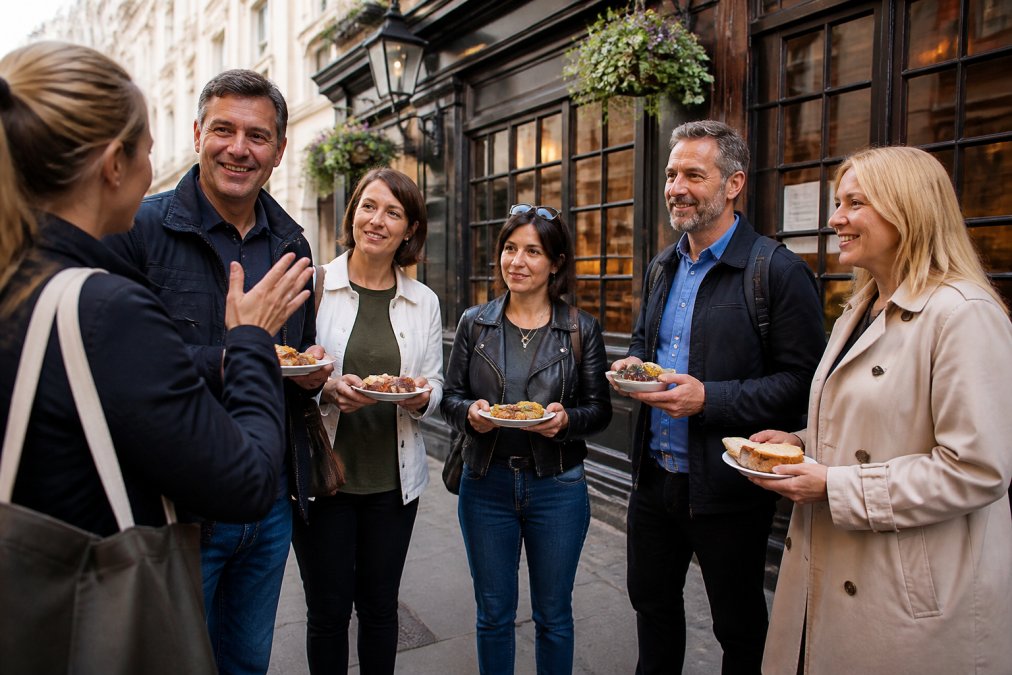
Expect a set number of stops, a mix of savoury and sweet tastings, and a guide who introduces each venue. Group size is the detail most worth checking before booking: smaller groups move faster and hear more. Dietary requirements are usually workable with advance notice, but confirm this at the point of booking rather than on the day.
Street art and heritage walks suit anyone who wants the city's visual culture rather than its headline landmarks. The Northern Quarter's murals change regularly, so a route that was accurate last year may already be out of date. Local history walks in the same area cover the industrial and social past, and the two themes pair well across a single afternoon.
Visit Manchester's official visitor guide lists current exhibitions and heritage openings, which is worth checking before you fix a date.
Football is Manchester's other great export, and the museum route is the one that works in any weather. The National Football Museum in the city centre holds a large collection of memorabilia and historical artefacts, with interactive penalty shootout and skills challenges and rotating exhibitions on social history. Stadium tours at the two major clubs sell out on match weekends, so book ahead and treat the museum as the flexible option.
Canal-side walking and short river cruises offer a slower view of the city's industrial waterways, and they work well as a half-day rather than a full one. For something further out, regional day trips by rail reach the surrounding countryside, historic towns and heritage sites within an hour or so. These suit visitors who have already covered the centre and want a second day with a different rhythm.
Self-guided and thematic routes are where the real savings sit, and they are the part of the market the big tourism portals barely touch. A themed "anti-tour" picks one narrow subject, radical politics, textile history, post-punk venues, migrant communities, and follows it properly instead of skimming everything. The trade-off is obvious: you lose the guide's storytelling and the instant answers, and you gain total control over pace, cost and timing.
The most reliable way to build one is to anchor it to a single stretch of street and let the theme do the work. Three worked examples, all walkable and all free to follow:
A practical build sequence, refined by most self-guided walkers:
Two mechanisms matter more than the theme itself. First, timing: canal towpaths and mill conversions are best walked mid-morning on a weekday, when foot traffic is light and the light is good for photography; the same route at weekend midday is a different experience. Second, the weather fallback: any route that depends on the water or on outdoor murals needs an indoor substitute, and the sensible approach is to identify one museum or gallery on the route before you set out rather than improvising in the rain.
| Format | Typical Duration | Best For | Booking Needed |
|---|---|---|---|
| Themed walking tour | 90-120 min | Music, heritage, street art | Yes |
| Food and drink walk | 2-3 hours | Culture through eating | Yes |
| Self-guided route | Flexible | Budget travellers, locals | No |
| Canal or river trip | 1-2 hours | Slower pace, families | Often |
| Regional day trip | Half to full day | Second-day exploring | Sometimes |
Look beyond the obvious stops. The Northern Quarter's back streets hide independent galleries and street art, while Castlefield's canal-side paths reveal industrial heritage most visitors miss. Salford Quays offers a different perspective entirely. Guided walking tours often build these lesser-known spots into their routes, so you see the city's quieter corners rather than just the main square.
Yes. Immersive food and drink walking tours combine tastings at independent eateries with stories about the city's history and culture. You walk between venues, try local dishes and drinks, and hear how immigration, industry and innovation shaped what people eat here. These tours suit both visitors and long-term residents who want to discover places they have walked past without noticing.
Traditional sightseeing often means a bus or a large group following a flag. Independent walking tours tend to be smaller, slower and more focused. They might centre on music history, street art, football culture or food. You cover less ground but go deeper, with a local guide who tells stories rather than reciting dates. Group sizes are usually capped so you can ask questions.
A music history walking tour connects specific buildings and streets to the bands and scenes that started there. You stand outside a venue and hear about the gig that launched a career, or walk a route that maps the city's punk, indie and dance heritage. It is a themed experience, not a general overview, so it appeals to people who want one subject explored properly rather than a bit of everything.
Several tours focus on the city's industrial past, its role in the cotton trade and its modern innovation economy. Themed walks cover subjects like engineering, social reform and architecture. These suit visitors with a specific interest and residents who want context for buildings they see daily. Check operator websites for current themes and dates, as offerings change through the year.
Traditional tours show you Manchester from a distance. Flavours of Manchester puts you inside it, walking between the city's best eateries and bars while a guide connects the food to the history behind it. Private and corporate tours are available, dietary requirements can be arranged in advance, and group sizes stay small enough to feel personal. Get started with Flavours of Manchester and see the city one bite at a time.


