

.svg.svg)


Contact us

Last Updated: September 8, 2026
Manchester's skyline tells a story of cotton mills, radical politics, and musical reinvention, but the city's soul is best discovered on foot with someone who knows where to look. The benefits of guided Manchester heritage walks go far beyond ticking off landmarks; they transform a casual stroll into a rich narrative about the people who built this city. A knowledgeable guide changes the entire experience, from hidden courtyards to the practical logistics that make a guided tour effortless.
Exploring alone with a map app leaves you with facts. A guided heritage walk gives you context, and context is where the real story lives. A local expert weaves architectural history, social history, and personal anecdotes into a narrative a guidebook cannot replicate.
Stand before a grand Victorian warehouse: on your own you note its size and age; with a guide you learn who financed it, who laboured inside it, and how its construction changed the surrounding streets forever.
The choice between guided and self-guided city tours comes down to how you want to spend your mental energy. Self-guided tours offer total flexibility over pace and stops, but demand constant navigation and research that can pull you out of the moment.
Guided tours trade that flexibility for depth and ease. You surrender control of the route but gain a local guide who answers questions instantly and adapts the narrative to your group's interests. For first-time visitors, the structured approach usually wins.
Option | Best For | Key Trade-Off |
|---|---|---|
Guided Tour | First-time visitors, history buffs, those wanting context | Fixed route and schedule |
Self-Guided | Repeat visitors, independent explorers, tight budgets | Requires research and navigation effort |
Hybrid (Audio Guide) | Solo travellers wanting flexibility with some context | Less interactive, no live Q&A |
The single greatest advantage of a guided walk is the human element. A skilled guide animates the past with inflection, humour, and personal connection (nps.gov). When a guide points out suffragette meeting halls or pivotal trade union sites, landmarks become stages where real people fought for change.
Good guides tailor their delivery to their audience, a family with children hears different stories than a corporate group, yet both leave with a genuine understanding of Manchester's cultural heritage. This adaptability is impossible to replicate with a map or audio file.
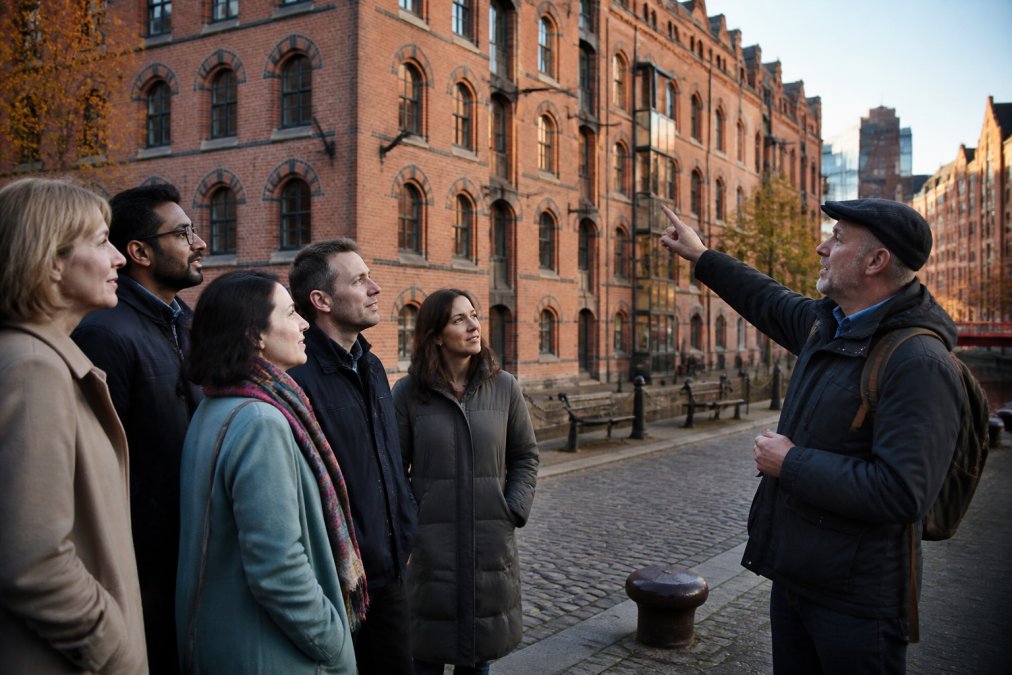
Manchester rewards those who stray from the main shopping streets, but finding its genuine hidden gems requires local knowledge. The benefits of guided Manchester heritage walks include access to tucked-away courtyards, quiet squares, and back alleys that hold centuries of secrets but appear on no standard tourist map.
A guide will point out faded painted advertisements on brick walls, unusual cobblestone patterns, and discreet blue plaques marking sites of global significance, revelations that often surprise even long-term residents.
Most visitors underestimate how much mental energy goes into simply getting to the start of a walking tour. Manchester's heritage sites are spread across the city centre, Castlefield, and Salford, and navigating between them can eat into your day (manchester.gov.uk). A guided tour removes that friction, but the real value is in the pre-tour logistics operators handle quietly behind the scenes.
Consider a typical morning start near Victoria Station or St Peter's Square. An operator will have scouted the exact meeting point, confirmed its accessibility, and timed the start to avoid the commuter rush. They know which Metrolink stops are a two-minute walk versus a fifteen-minute hike, details that sound trivial until you are on the wrong platform with a ticking tour start time.
Many heritage walks begin near Piccadilly Gardens or the Town Hall, areas not known for abundant luggage storage. Operators can point you toward left-luggage facilities at Piccadilly Station or secure lockers at the National Football Museum, and they know which nearby cafés have reliable restrooms and quick service.
For those arriving by train, a guided walk that starts within ten minutes' walk of a major rail station is worth its weight in gold, especially for day-trippers from Leeds, Liverpool, or Sheffield. Operators effectively act as a local concierge, advising on which station exit to use, which bridges are pedestrian-friendly, and where the nearest cash point is located.
Ultimately, the logistical benefit converts a complex urban environment into a simple, manageable experience. You do not need to know which bus goes to Castlefield or where to find a quiet lunch spot; the operator has solved those problems. For visitors with limited time, this alone justifies the cost.
Most heritage walking tours in Manchester run between two and three hours, covering roughly two to three kilometres at a relaxed pace, enough time to explore four to six major landmarks while allowing for questions and spontaneous discoveries (visitmanchester.com).
Shorter one-hour options focus on a single theme like the music scene or a specific district. Longer half-day tours, typically four hours, include extended breaks and sometimes a refreshment stop. A focused two-hour tour often leaves a more lasting impression than a marathon session.
Tour Type | Typical Duration | Distance Covered | Best Suited For |
|---|---|---|---|
Express Overview | 1 - 1.5 hours | 1.5 km | Tight schedules, first orientation |
Standard Heritage Walk | 2 - 3 hours | 2 - 3 km | Most visitors, families, groups |
Thematic Deep Dive | 3 - 4 hours | 3 - 4 km | Enthusiasts, specific interests |
A heritage walking tour in Manchester is a paced, conversational exploration, but knowing what to expect physically is as important as knowing what you will see. Most standard tours cover two to three kilometres over two to three hours, yet the ground is rarely flat: expect cobblestones in Castlefield, uneven pavements around the old textile district, and gentle inclines near the Cathedral. A good operator will warn you about these surfaces and adjust the route where possible.
Pace is the factor most visitors underestimate. The guide sets a steady rhythm: typically ten to fifteen minutes of walking between stops, then five to ten minutes standing for commentary. This stop-start pattern is easier on the knees than continuous walking, but you are on your feet for the entire duration, so consider your stamina honestly before booking.
Accessibility expectations are changing. Some operators offer 'slow-paced' tours for older walkers or those with limited stamina, covering shorter distances with more frequent rest stops. Others accommodate wheelchairs on routes that avoid the steepest cobbles, but always check in advance. The city centre can be loud, so if you are sensitive to sound, ask whether the guide uses a microphone or whether a quieter morning slot is available.
Weather is the other great variable. A professional guide will monitor the forecast and may adjust the order of stops, but you should come prepared. Waterproof footwear is non-negotiable; cobblestones become slippery when wet. Some operators offer indoor-heavy routes on wet days, focusing on covered arcades, the Royal Exchange, or the Cathedral interior. Check the forecast and dress accordingly.
Finally, expect the unexpected. The best guides are responsive to their group, and a tour that starts with the industrial revolution may end with a detour into a hidden courtyard because someone asked about Victorian advertising. You are not following a script; you are participating in a conversation about the city.
The benefits of guided Manchester heritage walks are clear: deeper context, hidden locations, and a stress-free way to understand a complex and storied city. You can read about the industrial revolution, but hearing its echoes in the architecture while standing on the cobblestones is an entirely different, immersive experience. For those who want to taste the city as well as see it, Flavours of Manchester combines this rich heritage with the city's best eateries and bars, offering tours like Cottonopolis and Taste of Two Cities that connect history directly to your plate. Check our website for current tour schedules and booking availability, and get started with Flavours of Manchester to experience the heart of the city one story at a time.
Exploring alone means relying on guidebooks and plaques for context. A guided heritage walk provides a structured narrative delivered by a local expert. Guides connect the dots between architecture, social history, and the industrial revolution, offering stories and context you would miss on your own. They also manage the route, timing, and access, so you focus on the experience rather than navigation. This transforms a simple walk into an immersive and educational journey through the city's past.
Many guided heritage walks are adaptable. It is best to contact the tour provider directly before booking to discuss specific accessibility requirements. Reputable operators are often happy to adjust the walking pace, rest stops, and route to accommodate different needs. The city centre terrain is mostly flat, but cobbled streets and historical buildings can present challenges. A quick conversation with the provider ensures the experience is enjoyable for everyone in your group.
Group sizes vary between operators. Many providers keep groups small, often between 10 and 15 people, to ensure a personal experience. This allows for easier interaction with the guide and a more relaxed walking pace. For corporate events or private celebrations, private tours can often accommodate larger groups of 20 or more. Check with the specific company for details on their group sizes and private booking options.
Comfortable footwear is essential, as you will be on your feet for a couple of hours. Dress in layers, as the weather can change quickly. A small bottle of water is useful, especially in summer. For tours that include food or drink stops, let the provider know about any dietary requirements in advance. Bring a camera or smartphone to capture the architectural highlights and hidden gems along the way.


