

.svg.svg)


Contact us

Last Updated: August 11, 2026
Walking tours transform familiar streets into unfamiliar territory. Residents who've lived somewhere for years often discover missed neighbourhoods, forgotten stories, and areas they assumed they already knew. A walking tour for locals reveals what a simple commute misses: a knowledgeable local guide connects architecture to the people who built it, explains why streets curve the way they do, and reveals the social movements that shaped neighbourhoods. At Flavours of Manchester, we understand that locals want depth, context, and stories that matter to the place they call home, not just surface-level tourism.
The best walking tours for locals explore hidden history, uncover industrial heritage, and connect food, culture, and community in ways that make you feel like you're discovering your city for the first time. Whether you're interested in architecture, social history, music, literature, or meeting other residents who share your curiosity, there's a walking tour designed for that specific passion.
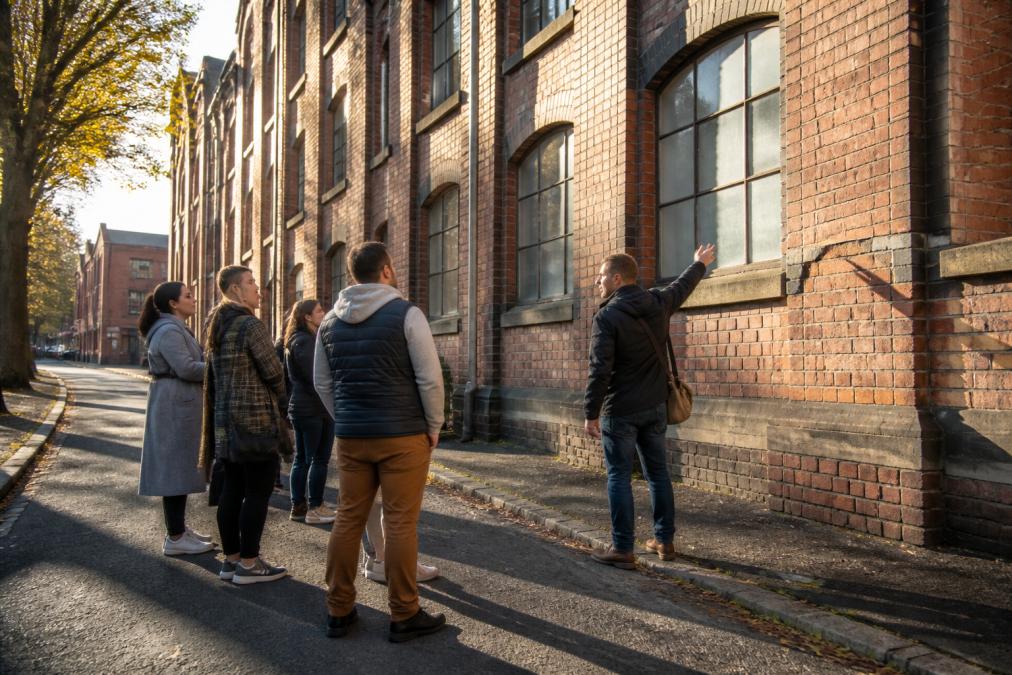
The mainstream landmarks, Town Hall, Cathedral, shopping districts, tell only part of the story. Hidden history walking tours dig into narratives rarely found in standard guidebooks: the industrial revolution that earned the city its Cottonopolis nickname, the radical movements that challenged the status quo, and the communities that built neighbourhoods block by block.
Manchester's identity was forged in textile mills and factory floors. Understanding Cottonopolis means understanding how a market town became a global industrial powerhouse and why that legacy still shapes the city's architecture, economy, and character today. Industrial heritage walking tours take you through converted mills now housing apartments and studios, along canals that once powered machinery, and into districts like Ancoats where the density of mills created entire communities around the factories. A guide explains why certain streets run at odd angles (following old property lines), why some buildings are so massive (multiple factory floors), and how the canal system was engineered to support industrial production.
For locals, this context transforms familiar streets into stages where history unfolded, revealing why the city is shaped the way it is.
Manchester was a centre of radical thought. The Peterloo Massacre of 1819, the birth of the cooperative movement, and the suffragette campaigns led by Emmeline Pankhurst changed the course of British history. A social revolution walking tour connects these stories to specific locations, showing where crowds gathered, where activists lived, and how ordinary people pushed for extraordinary change. For locals, this context transforms familiar streets into stages where history unfolded.
Different themed walking tours serve different interests and time commitments.
Tour Type | Typical Duration | Best For | Key Focus |
|---|---|---|---|
Industrial Heritage | 2-3 hours | Understanding Cottonopolis and factory history | Mills, canals, working-class neighbourhoods |
Music and Cultural Heritage | 2-2.5 hours | Music enthusiasts and cultural explorers | Venues, bands, rave culture, musical movements |
Street Art and Modern History | 1.5-2.5 hours | Contemporary culture and visual art | Murals, artist interviews, urban development |
Literary and Radical Tradition | 2-3 hours | Literature and political history enthusiasts | Writers, bookshops, radical movements, cultural sites |
Food and Drink | 2.5-3.5 hours | Culinary explorers and local foodies | Independent restaurants, bars, food culture, local producers |
Manchester's music scene shaped British culture. From Joy Division's post-punk influence through the Madchester rave movement to contemporary artists, the city has been a breeding ground for musical innovation. Music heritage walking tours visit iconic venues and tell the stories of the bands that played them. A guide might discuss the Haçienda's role in rave culture, the Factory Records aesthetic that influenced graphic design globally, or the connection between Manchester's industrial decline and the emergence of electronic music. These tours typically last around two hours and cover two to three miles, making them accessible for most fitness levels.
The Northern Quarter has become synonymous with contemporary Manchester: street art, independent shops, creative studios, and a thriving social scene. A street art walking tour explores the neighbourhood's visual culture, the artists behind the murals, and how the area transformed from industrial decline to creative hub. Street art tours typically run 1.5 to 2.5 hours and cover a concentrated area, ideal for an afternoon exploration.
Manchester has produced significant writers and thinkers: Elizabeth Gaskell, who wrote about industrial society; the Brontë connections; contemporary poets like Carol Ann Duffy. A literary walking tour connects these figures to the city, exploring bookshops, cultural institutions, and the neighbourhoods where writers lived and worked. These tours appeal to locals interested in how literature reflects place and typically last two to three hours.
Not everyone wants a group experience or set schedule. Self-guided digital routes offer flexibility: explore at your own pace, pause when something interests you, revisit areas, or skip sections entirely. Apps like AllTours and GPSmyCity provide audio commentary triggered by GPS location. Questo offers gamified self-guided tours that turn exploration into a puzzle-solving adventure.
The advantage is autonomy, you control speed, stops, and duration. You can linger in a café, photograph a building, or chat with a local shopkeeper without holding up a group. The disadvantage is missing the spontaneous insights a live guide provides, the anecdotes, and the sense of shared discovery.
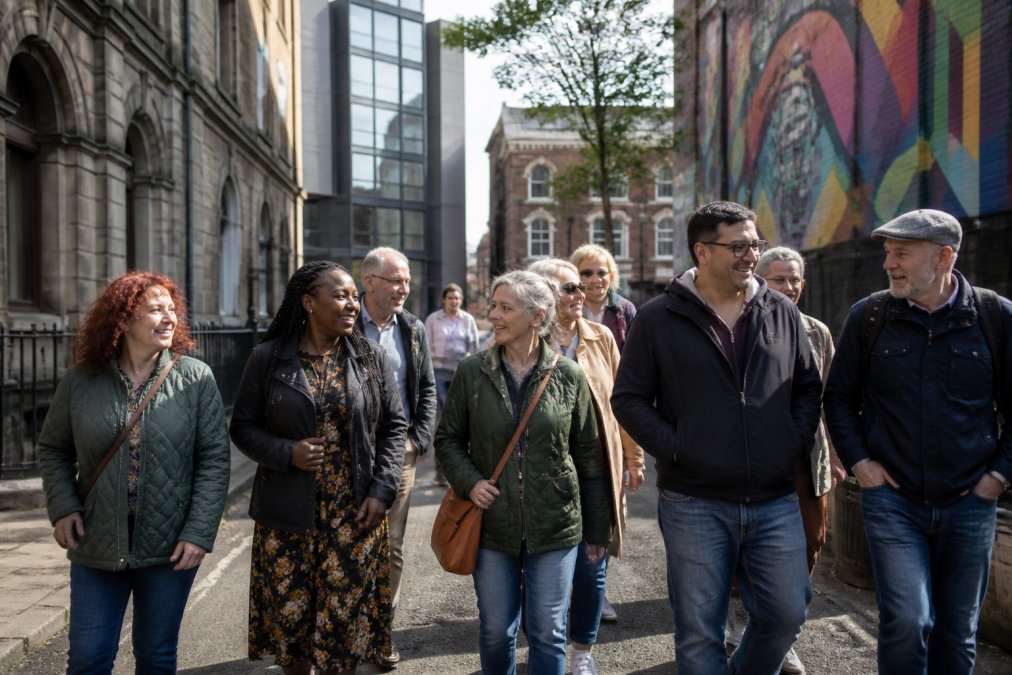
Beyond commercial walking tours, community walking groups exist specifically for residents. Groups like rambling clubs, local history societies, and informal social walks organised through community centres offer a different model: locals walking together for exercise, social connection, and shared discovery. These groups often meet regularly and rotate routes or themes. They're typically free or charge a small fee. The focus is on community building as much as exploration. Many local councils and community organisations maintain lists of active walking groups.
Group size matters. Meeting points are typically in the city centre or near public transport links. Check the specific location before booking. Availability varies: some tours run daily, others run on specific days or require minimum group bookings.
Walking tours use different pricing models. Free tours operate on a "pay what you feel" basis; you tip the guide based on your experience. Commercial tours charge per person, with prices varying based on tour length, guide expertise, and what's included. Check what's included before booking.
Manchester's weather is unpredictable. Rain is common, so waterproof jackets are essential. Winter tours are shorter and colder, but crowds are smaller. Summer tours are longer and busier. Spring and autumn offer good weather and moderate crowds. Comfortable walking shoes matter more than fashion. Layers work better than a single heavy coat. Most tour operators offer rescheduling if weather forces a cancellation.
Food and drink walking tours combine the walking tour format with culinary exploration. Instead of just talking about a neighbourhood, you actually taste it. You visit independent restaurants, bars, street food vendors, and specialty shops, sampling local dishes and drinks while a guide explains the food culture and how food reflects the city's character. These tours typically last 2.5 to 3.5 hours and cover a concentrated area.
Flavours of Manchester specialises in this format, offering curated food and drink walking tours that blend Manchester and Salford's history with its culinary landscape. Tours like "Taste of Two Cities" and "Cottonopolis" combine industrial heritage storytelling with tastings at independent venues. The advantage over simply visiting restaurants is the curation and context. A guide connects the dots, showing how a neighbourhood's food scene reflects its history and introducing venues worth returning to.
Walking tours for locals offer something that casual wandering doesn't: context, community, and discovery. Whether you choose a guided tour exploring industrial heritage, a self-guided digital route on your own schedule, or a community walking group for regular social exploration, you're choosing to see your city differently. Flavours of Manchester's guided food and drink walking tours connect stories to the independent venues and local flavours that define the city. Discover the heart of your city one bite and one story at a time, book a tour and experience what you've been missing.
Yes. Many walking tours cater specifically to locals seeking fresh perspectives on their city. These often focus on hidden history, lesser-known heritage sites, and community stories rather than mainstream attractions. Themed tours covering street art, literary history, social movements, and industrial heritage appeal particularly to residents wanting to rediscover neighbourhoods they thought they knew. Local guides frequently emphasise untold stories and insider knowledge that typical tourist routes overlook.
Hidden history tours go beyond iconic landmarks to explore social revolutions, industrial heritage, and local narratives that shaped the city. They visit lesser-known heritage sites, examine street-level social issues, and often include interviews with local artists and community members. These tours typically last 2-3 hours and cover specific areas like the Northern Quarter or Cottonopolis, revealing how ordinary residents lived and contributed to the city's development, rather than focusing solely on famous buildings.
Themed walking tours typically range from 2 to 3 hours, covering 1-2 miles. Available themes include music heritage, street art, literary history, social movements, and industrial development. Most operators offer regular scheduled departures, though private themed tours for groups can often be customised. Duration depends on the itinerary and group pace. Check availability and booking options directly, as some themed tours run fortnightly or on demand rather than daily.
Verify group size to ensure it feels personal rather than crowded. Check the guide's background and read verified reviews from previous participants. Confirm the meeting point, total distance, and estimated duration. Ask about flexibility for dietary restrictions or pace adjustments. Understand what's included (drinks, food tastings, etc.) and the cancellation policy. Consider the season and weather—some routes are better in dry conditions. Compare pricing models: some offer tips-based options, others fixed prices, and some include food and drink.
This article was written using GrandRanker


