

.svg.svg)


Contact us

Last Updated: August 10, 2026
Manchester's food scene has transformed dramatically over the past decade, evolving from chain restaurants and traditional pub fare into a thriving ecosystem of independent eateries and innovative chefs. Yet many long-time residents have never truly explored their own city's culinary landscape. A manchester food tour for local residents isn't about ticking off tourist attractions, it's about discovering the stories, history, and hidden gems just a few streets away.
Guided food tours offer expert knowledge of which independent businesses are genuinely worth visiting, the history woven into each neighbourhood, and curated experiences connecting food to Manchester's industrial heritage. Flavours of Manchester specialises in exactly this, designing tours for people who want to see their city through fresh eyes. Their guides are passionate Mancunians who share authentic stories about how the city's food culture reflects its past and shapes its present.
A typical manchester food walking tour lasts between three and four hours, visiting four to six venues selected for quality, independence, or cultural significance. The walking distance is usually two to three kilometres, so wear comfortable shoes and weather-appropriate clothing.
Your guide will introduce each venue, explain its story, and connect it to broader themes about Manchester's history. You'll receive tasting portions at each stop rather than full meals, allowing you to sample multiple cuisines without becoming overwhelmed. Most tours include both food and drink tastings, with non-alcoholic options available.
The pace is deliberately unhurried, allowing genuine interaction with venue owners and staff rather than rushing through a checklist. You're experiencing the area as a local would, just with expert narration.
Visit Manchester's official food and culture guide
The best food tours distinguish themselves through knowledgeable guides, authentic independent venues, quality food and drink, and genuine focus on local culture rather than tourist spectacle.
Flavours of Manchester stands out because guides are locals with real expertise in Manchester's food scene and history. The company offers specialised tours like Taste of Two Cities (exploring Manchester and Salford), Cottonopolis (focused on industrial heritage), and Inspiration, Innovation & Intellect (connecting food to Manchester's scientific and cultural contributions). Venues are carefully curated independent businesses, meaning your money supports local entrepreneurs and you get genuine stories from people who care deeply about their work.
Ancoats and the Northern Quarter are the two neighbourhoods most frequently featured on Manchester food tours. Ancoats was the birthplace of the Industrial Revolution, and walking through it today you see converted warehouses that once housed textile mills now hosting craft breweries, artisan bakeries, and contemporary restaurants. The neighbourhood's physical infrastructure tells a story about how Manchester's prosperity was built and how the city has reinvented itself.
The Northern Quarter has a different energy: grittier, more bohemian, fiercely independent. It's where you'll find vintage record shops next to vegan restaurants and owner-operated, experimental food businesses deeply embedded in local culture. A tour through the Northern Quarter reveals a particular Mancunian identity: creative, irreverent, and proudly local.

Both neighbourhoods reward slow exploration. When guided through them, you notice architectural details of converted mills, independent businesses that have survived corporate pressure, and the mix of long-term residents and newer arrivals creating something genuinely distinctive.
Manchester's food identity is rooted in the city's working-class history and has evolved through waves of immigration and the creativity of local chefs. Authentic Mancunian dishes include parched peas (marrowfat peas cooked with spices), pasty barms (meat pies in soft bread rolls), and dishes influenced by South Asian communities that have made the city their home.
Local produce features heavily on the best tours. Manchester's position in the North West provides access to excellent dairy from Cheshire, vegetables from surrounding agricultural areas, and fish via distribution networks. Independent restaurants prioritise sourcing from suppliers they know personally, creating traceable connections between food and landscape.
A genuinely local guide can explain why certain dishes matter, which businesses have been around for decades, and which newer places are doing genuinely innovative work. This context transforms eating into understanding.
When you choose a manchester food tours experience focused on independent businesses, you're making a deliberate choice about where your money goes. Every venue visited on a quality tour is independently owned, meaning money stays in the community rather than flowing to corporate head offices.
Independent restaurant owners have deep roots in their neighbourhoods, know their suppliers and customers, and are more likely to experiment and create something distinctive. Supporting independent businesses also means supporting staff who often have more autonomy and genuine investment in success compared to chain restaurants.
When you book with Flavours of Manchester, you're supporting not just the tour company but every venue they've partnered with. The company has built relationships with independent businesses across Manchester and Salford based on mutual respect and shared values about food culture.
A comprehensive tour typically includes four to six food tastings across different venues, plus two to three drinks (usually including at least one alcoholic option, with non-alcoholic alternatives). Food portions are designed as tastings rather than full courses.
Quality varies between operators. The best tours ensure what you taste genuinely represents what each business does well. Flavours of Manchester's tours feature five food dishes and two alcoholic drinks (with non-alcoholic options), carefully selected to tell a coherent story.
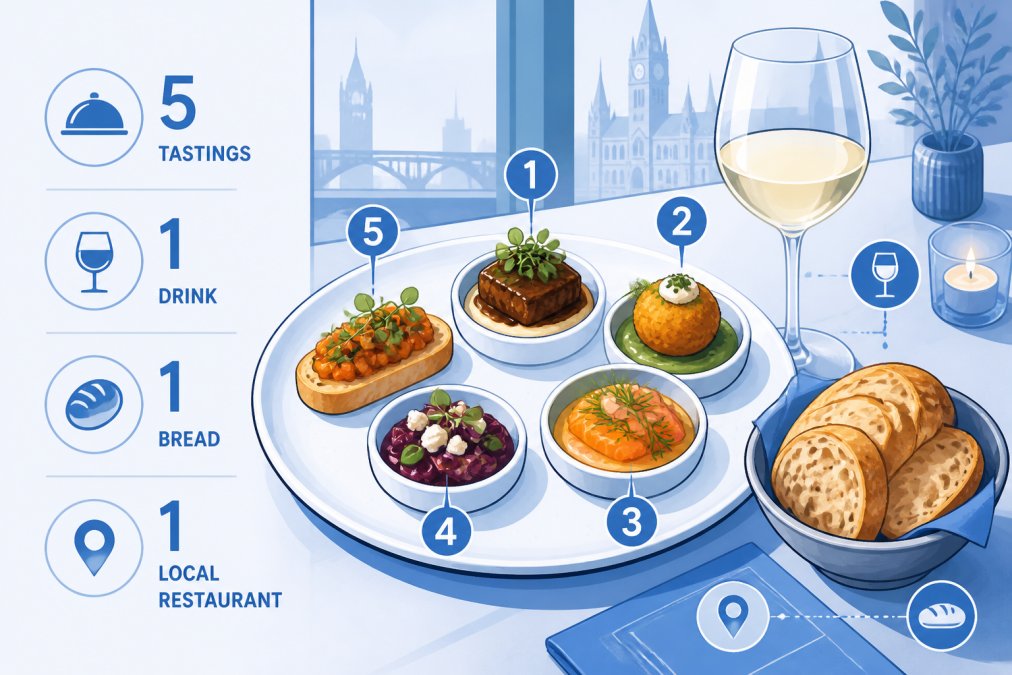
| Tour Element | What's Typically Included | What to Budget Separately |
|---|---|---|
| Food tastings | 4-6 portions across venues | Additional meals if hungry after |
| Drinks | 2-3 tastings (alcoholic/non-alcoholic options) | Extra drinks at venues |
| Guide expertise | Local knowledge and stories | Gratuities (usually expected) |
| Neighbourhood access | Walking through areas | Attraction entrance fees if relevant |
Read the specific tour description carefully and ask questions before booking. Reputable operators are transparent about exactly what's included.
Quality tour operators can accommodate most dietary requirements with advance notice. Vegetarian and vegan options are increasingly standard at independent Manchester venues. Gluten-free accommodation is more variable. Severe allergies require direct communication before booking.
Walking tours involve two to three kilometres over three to four hours with stops. If you have mobility limitations, discuss this with the operator beforehand. Some routes are flatter and less demanding than others. Most tours begin and end at accessible locations with nearby tram or bus stops.
Flavours of Manchester encourages participants to discuss any requirements or concerns directly before booking. Operators dismissive of these questions are usually not worth booking with.
Understanding Manchester's food culture requires understanding its history. The city's identity was forged through industrial innovation, immigration, and economic transformation, all reflected in what people eat and where they eat it.
Manchester became wealthy through textile manufacturing in the 18th and 19th centuries, creating dense working-class neighbourhoods with distinct communities. Food culture reflected this: hearty, affordable food for working people. Pies, stews, bread, and potatoes were staples.
Waves of immigration transformed the food landscape. Irish immigration brought different bread and potato traditions. Later, South Asian immigration created entirely new food cultures in areas like Rusholme and Moss Side. Each wave left lasting marks on what Manchester eats.
The decline of textile manufacturing created the physical spaces now housing the contemporary food scene. Vast warehouse buildings were repurposed into artist studios, then restaurants and craft breweries. The city's food renaissance is literally built on the bones of its industrial past.
Manchester's industrial heritage and urban regeneration
Contemporary food businesses are often explicitly conscious of this history. Chefs reference the city's past in menus, décor, and business philosophies. A tour connecting food to heritage isn't just about eating, it's about understanding how a city reinvents itself.
How many people are on your tour matters significantly. A group of 8 feels completely different from a group of 20, even visiting the same venues.
Smaller groups allow genuine conversation with your guide. You can ask questions, discuss what you're tasting, and have the guide adjust pacing based on group interests. Larger groups require faster movement and more standardised delivery. Venues also feel less welcoming when large groups arrive.
Most quality tours cap groups at 10-12 people. Flavours of Manchester maintains small group sizes to ensure personal experience and genuine interaction with guides and venue staff.
For local residents, group size is particularly important. You want genuine access to places you'll return to, relationships with local business owners, and knowledge you can use independently after the tour. Small groups facilitate this. Large groups feel like tourism, defeating the purpose if you actually live here.
Choosing a food tour as a Manchester resident is about understanding your city's story through the people and businesses shaping its present. The best tours combine exceptional food with genuine local knowledge, support independent businesses, and create experiences that change how you see neighbourhoods you walk through regularly. Rather than spending another evening at a chain restaurant, invest in discovering what makes Manchester's food scene genuinely distinctive. Book your Manchester food experience and explore your city like someone who truly knows it.
For long-term residents, Manchester food tours offer genuine value by uncovering hidden independent eateries and local stories you may have missed. Rather than generic tourist experiences, local-focused tours emphasise neighbourhood exploration, support for independent businesses, and the culinary landscape shaped by Manchester's industrial heritage. You'll discover how the city's transformation from cotton mills to creative hub is reflected in its food scene, plus gain insider knowledge about seasonal specialities and local sourcing practices that make the experience distinctly different from dining alone.
Most Manchester food walking tours range from 3 to 4 hours, with the majority lasting around 3 hours. This duration allows time for walking between independent venues, enjoying tastings at each stop, and hearing stories about the neighbourhoods and food culture. Longer tours, such as the Taste of Two Cities experience exploring both Manchester and Salford, extend to 3.5 to 4 hours. The walking distance typically covers 1 to 2 miles depending on the route, making it manageable for most fitness levels when wearing comfortable shoes.
Yes, most Manchester food tours include drinks as part of the experience. Tours typically feature a mix of alcoholic and non-alcoholic beverages, often wine, craft beer, or local tipples paired with food tastings. For example, the Taste of Two Cities tour includes two alcoholic drinks with non-alcoholic alternatives available. Tours emphasise that dietary preferences and restrictions are accommodated, so you can request alcohol-free options when booking. Always confirm drink inclusions when selecting a tour, as offerings vary between operators.
Independent food tours focus on locally run eateries where each dish tells a story about Manchester's culture and innovation. Unlike chain restaurants, independent venues support local producers, reflect neighbourhood character, and often feature Mancunian specialities you won't find elsewhere. Tours led by local guides emphasise authentic culinary heritage, sustainability through local sourcing, and direct connection to the communities behind each business. This immersive approach transforms dining from a transaction into a gastronomic journey that reveals how the city's food scene evolved alongside its industrial and cultural transformation.
This article was written using GrandRanker


