

.svg.svg)


Contact us

Last Updated: July 24, 2026
Whether is a manchester food tour worth it depends on what you're seeking from your Manchester experience. At Flavours of Manchester, we've guided thousands of visitors through the city's culinary landscape. This guide cuts through the marketing noise and shows you what you're actually paying for, who benefits most, and when you might save money by going solo.
A guided food tour costs more than booking restaurants independently, you're paying for expertise, curation, and convenience. But you're also paying for narrative. A good guide transforms eating into storytelling, explaining why Manchester's food scene emerged from its industrial heritage, which producers have supplied the same restaurants for decades, and which hidden gems locals actually visit.
The trade-off: you're locked into a fixed itinerary and group pace. If you're flexible, enjoy meeting other travellers, and want someone else to handle logistics, a guided tour delivers clear value. If you prioritize complete control or are on a tight budget, self-guided exploration makes more sense.
First-time visitors to Manchester gain the most from guided tours. A guide fast-tracks learning about which neighbourhoods are worth exploring and how the city's food culture connects to its history.
Corporate groups and team-building events benefit from structured logistics. One guide manages dietary needs and creates shared experience that builds camaraderie.
Foodies seeking local context find genuine value in storytelling about local producers, industrial history, and how the city's food scene evolved.
Travellers short on time get the most efficient experience, packing the best of Manchester's food scene into 2-3 hours without research or navigation.
Solo travellers who want social connection benefit from the group aspect, naturally leading to conversations with interesting people.
Locals who already know the city rarely need a guide. If you've lived in Manchester for years and regularly eat out, a food tour teaches you very little.
Budget-conscious travellers should consider self-guided exploration. Research restaurants online, book directly, and skip the guide fee.
Travellers who want complete control over itinerary and pace should explore alone. Guided tours follow a set route and timing.
People with very specific dietary needs sometimes find guided tours limiting. Booking restaurants directly gives you more control over menu negotiations.
Repeat visitors who've already done a tour should explore independently next time to discover new restaurants or deeper dives into specific cuisines.
A typical Manchester food tour lasts 2.5 to 3 hours and covers 1.5 to 2 miles on foot. You visit 4-6 different venues, spending 20-30 minutes at each location for a tasting portion and conversation with the guide.
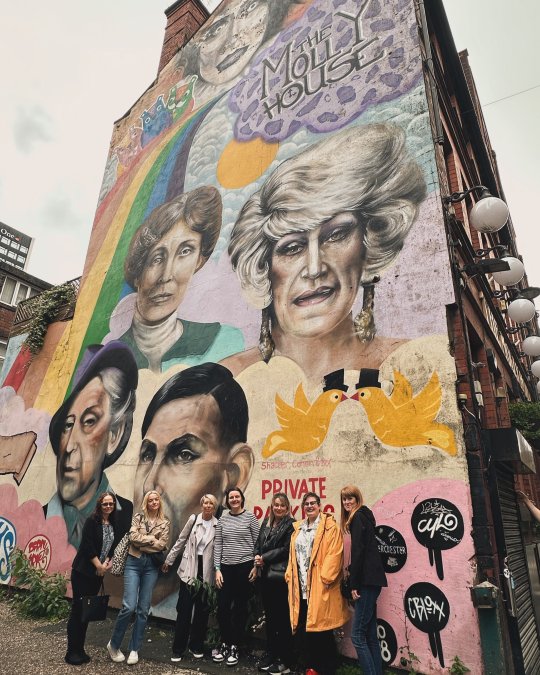
A diverse group of people walking through a vibrant Manchester street lined with independent restaurants and cafés, with the tour guide gesturing towards a storefront
The guide opens with context about the neighbourhood's history and what makes it distinctive. Then you visit tasting stops where you sample small plates while the guide explains the restaurant's story, the chef's approach, or ingredient provenance.
Most tours focus on specific neighbourhoods: the Northern Quarter (independent restaurants and street food culture), Ancoats (industrial heritage meets modern gastronomy), or Spinningfields (fine dining and upmarket venues). Some operators offer thematic tours: vegetarian/vegan, industrial heritage, or craft beer and cocktails.
You'll spend roughly 60-70% of your time walking between venues, not eating.
Most tours cover 1.5-2 miles total, which is leisurely but constant. If you have mobility issues or hate walking, a food tour will feel tedious. The Northern Quarter features narrow streets lined with independent restaurants; Ancoats is more polished with converted warehouses housing fine dining. Weather is a practical consideration, Manchester's weather is unpredictable, and tours operate in rain. Check the forecast and dress accordingly.
The quality of your food tour depends almost entirely on the quality of the tasting stops the operator has chosen.
A typical tour includes 4-6 stops with small portions so you can visit multiple venues without becoming uncomfortably full. The best operators have negotiated tasting menus specifically designed for tours, showcasing each restaurant's best work. The multi-stop format creates natural rhythm: eat, walk, listen, eat again. Better operators ask about dietary preferences beforehand and adjust stops accordingly.
The storytelling component separates a good food tour from a mediocre one.
Manchester's food story is genuinely interesting. The city's industrial heritage shaped its food culture. Warehouses became restaurants. Working-class pubs became destination venues. Local producers who supplied factory workers now supply Michelin-starred restaurants. A good guide weaves these narratives into each tasting stop.
The best guides have deep knowledge of Manchester's food scene, know the chefs, understand the producers, and can speak credibly about trends and history. Flavours of Manchester trains guides specifically on local history and culinary heritage. Their "Cottonopolis" tour connects Manchester's cotton industry to its modern food scene.
Flavours of Manchester leads the market for tours prioritising storytelling and local context. Their guides are trained specifically on Manchester and Salford's history, and tours are themed around specific narratives: industrial heritage, innovation, or cultural evolution. They offer individual bookings, group options, and corporate packages.
Other operators include Secret Food Tours, Do Eat Better Experience, and Manchester Food Walks, each with different approaches. Some emphasise fine dining; others focus on street food. Read reviews carefully for mentions of guide knowledge, group size, and whether the experience felt rushed or leisurely.
The Northern Quarter is Manchester's most distinctive food neighbourhood, younger, more casual, and experimental. Street food vendors, independent restaurants, and craft breweries define the character.
Ancoats offers a different experience. It's more polished, with converted warehouses housing fine dining restaurants and upmarket bars.
Hidden gems tours focus on restaurants tourists typically miss. The strength is discovery; the weakness is inconsistency. Some operators offer thematic specialisation: vegan/vegetarian tours, cocktail-focused tours, or tours centred on specific cuisines.
Most operators offer both public group tours (8-15 people) and private group bookings (6-50+ people).
Public group tours are cheaper per person but less flexible. Private group bookings cost 15-25% more per person but offer flexibility, you choose the date, time, and can request route adjustments. Tours with 8-10 people feel more conversational and flexible than larger groups.
Most tours cost between £45-£75 per person for a 2.5-3 hour public group tour. Private group bookings cost 20-30% higher but can be cost-effective spread across a group.
The price includes the guide's expertise, curation of restaurants, and logistics management. Compare this to booking restaurants independently: four restaurants at £15-20 each equals £60-80 on food alone, plus research and planning time. A food tour at £60 is roughly equivalent in food cost but includes expert guidance.
Booking in shoulder seasons (April-May, September-October) offers better value than summer.
A tour price typically includes:
What's usually not included:
Traveller Type | Value Assessment | Recommendation |
|---|---|---|
First-time visitor, loves food | High value, saves research time | Book a tour |
Local who knows the scene | Low value, you already know restaurants | Skip the tour |
Budget-conscious, tight timeframe | Medium value, premium price but saves planning | Book if time matters more than money |
Corporate team-building | High value, logistics handled | Book a private tour |
Solo traveller seeking connection | High value, natural social interaction | Book a public group tour |
Control-focused, wants flexibility | Low value, fixed itinerary limits freedom | Self-guide instead |
Very limited budget | Low value, cheaper to book independently | Self-guide instead |
Repeat visitor to Manchester | Low value, you've heard the stories | Self-guide to new neighbourhoods |
First-time visitors, people who value time over money, and those seeking social connection benefit most from tours. Locals, budget-conscious travellers, and control-focused people get better value from self-guided exploration.
Self-guided advantages:
Self-guided disadvantages:
Guided tour advantages:
Guided tour disadvantages:
The hybrid approach works for some: book one guided tour to learn the city's food story and get recommendations, then self-guide for subsequent meals.
Summer (June-August) is peak season. Tours are fully booked weeks in advance, prices are highest, and crowds are significant.
Spring (April-May) and Autumn (September-October) are ideal. Weather is pleasant, crowds manageable, and prices moderate.
Winter (November-February) is off-season. Prices are lowest, and you get the best value and smallest group sizes, though weather is cold and rainy.
Booking 3-4 weeks in advance offers the best value across all seasons.
Vegetarian and vegan diets are well-accommodated by most operators. Manchester's food scene has strong vegetarian and vegan options, and most operators provide alternatives at all tasting stops without charging extra.
Allergies and intolerances are manageable if you inform the operator in advance. Common allergies (nuts, shellfish, dairy) are typically accommodated.
Physical accessibility is a legitimate concern. Tours involve 1.5-2 miles of walking with multiple stops. If you have mobility issues, discuss this before booking. Wear comfortable, broken-in shoes with good support. Check the forecast and dress in layers with a waterproof jacket.
For most people without significant physical limitations, the walking is manageable. Contact the operator directly if you have concerns about feasibility.
Manchester's food story is genuinely interesting. The city transformed from industrial powerhouse to creative hub, and its food scene reflects that transformation. Warehouses became restaurants. Working-class pubs became destination venues. Local producers who supplied factory workers now supply Michelin-starred establishments.
The food scene is diverse and experimental. You'll find fine dining restaurants with Michelin stars, casual street food vendors, craft breweries, and independent restaurants that blend cuisines unexpectedly. High-quality food isn't confined to expensive restaurants, some of the best eating happens in casual neighbourhoods where talented chefs run small operations.
Restaurants are often designed with creativity and character, in converted warehouses, shipping containers, or unexpected spaces. The experience of eating in Manchester is as much about the setting and atmosphere as the food.
Manchester's food story begins with its industrial past. The city was the world's cotton capital in the 19th century. Warehouses, mills, and factories dominated the landscape. The working-class population demanded affordable, hearty food. Pubs, markets, and street vendors served this need.
The industrial era ended decades ago, but its physical legacy remains. Many industrial spaces have been converted into restaurants, bars, and food venues. Walking through Ancoats or the Northern Quarter, you're literally walking through converted factories. Modern chefs have embraced this heritage rather than erasing it, preserving the industrial aesthetic, exposed brick, steel beams, high ceilings, while creating contemporary food experiences.
Manchester's food scene is built on relationships with local producers. The city has a strong farmer's market culture and a network of local food producers, bakeries, cheese makers, butchers, breweries, and coffee roasters. Many restaurants prioritise sourcing locally.
A good tour guide will explain these relationships and how local sourcing shapes menu decisions. This storytelling adds depth to the eating experience.
There's no single "authentic Manchester cuisine." Instead, Manchester's authenticity comes from its diversity and commitment to quality ingredients and honest cooking. This authenticity separates a genuinely good food tour from a tourist trap.
Is a Manchester food tour worth it? For first-time visitors who want expert curation and local storytelling, a tour delivers clear value. Flavours of Manchester offers tours designed around Manchester's history and food culture, with guides trained to explain the city's culinary heritage.
For budget-conscious travellers, locals who know the scene, or people who prioritise complete control over their itinerary, self-guided exploration makes more sense.
For everyone else, the decision comes down to whether you value storytelling and convenience enough to justify the premium price. If you do, book a tour. If you don't, plan your own food exploration.
A Manchester food tour offers value beyond just food. You gain insider knowledge from a local food expert, access to hidden gems and exclusive tasting stops you might not discover alone, and a curated multi-stop experience that combines culinary heritage with storytelling. The cost includes guided navigation, portion control across multiple venues, and an immersive experience rather than standalone meals. For first-time visitors and those seeking authentic local insight, this justifies the investment. Locals may find less value unless the tour covers genuinely new neighbourhoods.
Most guided food tours include several tasting stops at carefully selected local producers and eateries, a knowledgeable tour guide sharing food and drink stories, and walking access to notable neighbourhoods like the Northern Quarter or Ancoats. Many tours include selected drinks at certain stops. Check your booking confirmation for specifics, as inclusions vary by tour operator. Some premium options offer fine dining experiences or private tour customisation. Visit the operator's website for current details on what's included in your chosen itinerary.
Most Manchester food tours last between 2.5 and 4 hours, covering walking distances of 1–2 miles depending on the route and number of tasting stops. The pace is leisurely, designed for stopping and eating rather than continuous walking. Urban routes through the Northern Quarter or Ancoats involve more street-level exploration. Check the tour operator's itinerary for exact duration and distance before booking. Those with accessibility concerns should confirm walking requirements in advance, as some tours offer modified routes.
Most reputable Manchester food tour operators accommodate dietary restrictions, including vegetarian, vegan, and allergen requirements, but you must declare these when booking. Flexibility depends on the specific tour and venue partnerships. Provide your dietary requirements in your booking confirmation so the guide can communicate with each tasting stop in advance. Some tours are more adaptable than others, so confirm with your operator that they can genuinely cater to your needs rather than assuming all venues can substitute options.
This article was written using GrandRanker


