

.svg.svg)


Contact us

An industrial heritage tour gives you far more than a walk through old buildings. You're paying for context, storytelling, and access to spaces that reveal how Manchester transformed from a market town into the world's first industrial city. The difference between wandering past a 200-year-old mill on your own and standing inside one while someone explains its role in the cotton trade is the difference between seeing history and understanding it.
Most industrial heritage tours combine three core elements: guided access to significant sites, historical narrative that connects those sites to broader economic and social change, and often, food or drink experiences that ground the story in lived reality. At Flavours of Manchester, we've designed our Cottonopolis Walking Tour to blend all three, you're not just learning about the industrial revolution, you're tasting the food that fed the workers who built it, drinking in venues that hosted the merchants who profited from it.
A quality industrial heritage tour explains not just what happened, but why it mattered: how the cotton industry created unprecedented wealth concentration, how it drove innovation in steam power and mechanisation, how it shaped urban planning and social structure. You leave understanding Manchester's place in global economic history, not just its architectural landmarks.
Most industrial heritage tours run between 90 minutes and 4 hours, depending on scope and format. The Cottonopolis Walking Tour takes 3.5 to 4 hours, which allows time for five food and drink stops alongside historical commentary. Shorter walking tours of specific areas like Castlefield typically run 90 minutes to 2 hours. Canal cruises usually run 1 to 1.5 hours, more relaxed but covering less ground.
Duration determines what you can meaningfully explore. A 90-minute tour covers one neighbourhood in detail or skims multiple areas without depth. Four hours lets a guide develop themes, answer questions, and create an immersive experience that makes the industrial revolution feel less like a history lesson and more like a story unfolding around you.
The time investment also affects physical demand. Longer tours require comfortable footwear and reasonable fitness. If you're combining a tour with other activities, factor in setup and wind-down time beyond the stated tour duration.
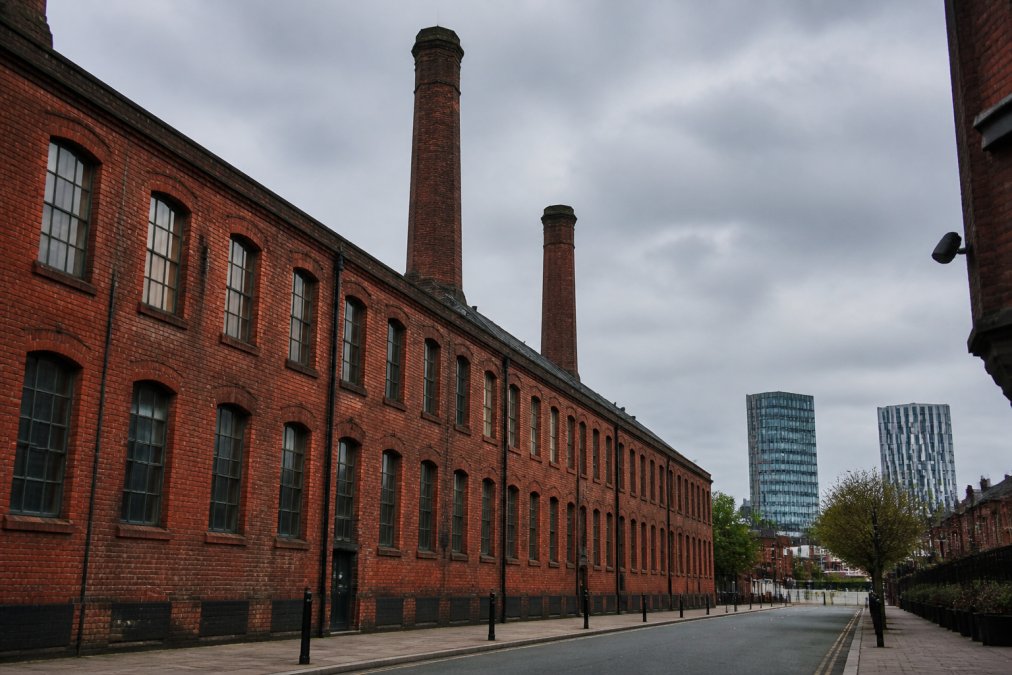
Castlefield is the UK's first designated Urban Heritage Park, a living layer cake of Manchester's history: Roman fort ruins, 18th-century canal infrastructure, Victorian railway viaducts, and modern regeneration (manchester.gov.uk). Walking through Castlefield, you're literally stepping through centuries of innovation and urban planning.
The Bridgewater Canal, which cuts through Castlefield, was the first major artificial waterway built purely for commerce (bbc.co.uk). It opened in 1761 and became the model for Britain's canal network (canalrivertrust.org.uk). Standing on the towpath, you can trace how goods moved from mills to the docks and how the canal shaped where factories were built. The railway viaducts overhead represent the next wave of transport innovation, replacing canals as the primary freight method.
Castlefield's transformation from industrial powerhouse to heritage attraction is instructive. Rather than demolish old structures, the city invested in preservation and adaptive reuse. Today it hosts museums, restaurants, and public spaces within restored warehouses, a model for how post-industrial cities can rebuild.
The Science and Industry Museum sits at Castlefield's heart, occupying the world's oldest surviving passenger railway station. Entry is free, making it one of the most accessible ways to explore industrial history. The interactive exhibits on steam engines, textile machinery, and early computing are genuinely engaging. You can spend 2-3 hours here and still leave with more to explore.
Ancoats is where the industrial revolution became a residential reality. In the late 18th and early 19th centuries, workers' housing was built directly adjacent to cotton mills, creating the first true industrial suburb. Thousands of workers lived within walking distance of their workplaces, served by shops, pubs, and schools designed for mill workers' families.
Walking through Ancoats today, you see long terraces of workers' cottages, hulking mill shells, and narrow streets designed for foot traffic. Recent regeneration has restored many streets while preserving historical character. What makes Ancoats compelling is that it forces you to confront the human cost of industrialisation. The mills generated enormous wealth, but workers lived in cramped, unsanitary conditions. The architectural history is inseparable from the social history.
The Science and Industry Museum is not just a repository of artefacts, it's an argument about what industrial heritage means. The Power Hall showcases the evolution of steam engines from Newcomen's atmospheric engine to high-pressure variants that powered the mills. Seeing these machines in person, understanding their scale and mechanical logic, is fundamentally different from reading about them. The textile machinery exhibits show the progression from hand spinning to fully mechanised production, illustrating how each innovation displaced workers and increased output.
The museum also addresses the moral complexity of industrial heritage. Displays acknowledge that Manchester's wealth was built partly on cotton grown by enslaved people in America. That context is essential for understanding the full picture of the industrial revolution. Free admission makes industrial history accessible to everyone, not just those with disposable income.
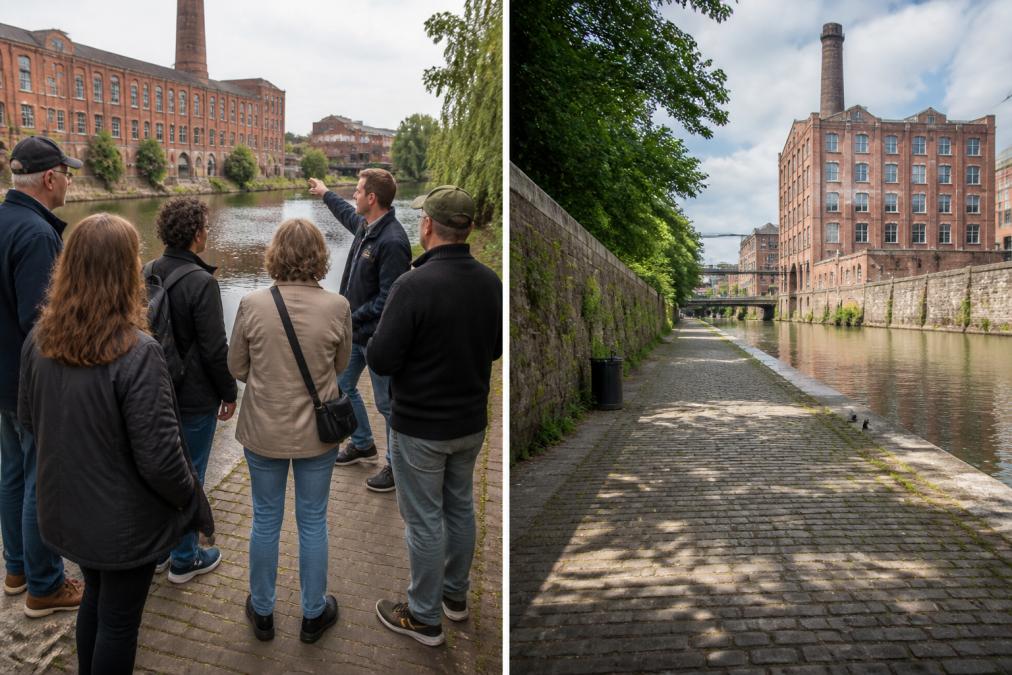
A guided tour buys you expertise and narrative coherence. A good guide explains not just what happened, but why it mattered, how buildings fit into broader patterns, and what changed when. They answer questions in real time and provide context that transforms a collection of old structures into a meaningful story.
Guided tours also solve the logistical problem of route planning. A guide handles navigation, so you arrive at each location without wasting energy. For visitors with limited time, that efficiency is valuable. The social dimension matters too, group tours create shared experience that generates conversation and bonding.
The downside is loss of autonomy. You move at the group's pace and visit sites the guide chooses. Flavours of Manchester's Cottonopolis tour integrates food and drink stops into the historical narrative, which deepens the sensory experience in ways you'd struggle to replicate independently.
Self-guided tours give you complete control over pacing, focus, and route. You can spend as long as you want in the Science and Industry Museum or skip areas that don't interest you. The financial advantage is significant, no guide fees, no mandatory food stops, you spend only what you choose.
Self-guided tours suit experienced visitors or locals. If you already understand Manchester's industrial history, a guide's narrative might feel redundant. The trade-off is effort. You need to research sites in advance, plan a logical route, and provide your own context and interpretation. Without a guide's framing, you might miss connections between sites.
Self-guided exploration works best if you have time flexibility. Guided tours run on schedules; self-guided exploration lets you visit at odd hours or linger indefinitely. For locals, self-guided exploration is often the better choice.
Whether an industrial heritage tour is worth the investment depends on what you're buying and what you value.
For visitors: If you're visiting Manchester for 2-3 days and want to understand the city's significance, a guided tour is probably worth it. You're paying for accelerated learning, what might take a week of independent research, a guide condenses into a few hours. Flavours of Manchester's Cottonopolis tour includes food and drink, which you'd purchase anyway if eating out; the guide fee covers the historical narrative and curated route.
If you're visiting for a week or more, self-guided exploration becomes more attractive. The Science and Industry Museum's free entry means you can visit multiple times without incremental cost.
For locals: A guided tour makes sense if you want to deepen knowledge in a specific area or see your city through an expert's perspective.
For corporate groups: Guided tours solve a coordination problem. You're paying for a guide to create a shared experience for 10-20 people, which is harder to organise independently. The cost per person drops with group size.
A guided industrial heritage tour is worth it if you value expert context and curated experience. It's not worth it if you prefer self-directed exploration or are on a tight budget. Neither choice is objectively better, it depends on your constraints and preferences.
An industrial heritage tour is most valuable for:
First-time visitors who want to understand Manchester's historical significance. Industrial heritage tours provide context that makes the city's architecture, layout, and culture coherent.
History enthusiasts and academics researching industrial revolution topics. Guides can answer specific questions and point you toward resources you wouldn't find independently.
Corporate teams building shared context. A guided tour quickly establishes common knowledge about the city's heritage and serves as a team-building activity.
Locals looking to rediscover their city. A guide's perspective can reveal aspects of familiar streets you never noticed, particularly the social history of workers, families, and communities.
Groups of friends or family seeking a distinctive activity. Industrial heritage tours are more intellectually engaging than generic sightseeing and create conversation. Flavours of Manchester's food-focused approach adds a sensory dimension that makes the experience memorable.
An industrial heritage tour is probably not necessary if you're visiting for a single afternoon, on a strict budget, or have specific research interests that a general tour won't address.
Industrial heritage sites are mostly outdoors or in unheated historic buildings. Manchester's weather is unpredictable, with frequent rain and cold winters. Plan accordingly.
For guided walking tours, waterproof jackets and comfortable walking shoes are essential. Tours operate in most weather unless conditions are genuinely dangerous. Layering is more effective than single heavy coats, you'll warm up as you walk. The Science and Industry Museum is indoors, so weather isn't a constraint there.
Winter tours happen in diminishing daylight. If visiting November through February, book morning tours so you have natural light. Summer tours can run later, giving you more flexibility.
Industrial heritage sites vary significantly in accessibility. The Science and Industry Museum has lifts, accessible toilets, and level access to most exhibits. Castlefield's paths are paved but uneven in places. Walking tours require sustained movement, the Cottonopolis tour covers 3.5-4 hours of walking, which is manageable for most people but not for those with significant mobility constraints.
Canal cruises are the most accessible option for those who can't walk long distances. You're seated for the duration, and the experience is equally rich. Confirm parking availability when you book. Public transport connects major sites if you're comfortable with navigation.
Dietary requirements matter if booking a food-focused tour. Declare vegetarian and non-alcoholic preferences when booking so the guide can plan appropriate stops. If you're sensitive to noise or crowds, book smaller tours or visit museums during quieter times.
Is an industrial heritage tour worth it? The answer depends on whether you value guided expertise, curated experience, and historical context. If you do, booking a tour like Flavours of Manchester's Cottonopolis Walking Tour combines industrial heritage exploration with local food and drink culture, creating a richer experience than either alone. You'll understand Manchester's role in global economic history while tasting the food that sustained the workers who built it. For visitors seeking genuine immersion in the city's past, that's worth the investment.
Most guided industrial heritage tours run between 2.5 and 4 hours, depending on the operator and route. Focused walking tours of specific areas like Castlefield or Ancoats typically last 90 minutes to 2 hours. Longer tours may include museum visits or additional stops. Check with individual tour providers for exact durations, as some tours can be customised for group bookings.
Key sites include Castlefield Urban Heritage Park (with Roman ruins and Victorian viaducts), Ancoats (the world's first industrial suburb with preserved mills and canal infrastructure), and the Science and Industry Museum (free entry, interactive exhibits on textiles and steam power). The Bridgewater Canal and Manchester Ship Canal also offer crucial insights into the city's manufacturing infrastructure and transportation legacy.
Guided tours offer expert context, curated itineraries, and access to stories you'd miss alone, particularly valuable if you're unfamiliar with the area's history. Self-guided exploration gives you flexibility, a slower pace, and lower cost. Locals may prefer self-guided visits to specific sites, while first-time visitors and those seeking immersive storytelling typically gain more from a guide's expertise and historical perspective.
Yes. Specialised tours blend industrial history with local cuisine, allowing you to explore heritage sites while sampling regional food and drink. This approach connects the city's manufacturing legacy to its culinary scene, offering a richer cultural understanding. Many operators offer themed tours that weave historical storytelling with tastings at local venues, making the experience both educational and gastronomic.
This article was written using GrandRanker


