

.svg.svg)


Contact us

Last Updated: July 30, 2026
Exploring Manchester's food scene strategically makes the difference between a memorable experience and a rushed one. At Flavours of Manchester, we've guided locals and visitors through the city's vibrant neighbourhoods, hidden eateries, and street food hotspots. This guide shows you how to explore Manchester's food culture with intention, whether you're planning a solo adventure, coordinating a group, or scouting locations for a corporate event.
Manchester's food culture has evolved dramatically over the past five years, blossoming from independent cafes in the Northern Quarter into a thriving ecosystem spanning street food markets, fine dining, and neighbourhood-specific food trails. Rather than simply listing restaurants, we'll show you how to navigate neighbourhoods strategically, time your visits for maximum impact, and discover spots most tourists never find.
Manchester's food scene centres on three overlapping worlds: independent neighbourhood eateries that have become local institutions, street food and market culture that shifts seasonally, and fine dining venues drawing visitors across Greater Manchester. The Northern Quarter dominates casual dining and street food, while the city centre houses both accessible restaurants and higher-end establishments.
What distinguishes Manchester from other UK cities is its emphasis on independent operators over chains. According to Greater Manchester's economic development report, independent food businesses account for over 60% of the dining sector. You're tasting food made by people who own their establishments, with genuine care in execution.
Expect strong coffee culture and craft cocktails, particularly in the Northern Quarter and Spinningfields. Street food is taken seriously, considered cooking from people who've left corporate jobs to pursue their passion. The seasonal rhythm matters significantly: summer brings outdoor markets and pop-up dining, autumn shifts toward comfort food and festivals, winter brings festive menus and intimate dining, and spring launches new openings and lighter seasonal menus.
Different neighbourhoods serve different purposes. Understanding their character helps you allocate time wisely.
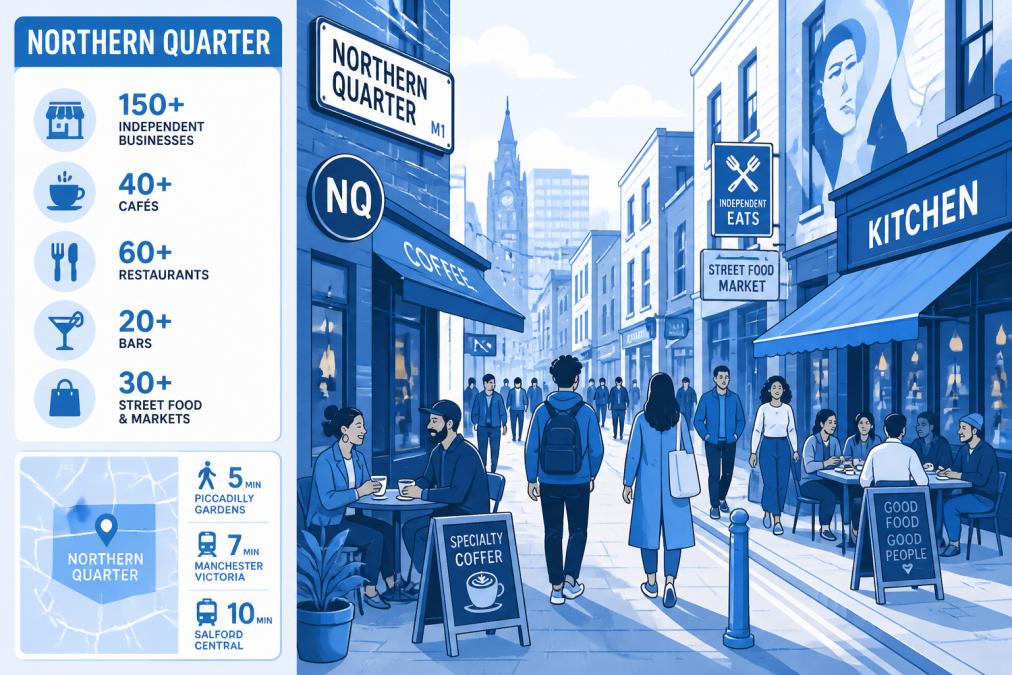
The Northern Quarter is where Manchester's food identity was forged. This neighbourhood of converted warehouses and street-level energy hosts the highest concentration of independent restaurants, street food vendors, and speciality coffee shops in the city. Chefs test new ideas, cuisines evolve, and failure is treated as part of the process. You'll find Vietnamese pho alongside wood-fired pizzas, Korean street food next to Italian delis, and craft cocktail bars sharing buildings with ramen shops.
The neighbourhood is best explored on foot, moving between small independent venues. Street-level windows display menus and prices. Peak times are Thursday through Saturday evenings and Friday to Sunday lunchtimes. Weekday mornings are quieter and ideal for genuine conversation with staff.
Key streets: Tib Street (coffee and casual dining), Church Street (fine dining and street food), and surrounding alleyways where pop-up venues appear seasonally. Budget £12-25 for casual dining, £30-50 for mid-range, and £60+ for higher-end concepts. Walk from Manchester Piccadilly station (15 minutes) or use the tram to Market Street.
The city centre offers formal dining, diverse cuisines, and Manchester's most celebrated fine dining venues. Hello Oriental (a sprawling Asian food court) and Corn Exchange (a Victorian market building with independent food stalls) are both institutions, combining food court convenience with independent operator quality.
Expect £20-40 for casual dining, £50-80 for mid-range, and £100+ for fine dining tasting menus. Booking ahead is essential for fine dining; casual venues accept walk-ins but queues form during peak times (12-1:30pm, 6-8pm). The city centre is walkable from most points, with tram stops throughout and abundant parking in multi-storey car parks.
Spinningfields represents Manchester's next wave of food culture. This neighbourhood of Victorian warehouses is attracting established restaurateurs and ambitious new operators testing concepts that push beyond current trends. The neighbourhood feels less crowded than the Northern Quarter but equally serious about food quality.
Spinningfields works best as a planned visit. Most venues require booking, and the neighbourhood feels less like a walk-and-discover environment. It's ideal for groups and special occasions. Budget £25-50 for most restaurants. The neighbourhood develops rapidly, with new venues opening quarterly. Check recent reviews before visiting. Tram to Spinningfields stop, or walk from the Northern Quarter in 15-20 minutes.
Street food markets are where Manchester's food culture moves fastest. These are genuine gathering spaces where the city eats and discovers new cuisines.
Corn Exchange operates daily with 20+ independent food stalls under one Victorian roof. It's the most reliable market experience and works well for groups because everyone can choose different cuisines from the same location. Peak times are 12-1:30pm weekdays and 11am-2pm weekends. Arrive early; most stalls run out of popular items by 1:30pm.
Hello Oriental spans three floors of Asian food vendors: ground floor (Chinese and Southeast Asian), first floor (Japanese and Korean), second floor (Indian and South Asian). Ask locals which stalls are worth the queue.
Manchester Market operates seasonally with rotating food vendors. Summer brings outdoor seating and evening events. Winter focuses on covered indoor stalls. Street food pop-ups appear monthly in various locations. Follow Manchester street food community social media for current locations.
Year-round markets operate 10am-10pm most days. Weekday lunchtimes (12-1:30pm) are busiest. For a relaxed experience, visit mid-afternoon (2-4pm) or early evening (5-6:30pm). Expect £8-18 per meal.
Approach markets with curiosity about vendors' specialties rather than chasing "must-try" items. Ask vendors about their most popular items; these are usually reliable. Manchester Tart (pastry, custard, and coconut) and Eccles Cake (flaky pastry with spiced fruit) are local classics worth sampling.
For groups, market visits work best when everyone buys from different vendors and shares. This gives broader tasting experience without overwhelming individual appetites. Spend 45 minutes to an hour browsing, queuing, and eating. Tables are limited, so arrive early if you need seating, or eat standing and move to nearby cafes for drinks afterward.
Beyond obvious venues lie restaurants where locals eat regularly. These aren't necessarily the most expensive or celebrated; they're places where food quality is high and atmosphere is genuine.
Hidden gems share common characteristics: they're usually small (under 40 covers), independently owned, focused on specific cuisines, and located on side streets. Ask your hotel concierge or Airbnb host for their personal favourite restaurants, the places they actually eat, not the ones recommended to everyone.
Speciality venues are worth seeking deliberately. Manchester has excellent Indian restaurants concentrated in Rusholme (south of the city centre), Vietnamese restaurants scattered through the Northern Quarter, and Italian delis operating for decades. These specialist venues are often cheaper and consistently excellent because they focus on one cuisine. Look for restaurants with handwritten menus, staff who know regular customers by name, and dining rooms that feel intimate. These are signs of established, genuine venues that have survived on quality.
Fine dining and popular restaurants require booking 2-4 weeks ahead during peak season (May-September, December). Mid-range restaurants need 1-2 weeks ahead. Casual venues accept walk-ins but have queues during peak times.
Use OpenTable for Manchester restaurant reservations for major venues. For smaller independent restaurants, call directly; many prefer direct contact and can advise on menu choices and dietary accommodations.
Lunch (12-1:30pm) is busier than dinner at casual venues but quieter at fine dining. Dinner (6-8pm) is peak time everywhere. Late dinner (8:30pm+) offers quieter experiences. Wednesday and Thursday are least crowded. Friday and Saturday are busiest.
Food tours compress knowledge and access that would take weeks to accumulate independently into a 2-3 hour experience led by someone who knows the city deeply.
The primary value isn't the food itself, it's the context and connections. A guide explains why certain cuisines dominate certain neighbourhoods, introduces you to restaurant owners and vendors by name, and shares stories that transform eating into cultural understanding.
Flavours of Manchester offers guided food and drink walking tours blending storytelling with tasting experiences. Tours combine neighbourhood exploration with stops at independent eateries and bars, allowing you to experience how food connects to Manchester's history, innovation, and cultural identity. Tours work well for groups and corporate events, handling timing, group management, dietary accommodations, and pacing.
Half-day tours (2-3 hours) work well if combining touring with other activities. Full-day experiences (5-6 hours) allow deeper exploration and more substantial meals. Consider your group composition and confirm that tours accommodate vegetarian, vegan, and allergen-free needs before booking. Most guides can modify routes to include suitable venues with advance notice.
Seasonal timing affects tour content. Summer tours emphasize outdoor markets and lighter cuisines. Winter tours focus on comfort food and indoor venues.
Your dietary preferences, budget constraints, and group composition should shape your approach.
Manchester has strong vegan and vegetarian communities, so independent restaurants cater seriously to plant-based diets. The Northern Quarter has the highest concentration of vegan-friendly venues. Prioritize venues with dedicated vegan menus rather than restaurants offering "vegan options." Markets work well for vegan diets because you can see exactly what's being prepared.
Allergen management requires different strategies. Fine dining venues maintain detailed allergen information and can modify dishes. Casual restaurants may not have this infrastructure. Ask directly about ingredients and preparation. For groups with mixed dietary needs, markets offer the best flexibility.
Manchester offers dining experiences at every price point. Budget exploration (£8-20 per meal): Markets, street food, casual independent cafes, and lunch menus at mid-range restaurants. Mid-range exploration (£20-50 per meal): Independent neighbourhood restaurants, established casual fine dining, and set menus at higher-end venues. Luxury exploration (£60-150+ per meal): Fine dining tasting menus, Michelin-starred restaurants, and high-end hotel dining.
A balanced itinerary combines budget and mid-range meals with one luxury experience. Spend heavily on one fine dining meal, then explore markets and casual venues for other meals.
Manchester's food calendar shifts seasonally, and timing your visit around specific events changes what you'll discover. Manchester Food and Drink Festival (typically September) brings special menus, pop-up dining experiences, and events across the city. Christmas markets (November-December) feature seasonal food, mulled wine, and festive menus. Summer brings outdoor markets, street food festivals, and al fresco dining. Check the Manchester events calendar before booking your visit to align your trip with food festivals for concentrated experiences.
The logistics of exploring Manchester's food scene matter as much as the food itself.
Tram lines link the city centre to the Northern Quarter (Market Street stop), Spinningfields, and beyond. A day pass (around £5.50) covers unlimited travel. Walking is viable for exploring individual neighbourhoods. The Northern Quarter is compact and best explored on foot. Cycling is increasingly popular for neighbourhood exploration with dedicated cycle lanes connecting major areas. Driving is least practical due to expensive parking; public transport or taxis are better options.
A sustainable daily pace involves 2-3 substantial meals plus snacking at markets or cafes. Most visitors benefit from a slower approach: one neighbourhood per day, allowing time for wandering and spontaneous discoveries. For groups, establish a shared itinerary but build in flexibility. Allow people to split up for specific meals if interests diverge, then reconvene later.
Book lunch at 12:30pm (after the initial rush), dinner at 6:30pm or 8:30pm (avoiding peak times). Allow rest time between meals. Exploring food neighbourhoods on foot is physically demanding. Build in cafe stops or park visits to recover before the next meal.
Exploring Manchester's food scene strategically transforms eating into a genuine cultural experience. The city's independent restaurant culture, year-round markets, and distinct neighbourhoods offer depth most visitors never discover. Start with the Northern Quarter to understand the city's casual food identity, then layer in fine dining experiences and market exploration based on your interests. Flavours of Manchester guides can accelerate your discovery, providing context and access that solo exploration requires weeks to accumulate. Whether visiting for a weekend or relocating permanently, approaching the city's food landscape with intention reveals not just excellent meals, but the stories, people, and history that make Manchester's culinary culture distinctive.
| Neighbourhood | Best For | Price Range | Transport | Key Venues |
|---|---|---|---|---|
| Northern Quarter | Independent eateries, street food, coffee | £12-50 | Walk from Piccadilly or tram | Tib Street, Church Street |
| City Centre | Fine dining, markets, casual gems | £20-150+ | Walk or tram | Hello Oriental, Corn Exchange |
| Spinningfields | Emerging concepts, special occasions | £25-100+ | Tram or 15-min walk | Established restaurants, new openings |
| Rusholme | Indian restaurants, speciality venues | £12-40 | Bus or taxi | Curry Mile restaurants |
| Markets (Year-round) | Diverse cuisines, budget meals | £8-18 | Walk or tram | Corn Exchange, Hello Oriental |
Manchester's food scene blends industrial heritage with modern culinary innovation. The city is known for traditional specialities like Lancashire Hotpot, Eccles Cakes, and Manchester Tart, whilst also hosting a vibrant independent restaurant culture, diverse street food markets, and craft cocktail bars. The Northern Quarter and city centre neighbourhoods showcase everything from speciality coffee roasters to fine dining venues, reflecting both local food culture and international influences. This mix of heritage and innovation makes exploring Manchester's culinary landscape distinctive.
Both approaches work, but guided food tours offer distinct advantages. Independent exploration gives you flexibility to move at your own pace and choose venues freely. Guided tours, however, provide insider knowledge about hidden gem restaurants, local food history, and cultural context that enriches your experience. Tours often include reserved tastings at multiple venues, handle logistics, and connect you with knowledgeable guides who share stories about Manchester's gastronomy and heritage. For first-time visitors or those seeking deeper cultural immersion, tours add significant value beyond what self-guided exploration typically offers.
The Northern Quarter is essential for independent eateries, street food, and quirky cafes. Manchester city centre offers fine dining, food halls like Corn Exchange, and established restaurants. Spinningfields provides emerging dining destinations and weekend markets. Each foodie neighbourhood Manchester has distinct character: the Northern Quarter feels bohemian and experimental, the city centre is polished and diverse, and Spinningfields bridges both. For a comprehensive exploration, plan routes across multiple neighbourhoods rather than staying in one area, allowing you to experience different aspects of Manchester's culinary landscape.
Manchester street food markets vary seasonally and by location. Hello Oriental and Corn Exchange are established food halls offering permanent and rotating vendors. Temporary street food markets appear at festivals and weekends throughout the year in locations like Spinningfields and the city centre. These venues showcase everything from Lancashire specialities to international cuisines. When exploring Manchester street food markets, check local event calendars for pop-up locations, visit during weekend afternoons for the best vendor selection, and arrive early for the widest choice of speciality items and limited-edition offerings.
This article was written using GrandRanker


