

.svg.svg)


Contact us

Last Updated: September 24, 2026
A hidden culinary gems Manchester walking tour beats a restaurant crawl because it moves you through the city on foot, weaving food stops together with the streets, stories and history that shaped them. At Flavours of Manchester, we built our tours on that idea: you taste the city and understand it at once.
A restaurant crawl asks you to pick three or four tables and sit still. A guided walk covers more ground, stops at smaller independent kitchens, and lets a local food expert explain why a dish or producer matters here.
The difference shows up in what you remember.
Most food walking tours run two to three hours, covering five to seven tasting stops within comfortable walking distance. That window keeps energy high and lets you try more without feeling rushed.
A standard tour breaks down roughly like this:
Group size, dietary accommodations and how far apart the stops sit all shift the clock: a private tour can move faster or linger longer, while a small group experience keeps a steady pace.
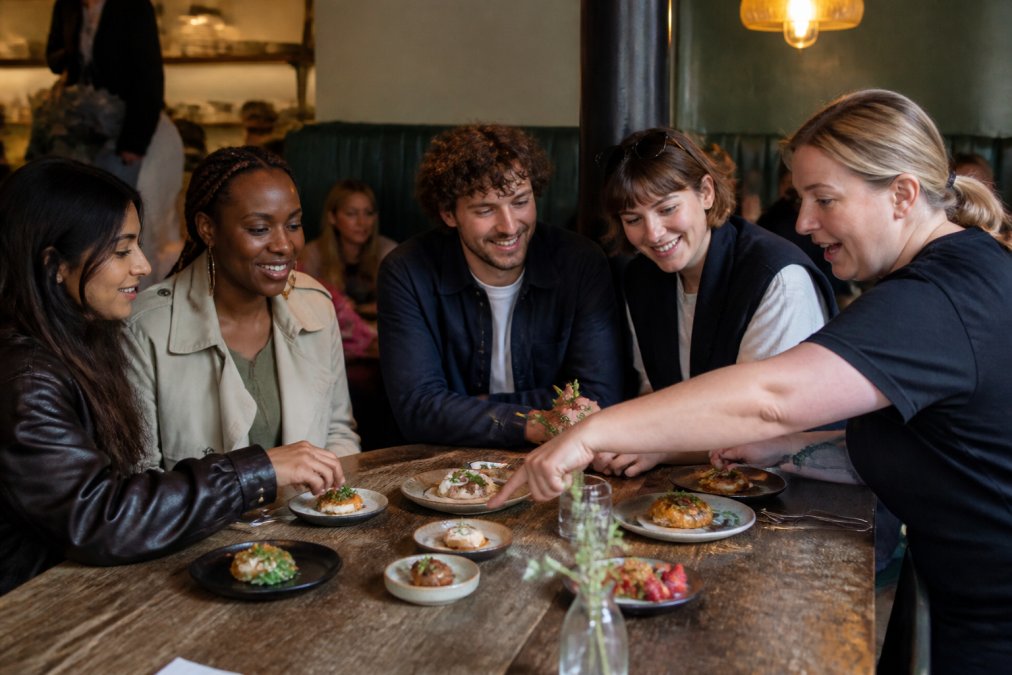
A food walking tour starts at a fixed meeting point, moves through a planned route of tasting stops, and ends near the last venue. You walk, taste, and hear the story behind each stop.
Tell the operator about allergies, dietary needs or dislikes at booking, not on the day. Most tours can swap a dish or adjust a stop with notice; flexibility is the norm when the kitchen knows in advance.
Ancoats and the Northern Quarter anchor most food tours, and for good reason. Both pack independent eateries, hidden kitchens and foodie haunts into a walkable grid, so you cover a lot of ground without a taxi. What separates a good route from a generic one is knowing which streets reward the walk.
Ancoats was the world's first industrial suburb, and its red-brick mills and canal-side warehouses now house some of the city's most interesting kitchens. The walkable core runs from Cutting Room Square toward the Ashton Canal, where a bakery, a small-batch roastery and a modern British kitchen sit within minutes of each other.
The Northern Quarter sits just north of the retail core, bounded loosely by Oldham Street, Thomas Street and the streets around Afflecks. It is the district most associated with independent food and drink, and it changes faster than almost anywhere else in the city, a pop-up last season can be a permanent fixture this one.
Routes often drift toward the Green Quarter or along the canal, where newer kitchens and local producers sit beside the water. Crossing into Salford widens the picture further: the food culture on that side of the river has its own history and independent scene.
If you would rather explore before you book, the same districts work as a free self-guided itinerary. Start at Cutting Room Square in Ancoats, walk the canal towpath toward the city, then cut up through the Northern Quarter along Oldham Street and Thomas Street. Build the route around three rules:
The best Manchester walking tour for hidden culinary gems combines small group sizes, a local food expert as your guide, and a route built around independent kitchens rather than chains. Flavours of Manchester runs exactly that kind of tour.
A route is not a list of restaurants in walking order; it is a sequence with a shape, built around four decisions:
Most food-tour content stops at the plate. Independent breweries, small distilleries and specialist bars sit within the same walkable districts as the kitchens, so a well-built route can match a dish to a local beer, a small-batch spirit or a soft pairing for anyone not drinking.
Independent kitchens in these districts tend to source closer to home than chains do, and many build menus around what is local and in season. That is why the food tastes of a specific place. When a guide can tell you where a loaf was baked or who runs the bar you are standing in, the tasting becomes a memory rather than a snack.
Group food tours for corporate events work best when the operator can handle larger numbers without losing the personal feel. Our private and corporate options are built for team-building away days, client entertainment and group celebrations.
A walking tour gives a team something to do together that is not another meeting room. Guests move, talk and share small plates, which loosens up conversation fast. For client entertainment, a route through the city's culinary heritage shows off Manchester in a way a restaurant booking cannot.
Group Type | Best Suited Route | Typical Duration | What to Plan For |
|---|---|---|---|
Small group of friends | Neighbourhood spotlight route | 2 to 3 hours | Book early for weekends |
Corporate team day | Private tailored route | 2 to 3 hours | Confirm headcount and dietary needs |
Client entertainment | Heritage-focused route | 2 to 3 hours | Allow time for a relaxed final stop |
Birthday celebration | Flexible multi-stop route | 2 to 3 hours | Flag any dietary restrictions in advance |
Culinary heritage is the thread that ties a good food tour together. The dishes you taste in Ancoats or the Northern Quarter are not random: they reflect waves of migration, industrial history and a food scene that keeps reinventing itself.
A guided walking tour takes you through neighbourhoods on foot, which means you can duck into side streets, markets and independent eateries that most visitors never find. A local food expert leading the tour knows which venues serve authentic dishes and can share the stories behind them. Because you cover a compact area on foot, you visit more tasting stops in one afternoon than you would by booking separate restaurant tables, and you get historical insights along the way that turn a meal into a culinary narrative.
Most reputable operators, including Flavours of Manchester, can accommodate dietary requirements when you tell them at the time of booking. Vegetarian and vegan options are increasingly common across the city's independent food scene, from plant-based street eats to meat-free versions of classic local dishes. If you have allergies or specific restrictions, mention them in advance so the guide can confirm suitable tasting stops.
Manchester food tour duration typically runs between two and a half and four hours, depending on the route and number of tasting stops. A multi-stop itinerary with five or six venues usually takes around three hours, including walking time between locations. Tours that cover two areas, such as a Salford and city centre route, can run closer to four hours. Always check the specific tour page for exact timings before you book.
Both get real value, but for different reasons. Visitors benefit from a guide who handles the route, the booking and the local knowledge, so they see authentic dishes and city secrets without guesswork. Long-term residents often discover hidden eateries in their own neighbourhoods that they have walked past for years. Because the food scene rotates menus seasonally, even locals who know the area well can try new dishes and hear stories about local producers they had not encountered before.


