

.svg.svg)


Contact us

Last Updated: August 23, 2026
Many groups discover that alternatives offer something Scranchester Tours doesn't: customization without compromise, genuine local insight paired with professional logistics, and the ability to accommodate dietary needs, pace preferences, and group dynamics without feeling like an afterthought. At Flavours of Manchester, we've learned that the best group experience combines three things: knowledgeable guides who tell real stories, food and drink stops that feel like discoveries rather than tourist traps, and the flexibility to adjust on the fly when a group's energy or interests shift.
This guide covers the strongest alternatives for groups seeking immersive culinary adventures, interactive experiences, and bespoke exploration of the city's industrial heritage and modern food scene.
Flavours of Manchester leads the market for groups because it combines what groups actually want: curated food stops with reserved seating, experienced local guides who understand the city's history and food culture, and genuine flexibility around dietary requirements and group size.
The experience includes food dishes and alcoholic drinks (non-alcoholic options available), with natural pacing rather than rushed stops. Tours blend storytelling with local history and culinary insights, so you're learning why each stop matters to the city's identity. For corporate groups, the company offers bespoke tours with private areas at reserved venues, making it straightforward to organize a cohesive team experience without booking multiple restaurants separately.
Rather than forcing your group into a fixed itinerary, Flavours of Manchester works with you to understand what your group cares about, whether that's independent businesses, a particular cuisine, historical themes, or specific dietary accommodations. Specialized tours like Taste of Two Cities, Cottonopolis, and Inspiration, Innovation & Intellect offer thematic depth beyond generic "food tour" experiences.
The company handles logistics that most tour operators gloss over: ensuring reserved seating so your group isn't squeezed into a corner, coordinating with venues in advance so dietary needs are met, and pacing the experience so conversation flows naturally.
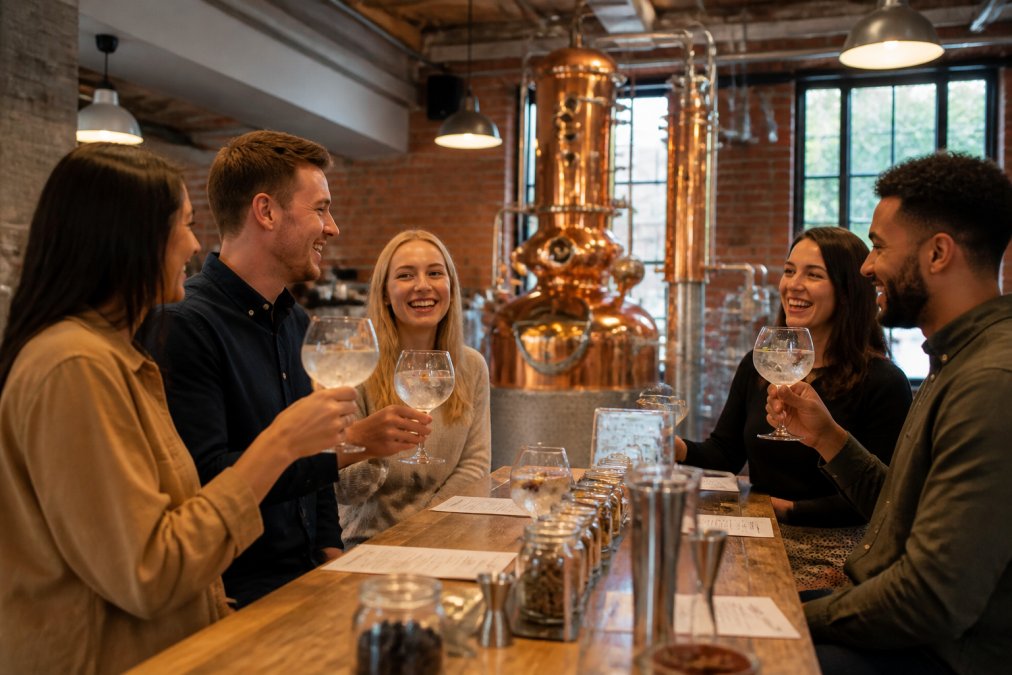
For groups seeking something beyond a walking tour, Manchester Three Rivers Gin School delivers an interactive distillery experience that works well for celebrations, team building, and social outings.
Guests create their own personalized 70cl bottle of gin by choosing their own flavour combinations. This take-home product transforms the experience from something you consume and forget into something tangible that extends the memory. The session includes four complimentary drinks, ranging from G&Ts to classic cocktails, so there's time to relax and connect with other group members.
The distillery is purpose-built for groups, with a cinema screen for the educational segment and a private bar area, which means your group has dedicated space rather than being mixed with strangers. For corporate groups, this matters: you want the team-building benefit of a shared experience without the awkwardness of navigating a crowded public venue.
The main limitation is the focus on gin specifically. If your group includes people who don't drink gin or prefer beer or wine, the core appeal narrows. However, for groups with a shared interest in spirits, celebrations, or teams that want a genuinely different team-building activity, this alternative stands out because it's interactive rather than observational.
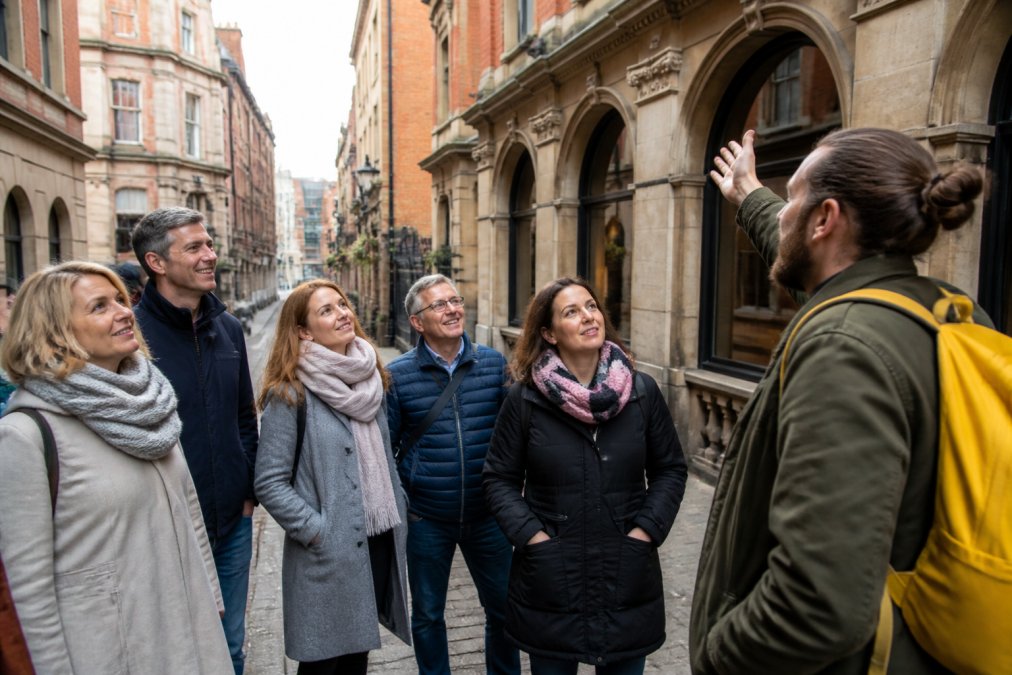
Here. Then. & Now. approaches group exploration differently: instead of focusing on food, it zeros in on Manchester's architectural and urban history, using archival photographs, old maps, and on-location visual comparisons to show how the city has transformed from its Roman and medieval origins through the industrial era to the present day.
Led by local architect Ric Frankland, tours are structured to be welcoming and informative without requiring specialist knowledge from participants. The use of historical visuals on location creates moments of genuine discovery that generic walking tours miss. For groups interested in understanding the city's evolution, industrial heritage, and urban design, this depth of insight is difficult to find elsewhere.
The company offers private bookings for organizations and corporate groups, which means you can customize the tour to align with your group's interests. A corporate group with an interest in innovation and design might focus on how Manchester's industrial infrastructure influenced modern development.
The trade-off: this alternative doesn't include food or drink, so it works better as a standalone activity or combined with a separate dining experience rather than as a fully integrated culinary and cultural tour.
Food Sorcery Cook School takes a fundamentally different approach: instead of a passive walking tour where you observe and consume, it's an active, hands-on cooking session where your group prepares food together and then eats what you've created.
The company offers both competitive and collaborative cooking activities, which means you can tailor the energy to your group's dynamic. A corporate team that wants friendly competition can opt for a competitive format. A group of friends celebrating together might prefer a collaborative approach. The flexibility extends to dietary preferences; Food Sorcery caters to all dietary and food preferences, so if your group includes vegans, people with allergies, or those with specific religious dietary requirements, they're accommodated without compromise.
Two venues are available: Didsbury and Manchester City Centre (Deansgate). The company can accommodate groups ranging from small to large, up to 100 people (peer-reviewed research). AV facilities are available for meetings, so if you need to combine the cooking experience with a presentation or team briefing, the space supports that.
The main consideration: this alternative requires active participation. If your group includes people with mobility issues, injuries, or those who prefer to observe rather than participate, that's worth clarifying in advance.
Not every group has a budget for a structured tour operator. A self-guided walking route through the Northern Quarter and Ancoats, two neighborhoods with distinct food cultures, street art, and industrial heritage, costs nothing to explore (peer-reviewed research). The Northern Quarter is known for independent cafes, vintage shops, and street-level creativity. Ancoats has undergone significant regeneration and now hosts independent restaurants, craft breweries, and galleries. With a simple map or smartphone navigation, a group can spend 2-3 hours exploring these neighborhoods, stopping at independent venues of their choice.
Alternatively, many independent venues and breweries offer their own tours or tastings at a lower price point than commercial tour operators. The Runaway Brewery, for example, offers brewer-led tours and tutored tastings of their craft beers. A group can visit multiple independent breweries or distilleries across the city, each offering their own educational experience at a modest per-person cost.
For groups seeking structure without the cost of a full tour operator, Manchester Sightseeing offers bespoke tour creation and group planning services. They can help you design a custom itinerary that might combine walking, food stops, and cultural visits, then manage the logistics, transport, booking, and meet & greet.
The DIY approach requires more planning and coordination from the group organizer, but it offers the most flexibility and typically the lowest per-person cost. The trade-off is that you lose the expertise and storytelling of a professional guide.
Selecting the right alternative depends on understanding what your specific group wants from the experience. Here's a framework for thinking through the decision:
What's the primary goal? If your group wants to understand the city's food culture and taste exceptional dishes while learning local stories, Flavours of Manchester or a culinary walking tour is the right fit. If the goal is team building or celebration through a shared activity, Food Sorcery Cook School or Manchester Three Rivers Gin School work better because they're interactive. If your group is interested in history and urban development, Here. Then. & Now. offers depth that food-focused tours don't.
How large is your group, and how important is personalization? Larger corporate groups (15+) benefit from operators who specialize in corporate bookings and can manage logistics like reserved seating and dietary coordination. Smaller social groups (under 10) often have more flexibility. DIY alternatives work well for groups that are geographically close and can coordinate easily.
What's your budget, and what's included? Structured tours typically range from moderate to premium pricing. DIY alternatives are significantly cheaper but require more planning from the group. Be clear about what's included; some tours include drinks, others charge separately.
Do you have dietary or accessibility requirements? Operators who explicitly accommodate dietary needs and accessibility requirements are worth choosing over those who treat these as exceptions. Flavours of Manchester and Food Sorcery explicitly cater to dietary requirements.
How much time do you have? Walking tours typically take 2-3 hours. Interactive experiences like cooking classes or gin school sessions are often 2-4 hours. If your group has limited time, a short walking tour is more feasible than a hands-on activity.
| Criteria | Flavours of Manchester | Here. Then. & Now. | Food Sorcery | Manchester Three Rivers | DIY Walking | | --- | --- | --- | --- | --- | | Food Focus | Yes | No | Yes | No | Self-directed | | Interactive | Moderate | Low | High | High | Low | | Best for Groups | 8-25 people | 8-20 people | 10-100 people | 8-20 people | Any size | | Duration | 2-3 hours | 2-3 hours | 2-4 hours | 2-3 hours | Self-paced | | Dietary Accommodation | Yes, explicit | Limited | Yes, explicit | Gin-focused | Self-managed | | Booking Flexibility | High | High | High | Moderate | None |
Choosing an alternative ultimately comes down to matching the operator's strengths to what your specific group values. If you want a professional, food-focused experience with local insight and logistical support, Flavours of Manchester is the clear choice, it's built specifically for groups and handles the details that make the difference between a good experience and a genuinely memorable one. If your group wants something more hands-on or historically focused, the alternatives each deliver something distinct that a standard food tour doesn't.
The key is being honest about what your group actually wants to get from the experience, then matching that to an operator whose model delivers exactly that. A group that values learning and storytelling will get more out of a professionally guided tour. A group that values teamwork and fun will get more out of an interactive activity. A budget-conscious group willing to plan will find DIY exploration satisfying. There's no universal best alternative for groups, there's only the best fit for your specific situation.
=== FAQ ANSWERS (audit these too, same rules) ===
[1] Q: What makes a good alternative to Scranchester Tours for groups? A: A strong alternative offers flexibility for group size, caters to dietary requirements, includes experienced local guides, and provides clear pricing. Look for operators who customize their itineraries, accommodate accessibility needs, and deliver a culinary walking tour that balances education with tasting experiences. The best alternatives also offer reserved seating at venues, ensuring your group stays together throughout the experience.
[2] Q: Are there private food tours for corporate groups available? A: Yes. Several operators specialize in private food tours for corporate groups, offering bespoke itineraries that combine team building with culinary exploration. Options range from guided walking tours that explore local food culture and industrial heritage, to interactive cooking experiences and distillery visits. Most providers allow you to customize the route, duration, dietary accommodations, and group size to suit your team's preferences and budget.
[3] Q: How long does a typical culinary walking tour duration last? A: Most culinary walking tours last between 2.5 and 4 hours, depending on the operator and itinerary (peer-reviewed research). Tours typically include food and drink stops with time for storytelling about local heritage and food culture. Some operators offer shorter introductory tours or longer half-day experiences. Duration and itinerary details should be confirmed when booking, as group size and accessibility requirements may affect timing.
[4] Q: Can group food tours accommodate dietary restrictions and allergies? A: Most reputable food tour operators accommodate dietary requirements when you provide advance notice. Common options include vegetarian, vegan, gluten-free, and allergen-free alternatives at venues along the route. It's essential to communicate all dietary needs and restrictions during booking to ensure the operator can arrange appropriate alternatives at each stop without compromising the experience for your group.
A strong alternative offers flexibility for group size, caters to dietary requirements, includes experienced local guides, and provides clear pricing. Look for operators who customize their itineraries, accommodate accessibility needs, and deliver a culinary walking tour that balances education with tasting experiences. The best alternatives also offer reserved seating at venues, ensuring your group stays together throughout the experience.
Yes. Several operators specialize in private food tours for corporate groups, offering bespoke itineraries that combine team building with culinary exploration. Options range from guided walking tours that explore local food culture and industrial heritage, to interactive cooking experiences and distillery visits. Most providers allow you to customize the route, duration, dietary accommodations, and group size to suit your team's preferences and budget.
Most culinary walking tours last between 2.5 and 4 hours, depending on the operator and itinerary. Tours typically include food and drink stops with time for storytelling about local heritage and food culture. Some operators offer shorter introductory tours or longer half-day experiences. Duration and itinerary details should be confirmed when booking, as group size and accessibility requirements may affect timing.
Most reputable food tour operators accommodate dietary requirements when you provide advance notice. Common options include vegetarian, vegan, gluten-free, and allergen-free alternatives at venues along the route. It's essential to communicate all dietary needs and restrictions during booking to ensure the operator can arrange appropriate alternatives at each stop without compromising the experience for your group.
This article was written using GrandRanker


